One-bedroom house starter kit
THOUSANDS of people who lost their homes to Hurricane Melissa are still trying to pick up the pieces of their lives and rebuild. The Jamaica Observer turned to trained quantity surveyor Donya Davis from Remy Solutions & Construction Limited for advice on what it would take to build a basic one-bedroom studio, one that could gradually be expanded as funding becomes available.
“What I will be describing is for a starter home or low-income housing for a stand-alone, open [plan] bedroom studio with an entrance patio, bathroom and kitchenette. The unit is not within an apartment complex. This studio will be situated on fairly flat land, with concrete slab roof. It is approximately 750 square feet, and the bedroom size is 14 x 12 feet,” Davis told the Observer’s
Real Estate on the Rock.
She began as an architectural technician, commonly referred to as a draughtsman, then got a degree in quantity surveying form the University of Technology, Jamaica. She has experience renovating or working on new builds for both residential and commercial property.
Davis provided a basic architectural plan, and detailed the typical components needed. The cost of building material is not included as that may fluctuate from one hardware store to another, but Davis estimates that construction and finishing work for this one-bedroom studio would cost between $23.5 million to $26.5 million.
Among the tips she provided for anyone looking to build a starter home: Know the going rate for tradesmen, and carefully choose who you employ. Davis points to the Incorporated Masterbuilders Association of Jamaica (IMAJ)’s Labour Management Agreement (LMA) as a valuable source of information on contractors and tradesmen.
“It’s a base price because the market price may be different based on location, but it gives you a basic idea of what your tradesman will charge you,” she said.
“[It is cheaper] to buy the LMA, compared to not knowing if you are being overcharged. I think it’s $4,000 for a sheet that gives you all the list of trades, and what the cost is, so it will save you some money,” she added.
Once you have an idea of the rates, carefully select the individuals who you will rely on to provide quality service.
“Avoid getting inexperienced individuals to do your work. Always try to find out if the person actually knows what he is doing. As much as you can, try to find somebody who has completed a project already and you can look at it and assess his or her work. Just don’t take up any, as we called them back in the days, cobbler. It will actually cost you more [if you do],” cautioned Davis.
She also stressed the importance of doing a budget before beginning your project, no matter how small the structure.
“Most people start their projects thinking, ‘I can buy material later’. But the price of material always moves and labour price always move. Every two years the LMA is revised, and the prices go up,” she said.
According to Davis, this often creates conflict.
“Most people will start a project and can’t complete it within a year. Then they say the tradesman robbed them because he charged more the next year than he said he would charge. It is often a fair increase. The LMA is revised every two years because the industry is growing, so always have a budget and add on about five per cent for contingencies,” she advised.
With these price escalations in mind, Davis suggested getting a loan, if possible, to bankroll the build and get it done quicker.
“Sometimes the loan repayment is far cheaper than you having that house for five years trying to build it, while the costs are still going up,” she said.
Starter kit
Building your starter home begins with identifying suitable land on which to erect the structure. In addition to establishing ownership, ensure the area is not flood prone and avoid land that is too steep, too rocky, or unstable in any way. According to Davis, here are the typical components you would need to construct the frame or envelope and finishes of the building. It will also need a waste water system (septic tank, manhole, etc).
Building frame/envelope
• Heavy equipment for excavation for the foundation and external plumbing
• 6”- 8” masonry block
• 25 kg cement
• 3/8” stone
• Washed sand
• ½” steel bars
• 3/8” steel bars
• ½” ply board,
• 2”x 4” and 2”x 6” lumber
• 3,000 PSI premix or hand-mixed concrete
• Electrical and plumbing pipes for rough-ins
• Electrical wiring (25 mm, main wire, etc)
• Rough cast and rendering of walls and ceiling
• Waterproofing membrane
Finishes
• Paint for walls and ceiling
• Tiles for floors, bathroom, shower, and kitchen
• Windows and doors
• Kitchen cupboards
• Bathroom vanity
• Electrical fixtures: Plug covers, fans, lights, scones, etc. Please consult with a licensed electrician.
• Plumbing fixtures: Shower hose, floor drain, toilet, shower enclosure, face basin, etc. Please consult with a licensed plumber.
External works
• National Water Commission connection for water supply and sewage, if needed
• Jamaica Public Service Co Ltd connection
• Electrical stanchion
• Landscaping
• Waste water drainage: Septic tank, manholes, manhole covers, grease tank, reed bed, etc.
Basic quantities of material needed to construct a one-bedroom studio:
Building frame/envelope
• 12 cubic yard rough sand
• 8 cubic yard rendering sand
• 18 cubic yard stone
• 500 bags cement
• 15 sheet 5/8”plywood
• 4 tonnes 1/2” mild steel
• 2 tonnes 3/8” mild steel
• 10 sheets JRC fabric
• 1,500 blocks
• 15 lengths 2”x4”x16’ lumber
• 15 lengths 2”x6”x16’ lumber
• 20 lengths 2” pipes
• 10 octagon boxes
• 40 cubic yard concrete
Finishes
• 200 pieces 24” x 24” ceramic floor tiles
• 350 pieces 12” x 12” ceramic wall tiles
• 1 closet door, 90” x 82” high
• 5 doors, 32” x 82” high (plus five pairs of hinges)
• 2 windows, 48” x 48” high
• 3 windows, 60” x 48” high
• 1 bathroom window, 24” x 24”
• 13’-6” lower kitchen cabinet
• 7’-6” upper kitchen cabinet
• Vanity or pedestal basin
• Bathtub or shower
• Shower hose and faucet
• Kitchen faucet
• Bathroom faucet
• 10 gallons external paint
• 18 gallons internal paint
External works
Please consult with a licensed electrician and plumber for accurate quantities based on location and terrain of land.
Cost range for construction of home
Construction and finishes work: $23,500,000 to $26,500,000.
Source: Remy Solutions & Construction Ltd
Telephone 876-770-4785 or email: remy2work@gmail.com
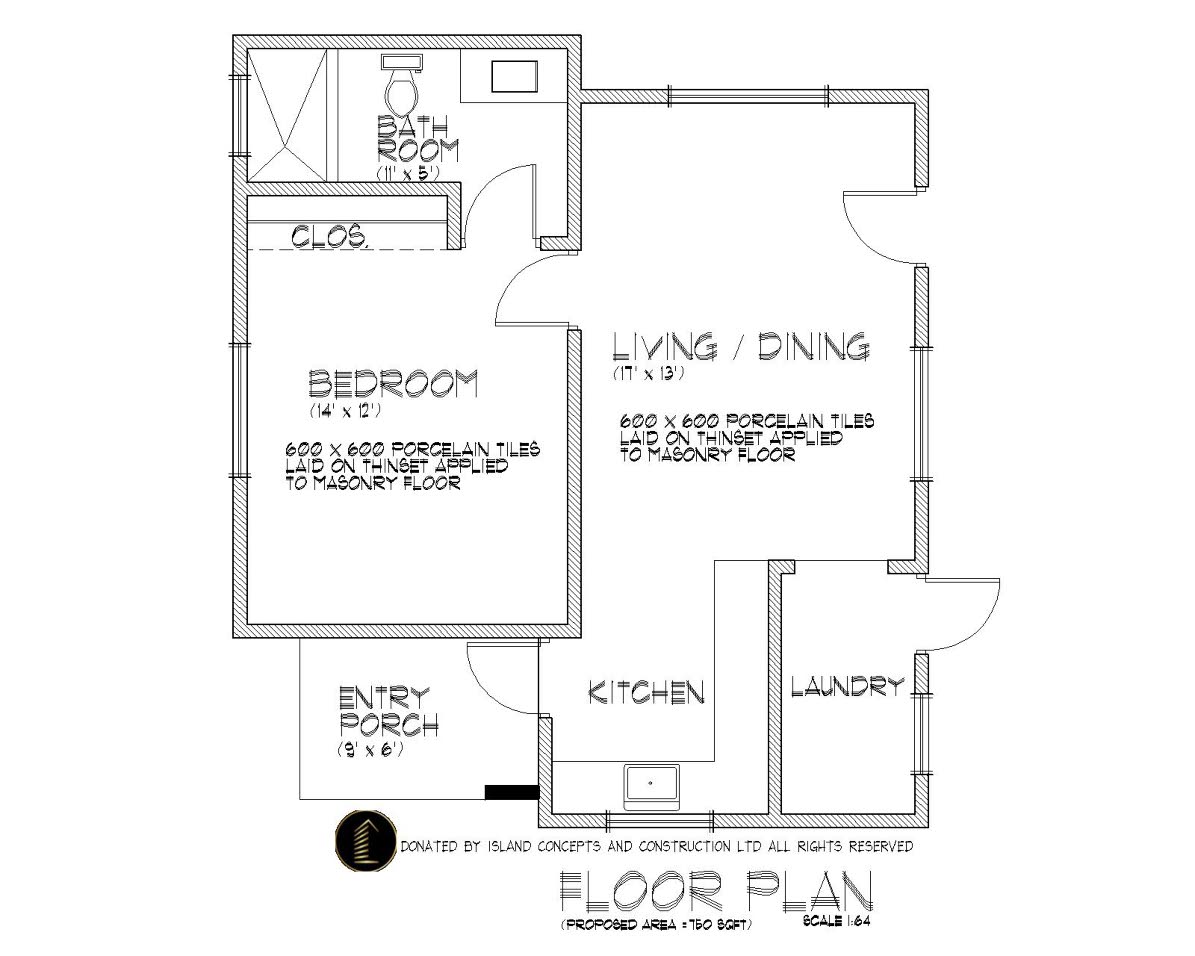
The stand-alone, open-plan bedroom studio with an entrance patio, bathroom and kitchenette as described by certified quantity surveyor Donya Davis from Remy Solutions & Construction Limited.
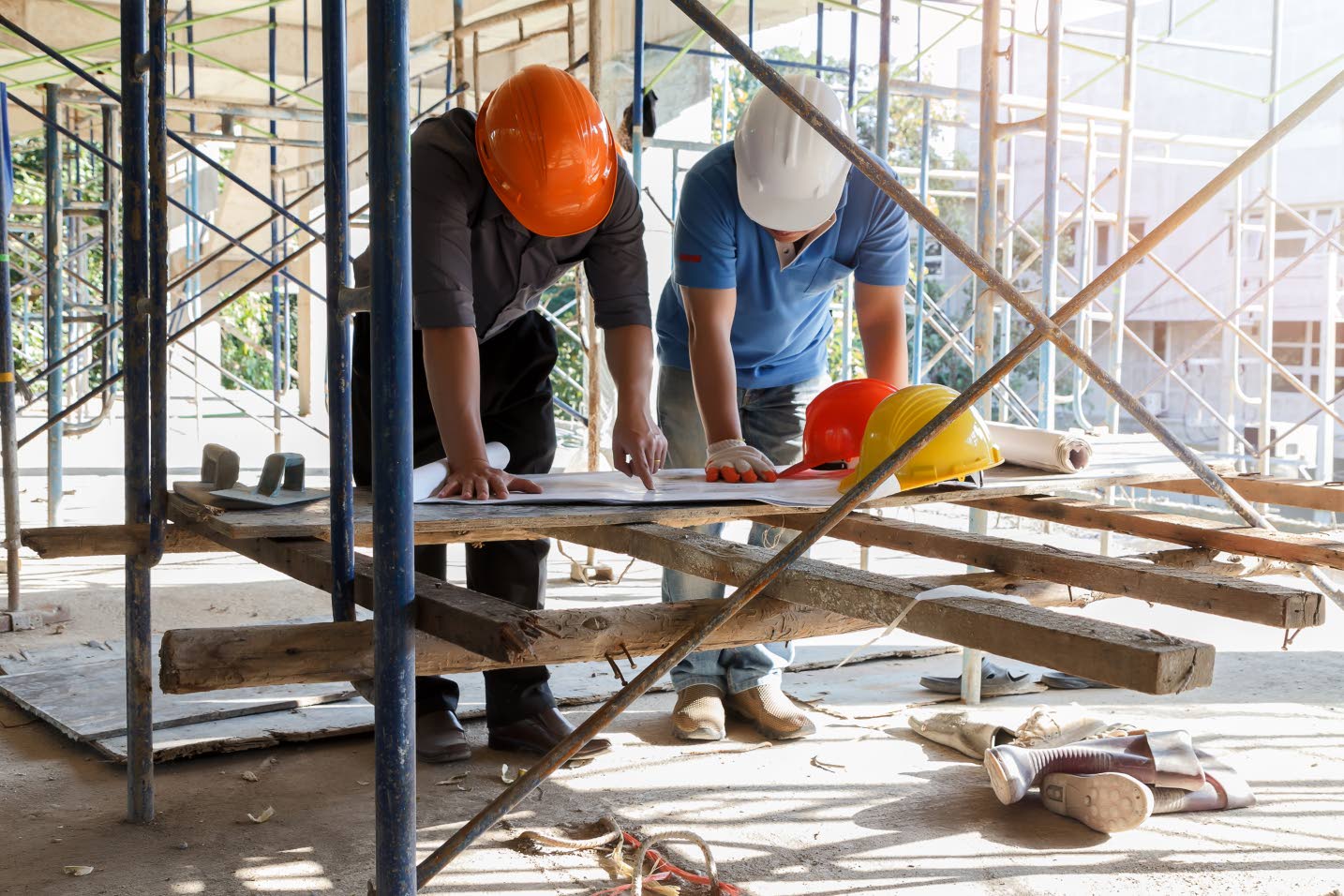
Be sure to hire professionals for the job.