



Bullish on Jamaica
It is a distracting January. Happenings in our Caribbean have been dominating conversations and creating disturbing ‘what if’ thoughts. Of course, we need to be aware, but we cannot allow fear to sap our energy. We have made significant strides in hurricane recovery, but there is much to be done to restore normality to education, health services, agriculture, and tourism in the affected parishes.
It was refreshing that last week’s 2024 annual general meeting of the Private Sector Organisation of Jamaica (PSOJ) provided a keen focus on Jamaica’s opportunities. Camille Facey, chair of the Governance Committee of the PSOJ, has piloted a Corporate Governance Toolkit in partnership with IDB Invest. Executive Director Sacha Vaccianna-Riley described it as “a milestone that positions Jamaican businesses, large and small, to operate at globally competitive standards”.
Outgoing President Metry Seaga, who has served his maximum term, gave us a sober reminder: “Jamaica will not achieve the elusive growth that we seek until and unless we produce it. We are blessed with a little thing called location, we are located in the Americas, where Singapore is located in Asia, and yet we have never used that location for anything other than to bring tourist to our country quickly and inexpensively.”
He continued, “We must get cracking on value-added manufacturing and services, we must import labour to transfer knowledge, we must climb the ladder to produce higher value products and provide higher value services. We cannot and will not grow our economy by selling goods and services to 3 million people with an average yearly income of under US$8,000.
“Whilst I can give the Government some leeway in that we could not go this route until we built a solid economic base, and then when the base was built we had Beryl, then Melissa, those are behind us now and we must not make any more excuses, no more delays…”
Seaga pointed out that while we now have the record low of 3.5 per cent employment, there was a need to “make it easier and cheaper to import labour into Jamaica”. The fact is that 60 per cent of our labour force is unskilled; we need greater expertise to bring our labour force up to mark.
A recent conversation with my cousin Andrea Williams-McKenzie, who is an experienced human resource executive in the UK, revealed the challenges that Jamaica faces, as artificial intelligence (AI) threatens the existence of entry-level jobs. As we reflected on the galloping technology over the last 30 years, Jamaica must now equip our workforce to harness the opportunities presented by AI or be outstripped by developed countries.
This is the biggest challenge to HEART/NSTA Trust, once heralded as a brilliant innovation but now criticised for various shortcomings. As Williams-McKenzie discussed AI efficiencies, I realised that this should be a foundation class for all HEART courses. This is not anathema to critical thinking, because to use AI productively one must determine the right tools for the job and make full use of them.
I remember Edie Weiner of Future Hunters explaining to the Jamaica chapter of the International Women’s Federation (IWF) that if we want our children to be good earners in the future, they should learn carpentry, masonry, plumbing and other careers that were once regarded as low level. Try to find people skilled in the above, and you will realise how much in demand they are.
We once thought that AI could not replace the creatives, now we hear that there is a popular AI actress that may be hired in Hollywood, and we are hearing music and poetry being churned out by AI. Give ChatGPT or Microsoft Co-Pilot the right prompts and they will create contracts, leases, and resumes in seconds. Social media presents multiple career opportunities. One young lady I know is doing so well with fashion and hair-care tips that companies now send her products for demonstration and promotion.
Continuous education has no age limit. It has been heartening to see CCRP members attending courses offered by Corrine Stewartson. Some of them seem simple but open a new world for seniors; for example, one course, smart use of your smart phone, explains the ease of digital banking and making payments via various applications.
We hope that we will be able to open Jamaica to the expertise necessary for us to train and retool for the AI revolution. “I am extremely bullish on Jamaica,” declared Seaga. “We have come a far way, but still have a long journey ahead. I believe in our people, our tenacity, and our grit. There is no stage on which we cannot shine; we just need to be on the programme,” he continued.
PM appeals to the Church
Speaking at the ‘Heal the Family, Heal the Nation’ Day of Prayer Service held at Power of Faith Ministries in Portmore, St Catherine, last Wednesday, Prime Minister Dr Andrew Holness emphasised the critical role of the Church in reducing crime. In a
JIS report by Vanessa James, she noted the prime minister’s appeal “that partnership is vital in tackling social violence, including intimate partner conflicts, domestic disputes, and petty quarrels between neighbours that too often turn deadly”.
“These are the [forms of] social violence that we’re going to need the help of the Church [with]…not just in prayers but in action. We must now, as a society, from the pulpit, preach the rejection of violence as a means of resolving conflict, said Prime Minister Holness. “…There are many youngsters in communities [who] could very well be in the church choir as they could be in a gang. It is only because the gangs reach out to them and not the church choir why they are in the gang and not the church choir. So we are going to now need the army of the Church to pull in those youngsters and divert them away from the gangs and the criminal activities.”
We could not agree more with the prime minister. The call for greater efficiency in one’s sphere of activity applies to the Church as well. Though I may not agree with Member of Parliament Everald Warmington regarding the $75 million allocated to our churches for hurricane recovery, he does have a point that there are churches who have done well financially and could reach out to their colleagues. I know that the traditional churches are deeply involved in this effort, using their administrative skills to raise funds for the affected parishes.
In commenting on tragedies involving certain little-known churches, this column has been calling for the Umbrella Group of Churches to have a due diligence process to confirm qualification for sound pastoring. There is no other occupation of such importance which does not carry checks and balances to protect the public.
Traditional denominations have built schools, colleges, and created compassionate programmes to assist the needy. There are too many stories of semi-literate individuals who become overnight ‘bishops’ and have truly little to offer their unsuspecting followers.
If our churches wish to reply to Dr Holness’s call for a meaningful partnership between Church and State to advance our country’s peace and security, then they should ensure that our clergymen and women are intelligent, ethical, and devout individuals who are equal to the task.
Back to school
The Ministry of Education, administrators, and teachers in our western parishes should be congratulated on their readiness for the Easter term after the damage sustained by over 600 schools. Some, for example the Petersfield High School, were used as hurricane shelters and had challenges relocating shelter residents who have been left homeless by the storm.
What a massive job it has been: removing debris, sanitising, building temporary classrooms, and creating an environment of normality for the children, some of whom have experienced the trauma of the full force of the hurricane and the loss of family members.
Where damage has been extreme, temporary solutions have been shared spaces with host schools; blended learning approaches combining in-person and remote learning; and the use of classroom tents and tarpaulins to create makeshift learning environments.
The Education Ministry has advised that the National Education Trust is prioritising structural upgrades, including replacing wooden frames with slab or steel roofs and ensuring compliance with building codes. The rebuild is expected to take three to four years.
They have received international support from UNESCO, learning kits, grants for student-teachers, and from UNICEF, tarpaulins, classroom tents, and learning materials, while also addressing mental health and psychosocial needs of students and teachers.
Kudos to Education Minister Dr Dana Morris-Dixon and Permanent Secretary Dr Kasan Troupe for leading this effort and for their plans “to rebuild a safer, smarter and more resilient education system”.
Crime and controversy
We welcome the significant reduction of 41 per cent in murders over the past year. Although there is concern regarding the lives lost in recent police operations, we must acknowledge that there are cold-hearted killers who will challenge the authority of the police.
We look forward to greater use of body-worn cameras to help quell the current controversy. We should note that the Independent Commission of Investigations (INDECOM), which investigates controversial incidents, have, in most cases, cleared the names of the lawmen involved.
We are relieved that several people of interest have been turning themselves in to the police, and urge the families of those who have not yet done so to encourage them to do likewise.
Jean Lowrie-Chin is an author and executive chair of PROComm, PRODEV, and CCRP. Send comments to lowriechin@aim.com.
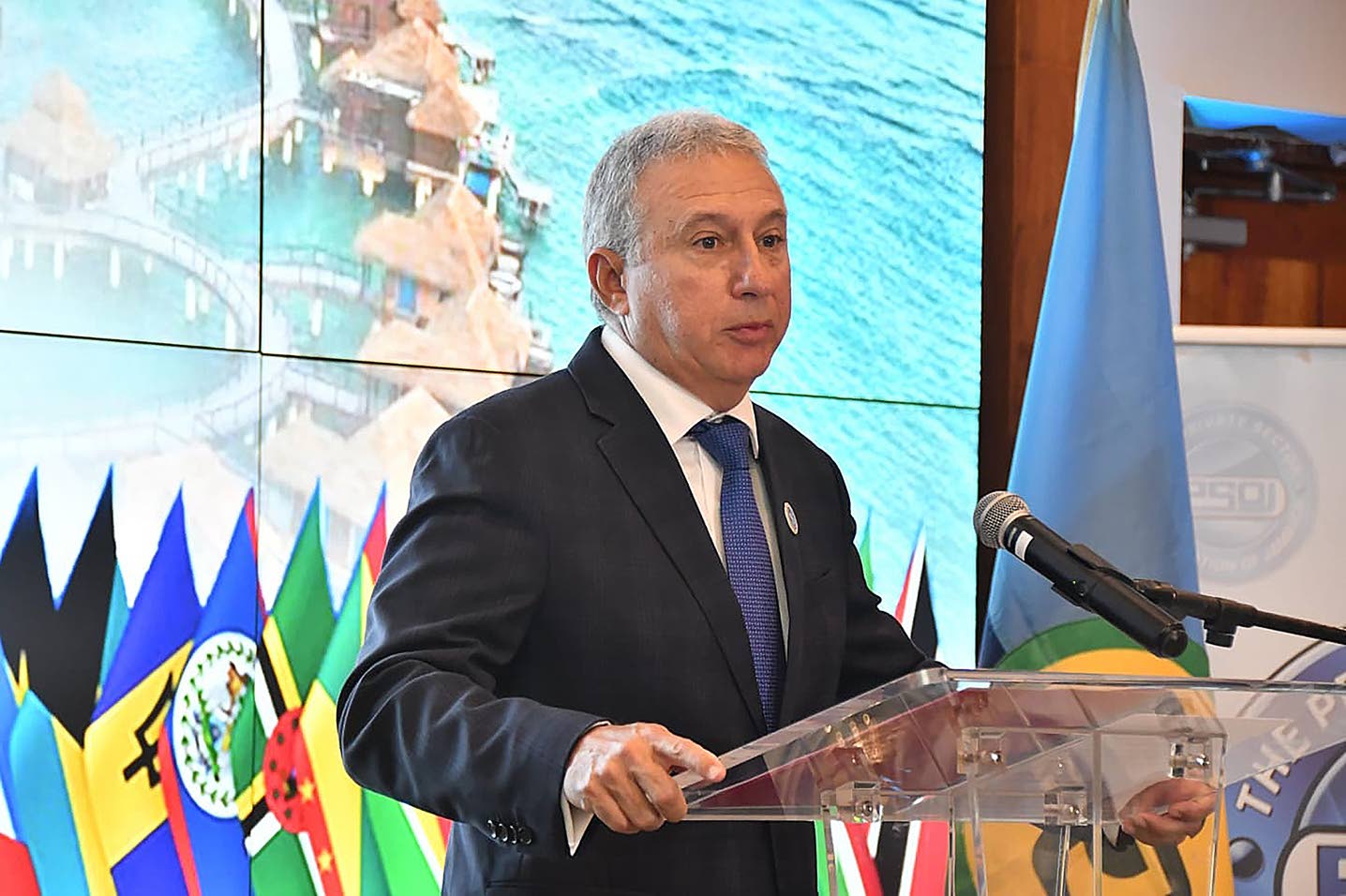
Metry Seaga Naphtali Junior


