



Built for Jamaica
Showfa Express takes a different route in delivery service
WHEN Jamie Hall returned to Jamaica in 2020 after working on advanced logistics and robotics systems overseas, he did not come back with an app idea or a pitch deck. He came back with a conviction that the same enterprise-level technology powering global e-commerce could be built — and made to work — in the Jamaican market.
That conviction would later take shape as Showfa Express, a locally built delivery company applying automation, real time tracking, and AI-driven routing to a sector long defined by makeshift systems, informal processes, and inconsistent service.
Founded in 2023, Showfa has scaled rapidly in a short period, expanding delivery operations across seven parishes from hubs in the parishes of Manchester and Portmore in St Catherine, and growing delivery volumes more than threefold in under two years. Its customers now range from individual consumers to SMEs, medical suppliers, and listed companies looking for reliable, predictable logistics in an increasingly convenience-driven market.
“It looks very simple on the consumer end but on the back end it’s a lot of sophisticated work to make logistics flow seamlessly,” Hall told the Jamaica Observer in a recent interview.
Showfa’s growth comes against a shifting backdrop. Rising operating costs, tighter margins, and disruptions linked to extreme weather like Hurricane Melissa have forced many Jamaican businesses to reassess how they move goods. At the same time, Hall said consumer expectations are changing, with delivery increasingly seen as a basic service rather than a premium add-on.
Small and medium-size enterprises that once relied on in-house bearers, ad hoc couriers, or owners making deliveries themselves are finding those models costly, inefficient, and difficult to scale, the CEO reasoned.
His pitch to businesses is straightforward: Outsource delivery and focus on what generates revenue. Rather than maintaining vehicles, managing staff, and absorbing the risks that come with in-house delivery, Hall said companies can plug into an existing network that already moves goods across parishes daily.
“If you’re a business owner and you’re taking taxis or driving across parishes to deliver goods yourself, that’s time you could have spent marketing, producing, or growing the business. When you actually do the math, it’s cheaper to pay the delivery fee and focus on what makes you money,” he said.
Built for Jamaica, not imported
Born and raised in Jamaica, Hall told the Sunday Finance that he was determined to create a business model that truly serves the people. He said one of the biggest mistakes in the sector has been the tendency to import overseas delivery platforms and attempt to retrofit them for Jamaica, often with limited success.
“A lot of global apps assume formal street addresses, cashless transactions, and predictable road networks. Those assumptions don’t always hold here, especially when you go into the countryside. We built around those realities — and that’s what sets us apart. We have a dispatch system that stores informal locations, re-routes drivers in real time, and supports cash-on-delivery alongside digital payments,” he said.
Over time, those differentiators helped the company build trust with customers and, eventually, shift behaviour.
In its early days in Manchester, roughly 70 per cent of Showfa’s transactions were cash-based. Today, that figure has fallen sharply as repeat customers grow comfortable paying online or via bank transfer, supported by real time notifications and digital proof of delivery.
“It’s a low-trust environment, and a lot of people are underbanked, but over time people trusted us to pay for their goods online. That cash percentage dropped to about 20 per cent,” Hall said.
Enterprise technology, local scale
Hall’s approach is rooted in his technical background. A mechanical engineer, he studied at Columbia University in New York before joining a robotics start-up focused on warehouse automation. That company was later acquired by Shopify Logistics, where Hall worked on robotic system integration across North America and Europe.
Those systems were designed to address labour shortages and improve fulfilment efficiency — challenges that, while different in scale, are familiar to Jamaican SMEs.
At Showfa similar principles underpin the technology stack, Hall said. AI-powered routing assigns deliveries in real time, GPS tracking monitors vehicle movement continuously, and automated notifications keep customers updated at each stage of the delivery process. Internally, data is used to flag maintenance issues before vehicles fail, and to verify expense reports submitted by drivers, reducing errors and delays.
Much of that functionality typically costs millions of dollars to build at scale, but Showfa’s model makes it accessible to local businesses at a fraction of the cost, with in-parish deliveries starting at $790 for packages up to 20 pounds and a flat out-of-parish rate of $1,690.
The logistics and delivery space in Jamaica has grown more crowded in recent years, with food delivery platforms, traditional courier companies, and new entrants competing for share. Many focus on consumer-facing services, particularly meals and groceries, while others specialise in document or parcel delivery.
Showfa has positioned itself differently, targeting the operational layer behind businesses rather than just end consumers. Its client list includes food operators, medical supply companies, and corporate clients, including Lasco Financial Services Limited for which it handles card and document deliveries across multiple parishes.
The company is also completing vendor onboarding with DHL Jamaica to provide overflow delivery support.
Operational discipline has been central to the company’s growth. Showfa operates a fleet of 12 vehicles, supported by a team of 28 staff across operations, fulfilment, accounting, marketing, and customer support. Unlike many delivery platforms, it does not rely on motorcycle riders, opting instead for compact and larger vehicles suited to parish-wide and inter-branch deliveries.
He noted that the vehicles are tracked continuously, with telemetry data allowing the company to respond quickly if something goes wrong. Orders follow a strict chain-of-custody process — from pickup to delivery — with digital timestamps, signatures, and proof-of-delivery available to customers. Hall says the company has not lost a package since launch, despite handling tens of thousands of deliveries.
Looking ahead
As technology adoption accelerates among Jamaican SMEs, Hall believes logistics will play an even larger role in determining which businesses grow and which stall. For Showfa, the focus now is on deepening relationships with businesses that already operate across parishes, while continuing to refine its technology and internal systems.
For Hall, the broader significance goes beyond the company’s growth. Showfa’s trajectory, he argues, demonstrates what is possible when returning talent applies global experience to local problems.
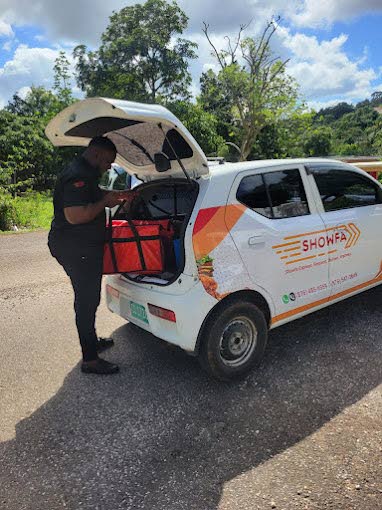
A Showfa delivery associate prepares orders for dispatch, part of a system designed to move goods efficiently across informal addresses and unpredictable road conditions.
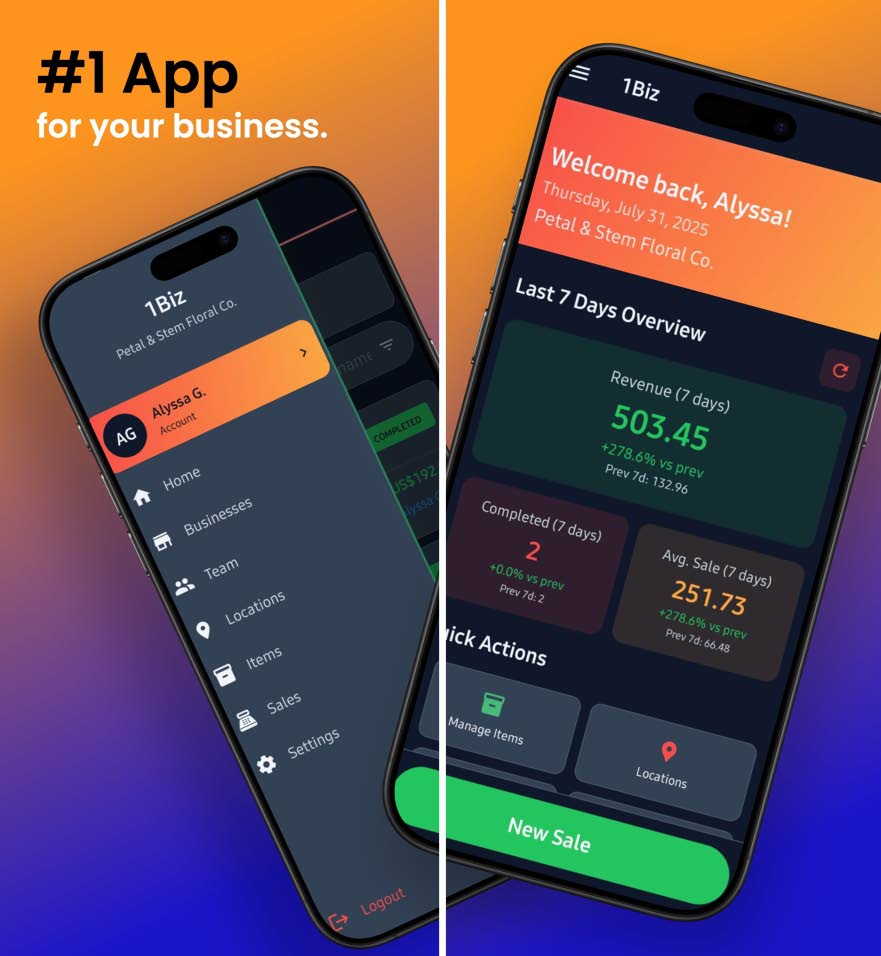
Showfa’s proprietary business app allows merchants to track deliveries, manage inventory, and monitor sales in real time — bringing enterprise-level logistics tools to local SMEs.
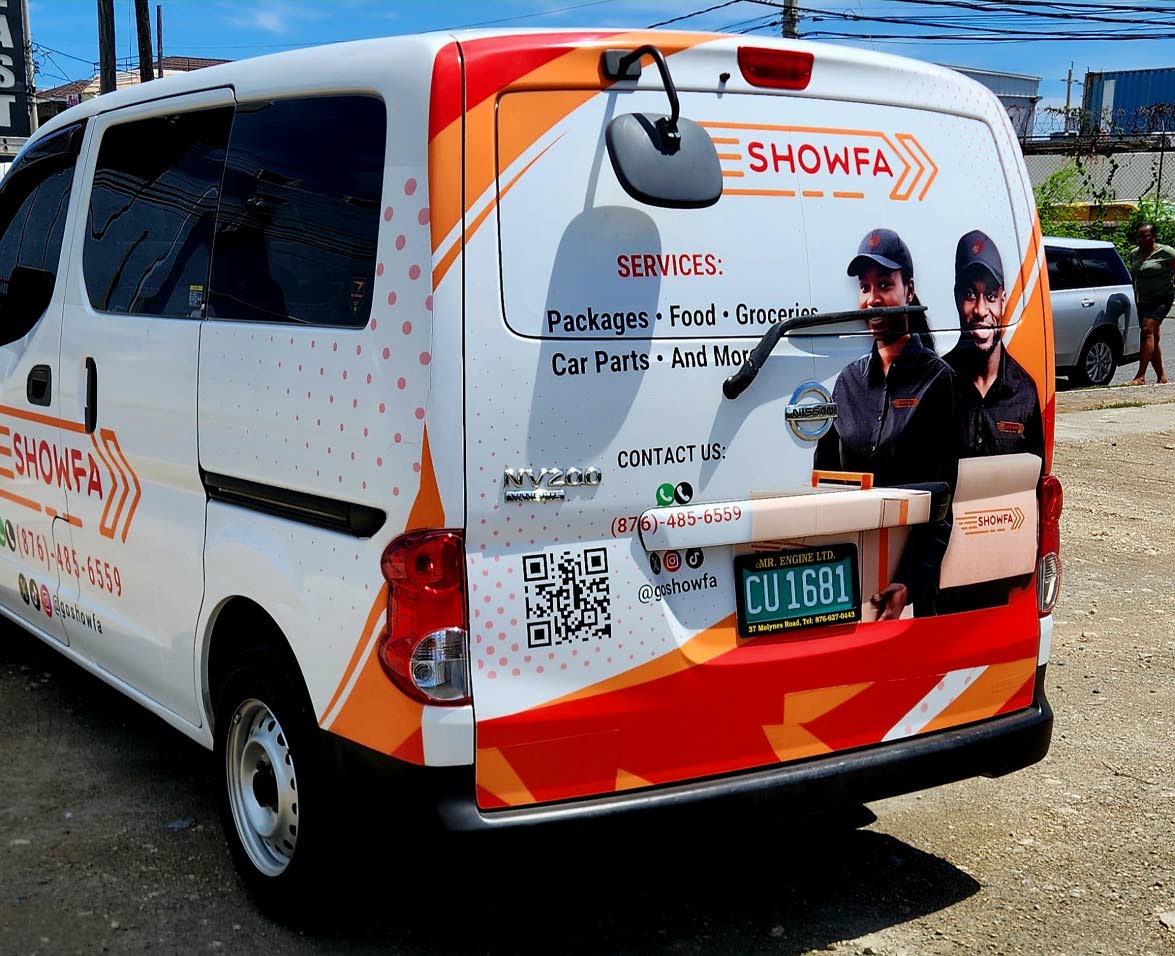
Showfa Express has built a multi-parish delivery operation using a fleet of compact and larger vehicles, supported by real-time tracking and chain-of-custody controls.


