



Jamaica fights AI misinformation; courts India and South America in tourism recovery push
TOURISM Minister Edmund Bartlett says his ministry is actively deploying its marketing budget to counter AI-generated misinformation that has threatened the sector’s recovery from Hurricane Melissa, while aggressively pursuing new tourist markets in India and South America.
Bartlett, in an interview with the Jamaica Observer last Friday, stated that false narratives and digitally fabricated images of storm damage — including deep fake videos and AI-generated ‘aftermath’ photos debunked by geolocation and digital forensics teams — had circulated widely since the October 28, 2025 hurricane, damaging the island’s reputation and depressing bookings.
“Destinations are now at risk of their reputation being tarnished by misinformation and disinformation,” Bartlett told Business Observer, pointing directly to the false posts. “We have examples of that where daily we have to be correcting false stories created and implanted…and when there is a disruption like a weather event such as Melissa that offers a new opportunity for this kind of reputational assault, it forces us to spend more on information management, perception management, and with that public relations as promotion and advertising.”
For the current 2025/26 financial year, the ministry’s allocated marketing spend stands at $4.5 billion, alongside dedicated support lines of $270 million for airlift and $163.5 million for cruise shipping. From Jamaica’s multi-year budget figures, indications are that the figure for marketing the country in the 2026/27 fiscal year could top $4.8 billion while another $457 million is expected to be set aside to help support airlines and cruise ships taking tourists to the island.
Despite the increased pressure on marketing and public relations, Bartlett indicated that the ministry would not be seeking a significant increase from what is expected to be allocated, reasoning that it was adequate given the constrained physical capacity, with only about 70 per cent of the island’s hotel room stock currently available.
The minister detailed the specific challenge of maintaining airline confidence, a task complicated by the false perception of the island’s readiness and central to the use of the dedicated $270-million airlift support fund. “Then you have the issue now of the attitude of our partners based on the perception that we are not either safe or ready or open,” he said.
“So now you have to go and incentivise even some of these partners, because bookings become a challenge…you have to tell them and let them appreciate that even if the flight is not full, don’t discontinue the route.”
He explained that incentives now focus solely on partnerships in marketing and seat support, explicitly ruling out direct revenue guarantees — a practice he said is no longer necessary for what he called “one of the most connected destinations in the region.”
The strategy appears to be yielding early results. “They’re coming in good. The rotations are less, but the load factors are high,” Bartlett noted. He added that in the first two weeks of the current winter tourist season, arrivals reached 45,000 stopover visitors and 65,000 cruise passengers, helping the country achieve 94 per cent of its target arrivals for calendar year 2025.
Beyond managing the immediate crisis, Bartlett identified long-term market diversification as a key pillar of the efficient spend. “We have to look at new markets, and new markets for us represent an investment,” he stated. “So we will be looking at India, and we will be spending a lot more energy on South America.”
The minister emphasised that India is a key focus, but noted that South America — particularly Brazil and Argentina — represents a growing source of long-stay visitors, with visa facilitation talks and direct flight discussions underway as part of the diversification push. In 2025, approximately 31,000 tourists arrived from South America, up 77 per cent on the prior year arrivals.
The India initiative specifically targets Delhi, Mumbai, and Chennai. Bartlett cited Emirates as a vital potential partner for connectivity via Dubai, alongside talks with Air India and leveraging existing European and North American carriers.
He, however, declined to say when he expects the Indian market to open up to Jamaica.
“Normally you know that I’m driven by KPIs, but because this is the first initiative that we’re making in the Indian market, we have to assess and determine what the take-up is likely to be, and then we begin to talk about how we can now drive the arrivals, whether through Dubai, which is the likely place, or through London, as is possible, or if we could get direct flights from India,” he said.
Pressed on whether the budget was sufficient, Bartlett affirmed its adequacy for current demand, adding that the pace of marketing would increase in lockstep with the return of hotel rooms. “The budget is…adequate to deal with the current demand,” he said. “As we drive further with the return of more of our inventory, then we step up the pace of our activities.”
He credited the private sector, including major brands like Sandals and Iberostar, as huge market drivers whose own advertising spend complements the ministry’s efforts. “I feel very, very blessed with the level of collaboration…The tourism family has been very united,” Bartlett said, highlighting the enduring recovery task forces established during the pandemic.
The minister declined to give full-year arrival projections, explaining that final figures depend on finalising reopening dates for hurricane-damaged hotels. He is meeting with key partners, including Hyatt and Royalton, through early February to lock in timelines.
“I expect that Princess will come back the first week of February. Sandals…by March, April,” Bartlett said, noting that the most significant delays affect the seven Hyatt properties — including Secrets, Hyatt Ziva, and Dreams — which sustained severe damage after being in the hurricane’s eye wall.
He indicated that this coordinated recovery effort will also inform a review of the Tourism Act, slated for Parliament in the new legislative year, to address the growing role of villas and Airbnb accommodations in the sector.
The review is expected to establish clearer regulations and tax structures for short-term rentals, which now comprise over 15 per cent of Jamaica’s accommodation stock and represent a substantial and rapidly growing subsector.
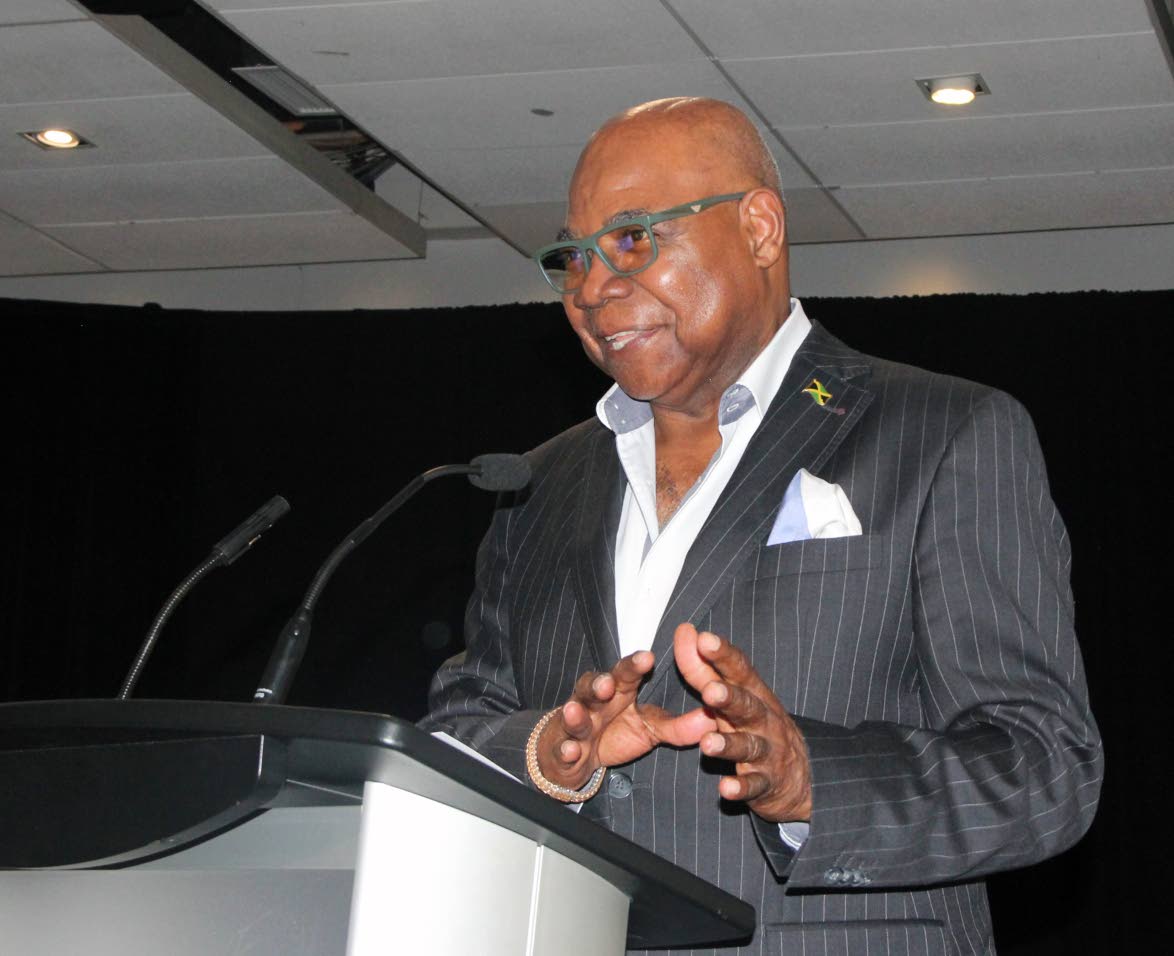
Tourism Minister Edmund Bartlett outlines Jamaica’s strategy to counter AI misinformation and attract new visitors from India and South America during the sector’s hurricane recovery.


