



WISYNCO’S US$35-M BET
New brewery positions Jamaican giant for US export push
Wisynco Group has begun the regulatory and licensing process to export beverages from its newly commissioned brewery into the United States, signalling an early move into what Chairman William Mahfood expects will become one of the company’s largest overseas markets over time — even as exports remain a small part of its business today.
“We’re now looking at the registration process and we hope to start exporting into the US and into the Caribbean markets within the next couple of months. We haven’t even started to look at the international markets yet in a serious way, but we see this as a big breakthrough,” Mahfood told the
Jamaica Observer at the official opening of the company’s US$35-million brewery and manufacturing facility at Lakes Pen, St Catherine, on Tuesday.
The move comes against the backdrop of a business that remains overwhelmingly domestic. According to Wisynco’s latest annual report, exports generated $1.23 billion in revenue in the 2025 financial year, accounting for just over two per cent of the group’s total revenues of $57.27 billion.
The bulk of sales — more than $55 billion — continues to come from the local market.
That imbalance is precisely what the new brewery is intended to address over time, though Mahfood cautioned that the company is still in execution mode.
“For now, our focus is really on getting the products launched properly and stabilising production. Exports will come, but we want to do it right. Other than Stone’s, which we do a lot of exports now…We will export some of the canned products that we already have, like Boom, Bigga, etc, those will be exported now,” he said.
The Lakes Pen facility, commissioned in June 2025, gives Wisynco Group Limited the ability to produce beer, stout, malt beverages, ready-to-drink products, and Stone’s Ginger Wine, which is manufactured locally under an associate arrangement for both domestic sale and export. The investment is part of a wider expansion programme that saw Wisynco commission several new production lines during the year.
Chief Executive Officer Andrew Mahfood said the brewery was designed less as a single-category play and more as a flexible manufacturing platform.
“This facility significantly expands our capacity, strengthens our ability to meet growing market demand, and gives us the flexibility to diversify our product portfolio in meaningful ways,” he said.
That flexibility extends to packaging — an important consideration as the company looks ahead to overseas markets. The brewery includes high-speed canning and glass bottling lines alongside existing PET production, allowing Wisynco to tailor output based on customer requirements and logistics constraints.
“A 40-foot container of Bigger in plastic holds roughly 1,500 cases. That same container will hold almost 3,000 cases of Bigger cans, which allows for much better absorption of freight and a more competitively priced product in overseas markets.” Andrew Mahfood explained.
Cans, he added, also offer longer shelf life than plastic bottles — a critical factor for exports that spend weeks in transit or distribution.
The company’s annual report highlights export growth as a longer-term objective, noting that new production lines are expected to improve shelf life, reduce freight sensitivity, and allow packaging that meets international standards.
Still, Wisynco has stopped short of quantifying how much the new brewed categories will contribute to export revenues.
Initial output from the facility is being directed primarily at the local market, where Mahfood said demand has been strong, even ahead of a full marketing roll-out, which was delayed following Hurricane Melissa.
“We’re seeing tremendous demand for these products already, particularly from the hotels and so on,” he said. “We really haven’t started marketing them yet because of Hurricane Melissa, so we pulled back a little. Now we’re focusing on the launch.”
The brewery has an initial capacity of about 150,000 hectolitres per year and has been built with room to scale. Director of production Devon Reynolds said capacity can be doubled relatively easily as demand grows.
“We are built to expand. The can line you’ve seen can do 30,000 cans per hour, and we’ve designed the space so we can add a much larger glass line as well,” Reynolds told the Business Observer during a tour of the facility.
The brewery has also been named the Devon Reynolds Brewery in recognition of Reynolds’ 43 years with the company and his role in leading the design and commissioning of the facility. Mahfood described the naming as a rare acknowledgement of long-service technical leadership in Jamaican manufacturing.
Currently, the facility directly employs about 85 people in manufacturing, with total employment linked to the operation — including sales, warehousing and distribution — estimated at between 350 and 400. Wisynco’s overall workforce now stands at roughly 2,600.
While the brewery positions Wisynco in brewed and alcoholic categories for the first time at scale, Andrew Mahfood said the company’s entry is anchored in longer-term consumption trends rather than immediate competitive disruption.
“Beer consumption per capita in Jamaica is about 20 litres. In Trinidad it’s around 40 litres, and in the US and Canada it’s closer to 65 or 70 litres. That suggests the market here has the potential to grow over time, and we want to be part of that growth,” he said.
An aerial view of Wisynco’s manufacturing complex at Lakes Pen, St Catherine, including the newly built Devon Reynolds Brewery, a roughly 200,000-square-foot facility commissioned as part of the company’s latest expansion programme.
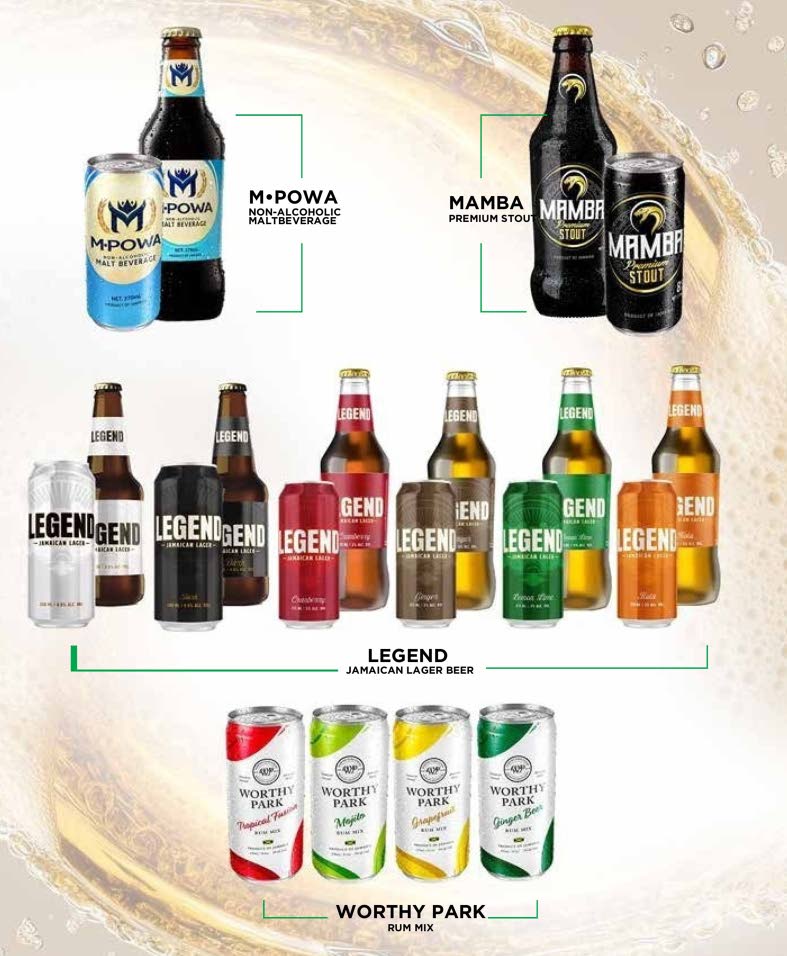
Wisynco’s new brewed product line, including alcoholic and non-alcoholic beverages, produced at the Devon Reynolds Brewery.
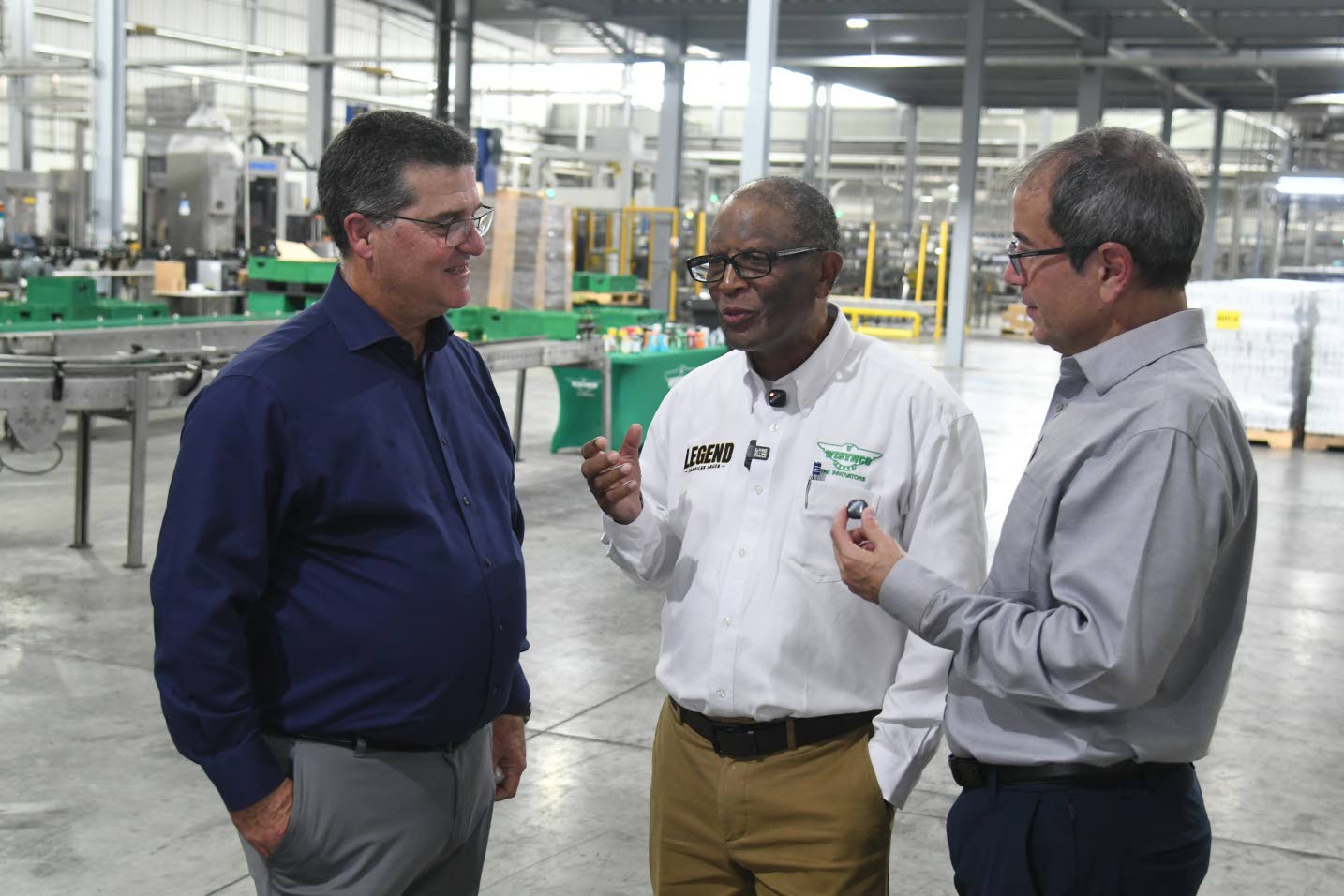
Production Director Devon Reynolds (center), for whom Wisynco’s new brewery is named, in discussion with Chairman William Mahfood (left) and CEO Andrew Mahfood as the company readies its export push. (Photo: Karl McLarty)
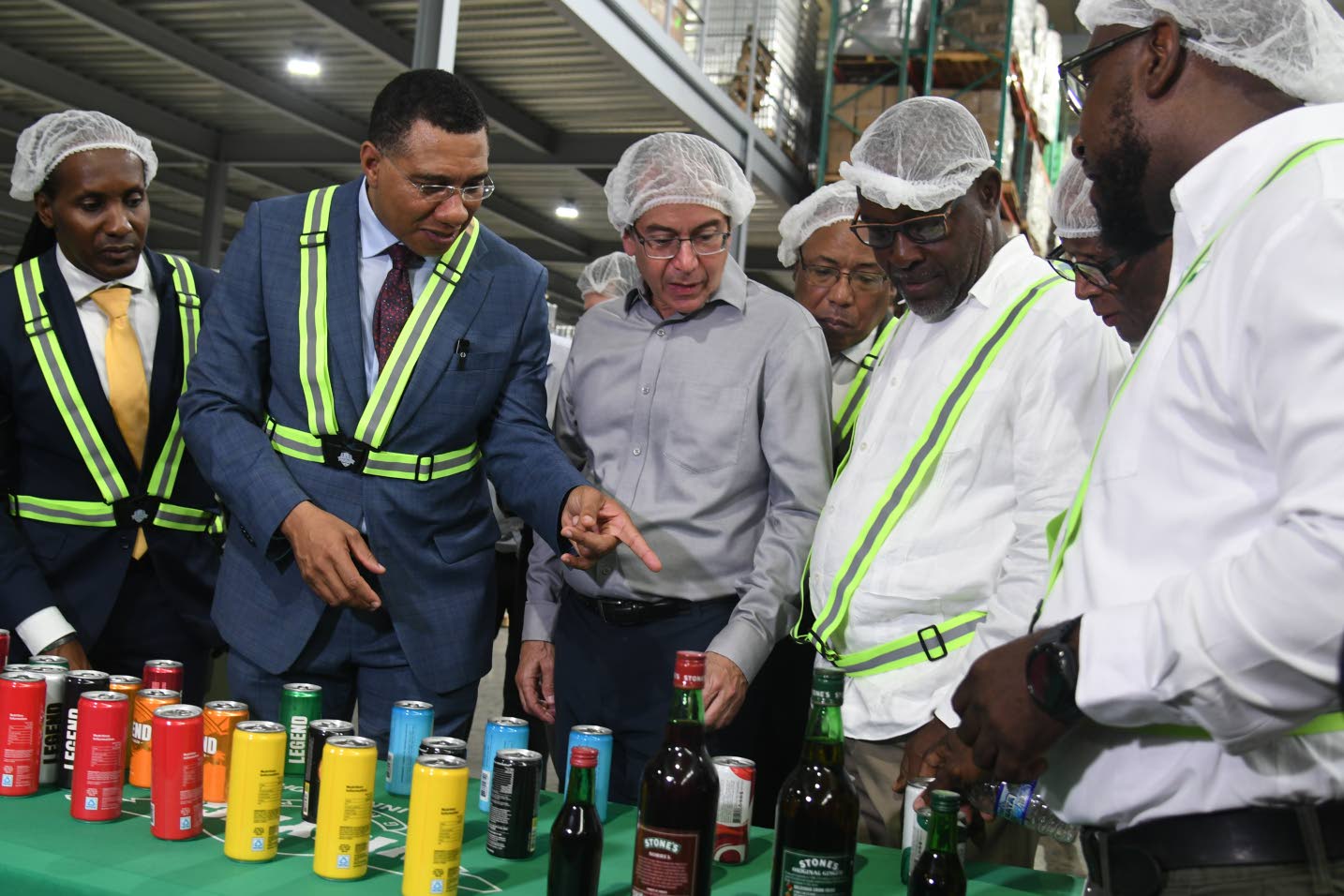
Prime Minister Andrew Holness (second left) and Wisynco CEO Andrew Mahfood (third left) during a tour of the Devon Reynolds Brewery, where the company showcased its new brewed products and export-ready packaging lines. (Photo: Karl McLarty)
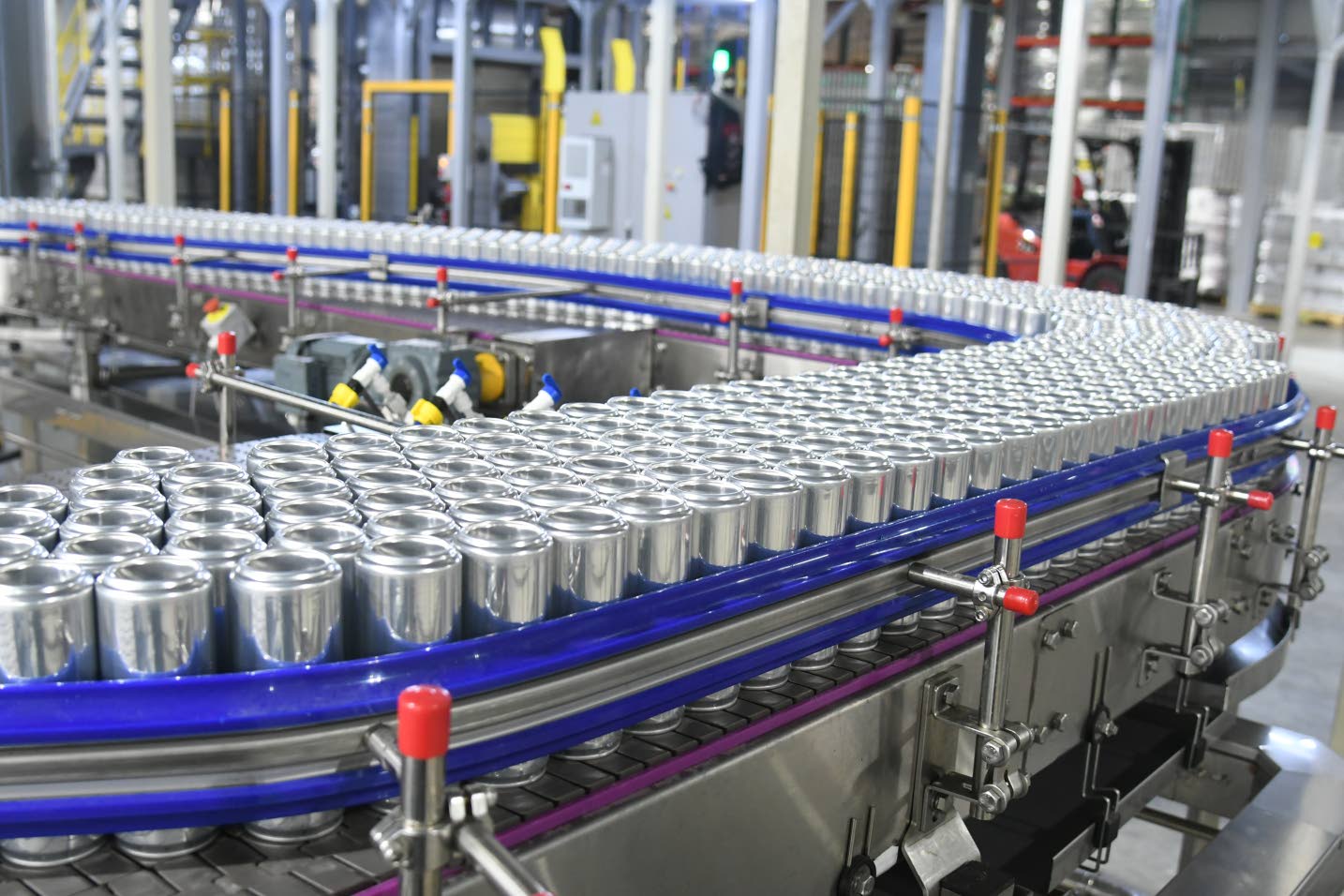
Cans move along Wisynco’s high-speed packaging line at the Devon Reynolds Brewery, capable of producing up to 30,000 cans per hour up to 6.5 million cases per annum, as part of the company’s expanded production capacity. (Photo: Karl McLarty)


