



The AI valley of good and…
“Don’t get high on your own supply.” This line has been widely credited to hip hop and other genres, but it originates from the 1983 classic film Scarface. In the literal context of the movie it means sellers of crack-cocaine and other hard drugs must never use them. The reasons are obvious.
Illicit drugs are extremely addictive. They literally destroy lives and livelihoods. Additionally, getting hooked on one’s own supply inevitably destroys present and future profits. Being addicted to one’s own supply is a bad business model.
The mentioned line from Scarface was spoken by Elvira Hancock (played by Michelle Pfeiffer) as lesson number two: During a scene in which she is advising Tony Montana (Al Pacino) on the rules of the drug game; right after Frank Lopez gives lesson number one about not underestimating the other guy’s greed. Tony famously ignores the advice and that contributes to his brutal downfall.
“Don’t get high on your own supply,” now iconic, has far wider application than the grubby world of illicit drugs.
Sellers of the lowest common denominator, deadly brain and mind poisons, crudeness and tomfoolery are rarely consumers of their products.
DISCERNMENT IS A MUST!
I have been doing a bit of reading and viewing of how several technologies and screen addiction, especially, are wreaking havoc on the vulnerable and developing brains of children, globally. These are some key observations:
• A number of developed countries — where many of these technologies originated — have begun to walk back, restrict, roll back children’s access to screen time.
• Many owners and top executives of some of the world’s biggest technology companies severely limit or don’t allow their own children to use smartphones until age 14, and in some cases even later.
• Artificial intelligence (AI) has some very enticing positives, but also some extremely concerning and frightening negatives.
• The 2024 Nobel Prize winner in physics, Professor Geoffrey Hinton — a British-Canadian cognitive psychologist and computer scientist widely known as a “godfather of AI” — along with other renowned scientists and experts have been sounding the alarm about unchecked/unmediated AI and its potential for catastrophic damage to human existence.
• We, in the developing world especially, need to be very careful that we don’t become addicted consumers or “junkies” for already-rich people who are eager to get us permanently hooked. Why? They get richer while we get poorer, weaker, and less respected.
Going forward, we need to, as we say in the streets, “look outtah we yeye dem”, especially as it relates to the adoption and embrace of technologies which research is proving — and has proven — are severely unhelpful.
We need to apply discernment.
Why is discernment so crucial? We have a local saying: “Anuh guh it a guh, ah come it ah come.” The reality is that the technology revolution is here. The AI revolution is here to stay. We must, therefore, embrace AI and other technologies discerningly in order to meet our unique needs.
And we must reject those technologies which, based on an abundance of verified research, will destroy our society. I believe especially ordinary folks are not being educated enough about either the negatives or positives.
“Don’t get high on our supply,” experts globally have warned. We must believe. We must listen.
Ponder this: ‘Back to basics: McPherson Middle School trades Chromebooks for pencil and paper’.
The Sentinel news service said among other things: “Citing an effort to improve academic, social, emotional, and behavioural outcomes, next quarter McPherson Middle School will require 6th to 8th graders to hand in the Chromebooks at day’s end, and complete homework assignments the way their grandparents did, with the old stand-bys of paper and pencil. The school used grant money to buy charging carts for each Chromebook, and students will be allowed to use them in the classroom, albeit sparingly.
“The newsletter the school sent to parents read, in part: ‘We know this is a significant change, and we expect a few hiccups along the way. However, we believe this decision is developmentally appropriate and ultimately in the best interest of our students. Research and classroom experience continue to show that reducing screen time benefits both learning and mental health, especially for middle school students. When daily device use is limited, students tend to be more attentive and engaged, experience fewer digital distractions, and build stronger social and communication skills. They also often report improved sleep patterns, focus, and overall well-being.’
School Social Worker Carrie Brock referred to a recent article in the American Academy of Pediatrics linking 12-year-olds’ ownership of smartphones to depression, obesity, and lack of sleep: “We need to be able to be a guard rail and safeguard for our children when it comes to unfettered access.” (The Sentinel, December 8, 2025)
I anticipate some are going to shout, “Higgins, Kansas is a solidly red state (Republican leaning), at the presidential level particularly, and therefore the decision at that school should be taken with a grain of salt.
Alright, I can understand that perspective.
Those who hug that viewpoint need to consider this, though, France, Italy, China, Brazil, South Korea, the United Kingdom (UK), United Arab Emirates (UAE), Netherlands, Finland, Hungry, have all imposed and/or are planning to impose national and/ or broad bans and restrictions. It would be a stretch to categorise most of these countries as having red state-like agendas.
Check this too, Algeria, Burkina Faso, Cameroon, Ghana, Iran, New Zealand, Portugal, Rwanda, Saudi Arabia, Tunisia, and many other countries, including Jamaica, all have policies restricting cellphone use in school. Red states-like agendas are not big currency in most of these countries.
Anyway, consider this from the British Broadcasting Corporation (BBC): “Australia’s world-first social media ban for children has taken effect, with throngs of teenagers waking up to find their accounts have gone dark. Others tell BBC they have already snuck past barriers and will continue scrolling and posting freely until they are caught.
“The new law means social media firms, including Meta, TikTok, and YouTube, must take ‘reasonable steps’ to ensure Australians aged under 16 don’t hold accounts on their platforms.
“The ban, eyed with excitement by global leaders and trepidation by tech companies, was justified as necessary to protect children from harmful content and algorithms — though critics have argued blanket prohibition is neither practical nor wise.” (BBC, December 10, 2025)
Is this food for thought for Jamaica or not? I think it is!
Some ministers and Members of the British Parliament have said they would consider the Australian model if it proves effective. Legislators in several countries have adopted a similar stance. I believe they are exercising wisdom.
A long time ago Bob Marley sang: “Wake up and live.” Among other things, this means we need to apply discernment to the happenings in our immediate environment and also the wider world. This is still very good advice.
Ponder this: Steve Jobs, a founder of Apple Technology Company, introduced the iPad to the world. Jobs. in a 2010 The New York Times conversation said his children hadn’t used the iPad and that his family strictly limited tech at home.
Bill Gates, co-founder of the software company Microsoft, confirmed in multiple interviews that his children got cellphones only at 14.
The guard rails these individuals, and others like them, have set up should make our antennae shoot up.
I believe we should interpret their restrictions as a warning to the world: “Don’t get high on our supply.” We need to take heed.
STRAIGHT FROM RIVER BOTTOM
“When fish come from river bottom and tell you that shark dung deh, believe him,” is a local saying that many Jamaicans repeat quite often. It means that if genuine and experienced people in a particular situation give you honest advice, you should believe them and take the necessary precautions to avoid serious or even deadly consequences.
Consider this excerpt from Professor Geoffrey Hinton’s speech at the Nobel Prize banquet on December 10, 2024: “Unfortunately, the rapid progress in AI comes with many short-term risks. It has already created divisive echo-chambers by offering people content that makes them indignant. It is already being used by authoritarian governments for massive surveillance and by cybercriminals for phishing attacks. In the near future, AI may be used to create terrible new viruses and horrendous lethal weapons that decide by themselves who to kill or maim.
All of these short-term risks require urgent and forceful attention from governments and international organisations.
There is also a longer-term existential threat that will arise when we create digital beings that are more intelligent than ourselves. We have no idea whether we can stay in control.
But we now have evidence that if they are created by companies motivated by short-term profits, our safety will not be the top priority. We urgently need research on how to prevent these new beings from wanting to take control. They are no longer science-fiction.”
Many other renowned scientists have also been warning about the dangers of unmediated AI. These are a few:
1) Stephen Hawking: The late theoretical physicist famously warned in 2014 that the development of full artificial intelligence “could spell the end of the human race”.
2) Yoshua Bengio: Another “godfather of AI” and a Turing Award winner has warned of the dangers of “out-of-control” AI, noting that some frontier AI models are already showing signs of self-preservation in experimental settings.
3) Stuart Russell: A professor of computer science at the University of California, Berkeley, has emphasised that the primary danger is not malice, but competence. A super intelligent AI could be perfectly effective at achieving goals that are catastrophic for humans if not properly aligned with human values, he says.
4) Max Tegmark: A physicist and AI researcher at the Massachusetts Institute of Technology (MIT) has been a leading voice in calling for a pause in the development of human-competitive AI. He advocates for the implementation of very strong safety guard rails.
I anticipate that those who take their daily bread from individuals who spew religious fanaticism and superstitious claptrap, along with those who drink poisons from conspiracy theorists, will conflate the content of this piece to help fuel their fixation with an inevitable and apocalyptic crash of Earth.
These celebrated scientists are not doomers. And neither am I. These scientists are not saying AI is The Four Horsemen of the Apocalypse spoken about in the Bible, Revelation 6.
As a matter of fact, the timely warnings of the scientists are perfectly in line with the instruction which God gave man when he created the Earth. Genesis 1:28: Subdue it and have dominion over the fish of the sea and over the birds of the heavens and over every living thing that moves on the Earth.”
We need to listen. We need to take heed.
MANY POSITIVES
Technology is good. Robots and digital technologies have helped doctors make faster and more precise diagnoses. Technology has enabled faster and more efficient communication, transportation, manufacturing, and trading. These are global pluses.
There is an unfortunate and long-standing notion that advances in technology invariably benefit a few, not the many. Well, just look around where you live and work today and you will realise that that notion is patently bogus. If you produce something which solves a problem, these are the best of times. Evolving technology, to me, means opportunities for humans to create and capture new and better frontiers.
What’s to fear? Some have theorised that by 2050, or maybe earlier, we humans will become indistinguishable from robots. This is known as the singularity in the tech world. This must not happen. We must act to prevent it.
PULL QUOTE
The reality is that the technology revolution is here. The AI revolution is here to stay. We must, therefore, embrace AI and other technologies discerningly in order to meet our unique needs… And we must reject those technologies which, based on an abundance of verified research, will destroy our society. I believe especially ordinary folks are not being educated enough about either the negatives or positives.
Garfield Higgins is an educator and journalist. Send comments to the Jamaica Observer or higgins160@yahoo.com

Apple founder Steve Jobs
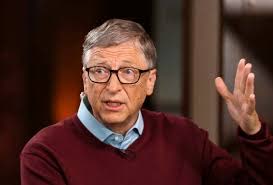
Bill Gates

MaxTegmark.
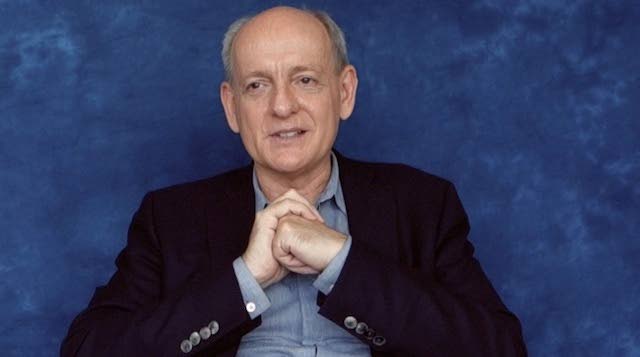
Stuart Russell.
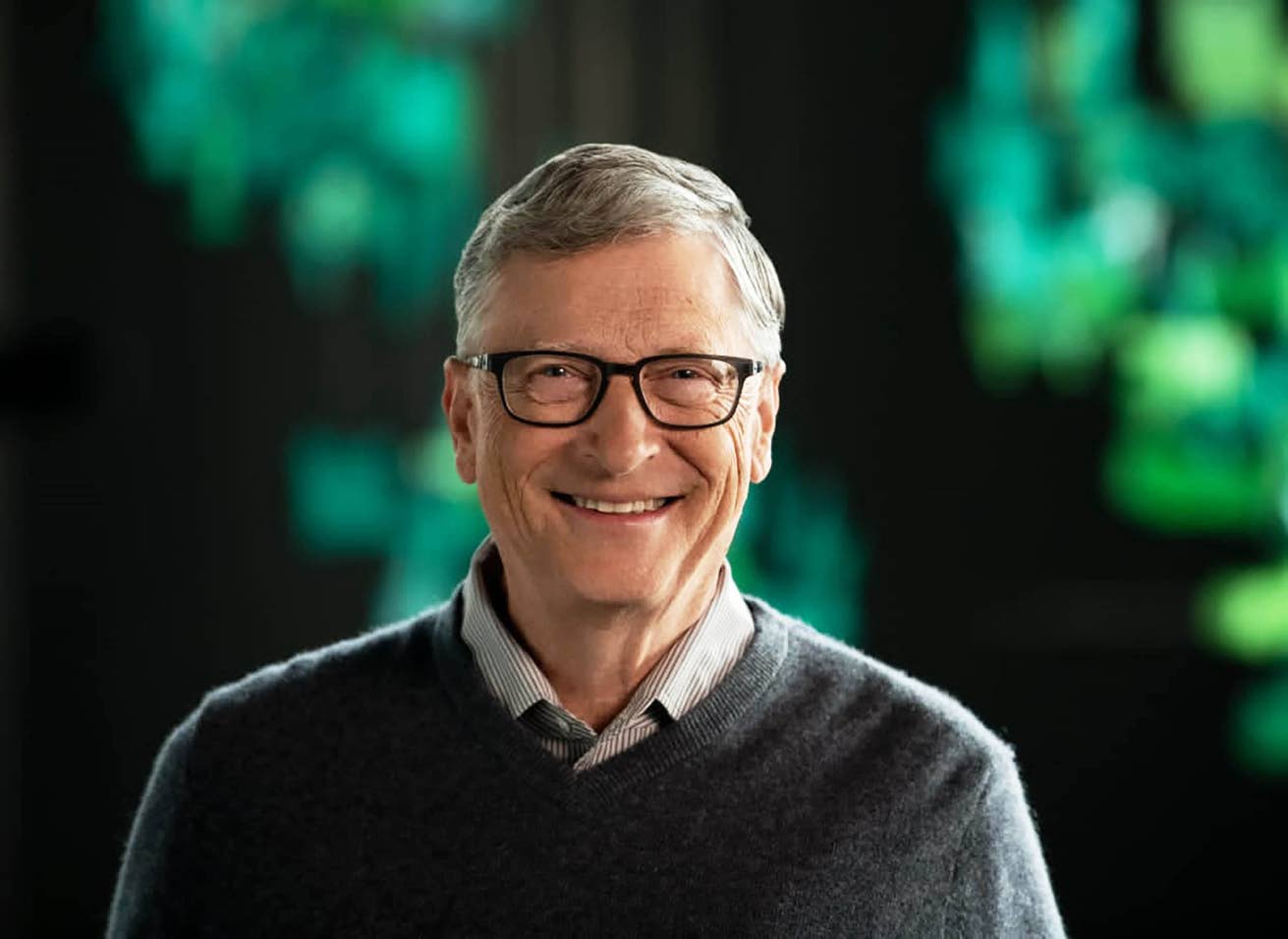
Bill Gates.


