



‘Butch’ Stewart’s love affair with Air Jamaica
Adorable ‘Love Bird’ became the little piece of Jamaica that cries
January 4, 2026 marked the fifth anniversary of the passing of Gordon “Butch” Stewart, Jamaica’s ebullient, generous and patriotic businessman. This month, in his honour, the Jamaica Observer publishes a series of updated articles recalling actions of “The Chairman” that inspired the nation. This is part one of the second in the series.
Twenty-two years ago, Gordon “Butch” Stewart, his big heart breaking, handed back control of Air Jamaica to the Government after 10 years, gave it US$20 million to fund the transition, and washed his hands of the one project that had defied the considerable genius of this marketing superstar.
It was a terrible blow to Stewart, after giving it his all and seeing the ‘Love Bird’ soar to new heights before being downed by economic turbulence and the disappointments by the Administration of the day which had minority ownership.
“Partnering Air Jamaica with the Government was a nightmare,” he told an interviewer. “They didn’t want to do any of the work and they didn’t keep their promises. We just kept on doing and presuming that the promises would be fulfilled. They never materialised. Our debt-swap agreement reached in 1999 to be signed ‘next week’ was never signed.”
Stewart, like many Jamaicans, had fallen in love with the airline that carried the hope and pride of the nation — adorably tagged ‘The little piece of Jamaica that flies’. He had taken it over on the brink of extinction and its recovery was nothing short of spectacular.
He quickly reimaged the airline, introduced unprecedented innovations such as on-time no-line schedules, champagne flights, and the flying chef; bought new state-of-the-art planes and made Air Jamaica the first choice of Jamaican travellers, with whom Stewart enjoyed an unusually rare relationship.
A down-to-earth man, Stewart enjoyed the adulation of Jamaicans in the United States, Canadian, United Kingdom, and Caribbean diaspora who would flood to his promotional events and relish the opportunity to chat and laugh with The Chairman, as he was fondly called.
Handing back the airline was therefore deeply personal to Stewart and he suffered like a parent who had lost a favourite child. In hindsight, maybe he would have seen it coming, had he not allowed his patriotic fervour to cloud his business acumen.
That, of course, was understandable because he was the founder of the phenomenally successful Sandals and Beaches resorts chain, and the flagship Appliance Traders Limited (ATL) which, coincidentally, he had started the same year in which Air Jamaica was launched.
And yet, Stewart was not the only outstanding businessman who had, tragically, fallen in love with Air Jamaica. Before him was his great friend, Michael “Mike” Fennell who had been lured in to run the airline five years before. It was a bad time to be taking over.
In the streets, the Love Bird was re-dubbed Ganja Bird and ‘Ganja Plane’, as drug smugglers had put the airline’s future in doubt. And Fennell was now about to get a rude awakening.
It’s not as if he did not know that Air Jamaica had more than its fair share of challenges. When he got the job, good friends joked that they didn’t know whether to wish him congratulations or commiserations. But there was a serious undertone to the pleasantry.
The United States Customs and the Drug Enforcement Agency had the airline under constant scrutiny. A hefty fine followed every shipment of ganja that was detected, and the Americans made it clear that if the fines were not paid, the planes would be seized on US soil.
Fennell, however, was brimming with confidence when he took on the job. Before that he had chalked up big-time success as head of the foreign-owned companies Metal Box and Berger Paints, creating history by becoming the first Jamaican managing director of British-owned Berger. If he could do that, Fennell reasoned to himself, Air Jamaica should be a stroll in the park.
Really?
On the Monday morning when he reported for work at Harbour Street in downtown Kingston, after he had met the staff and gone through the usual introductory paces, he went into his office and picked up the priority correspondence file. This should give him an idea as to what were the big ticket items that needed his immediate attention.
He was not quite prepared for the correspondence on US Customs letterhead that leapt out at him. The airline had been fined US$35 million for a huge shipment of marijuana that was discovered on one of its aircraft. Fennell dropped back in his big swivel chair and involuntarily let out a huge sigh.
But the moment lasted only briefly. He reached for an imaginary cigarette, sipped from an imaginary tumbler of white rum and got busy with the task of fixing the broken wings of an ailing airline.
When he finished with the supportive US Customs people, they not only reduced the fine — from US$35 million to just under US$3 million — but they agreed that instead of making any cash payments to them, Air Jamaica should invest the money in beefing up security arrangements that would prevent future drug shipments. The airline was able to bring the drug smuggling under control.
Fennell had at last clipped the wings of the so-called ganja bird. But as soon as that menace was behind him, he faced a worse nightmare — one this time that had its origins half-way across the world.
This was 1990. In pursuance of a long historical claim that Kuwait belonged to his country, then Iraqi President Saddam Hussein invaded the neighbouring Arab country and outraged the United Nations representing an outraged world. The United States put together a coalition that successfully drove Iraq out of Kuwait. But the war dubbed Operation Desert Storm had driven up the price of oil, with serious repercussions for Air Jamaica.
“We had to go into defence mode,” Fennell described it. “We sought strategic alliances with other airlines. This was successful because all the others were themselves facing major problems as a result of the cost factors emanating from the high fuel prices.”
However, it soon became clear that strategic alliances alone could not help and things got progressively worse. The airline was having a hard time meeting its day-to-day expenses. The owners, the Government, was unable to provide the required financing, other than guarantees for the old fleet of aircraft.
“There was no money for purchasing new planes or opening up new destinations,” Fennell recalled. The airline was in a fight for its very survival and he found himself fighting to salvage his own reputation as a successful manager.
All aspects of the airline’s operations, including the critical element of flight schedules, came under pressure. In the midst of all the problems, however, the airline never stopped paying close attention to its safety record, its ace in the hole.
“Another of our successes was that we were able to retain a slot at Heathrow Airport in London, the preferred destination in England,” he boasted.
But, concluding that it would never be able to provide the financing needed by Air Jamaica, the Government decided to sell the airline and mandated Fennell to lead the privatisation process. That was followed by many discussions and interviews with other major airlines in the United States, Canada, and Nigeria, but no takers.
An optimistic group which called itself the Air Jamaica Acquisition Group, or AJAG, comprising Peter Rousseau, Ivor Alexander and a Canadian partner soon collapsed, similarly followed by a John Issa-led initiative.
Stewart, never able to constrain his patriotic spirit, decided he could not watch the débâcle any longer without doing something. But it would be like nothing the great Butch Stewart had taken on before.
Tomorrow in part two: The Love Bird takes off on wings of national goodwill.
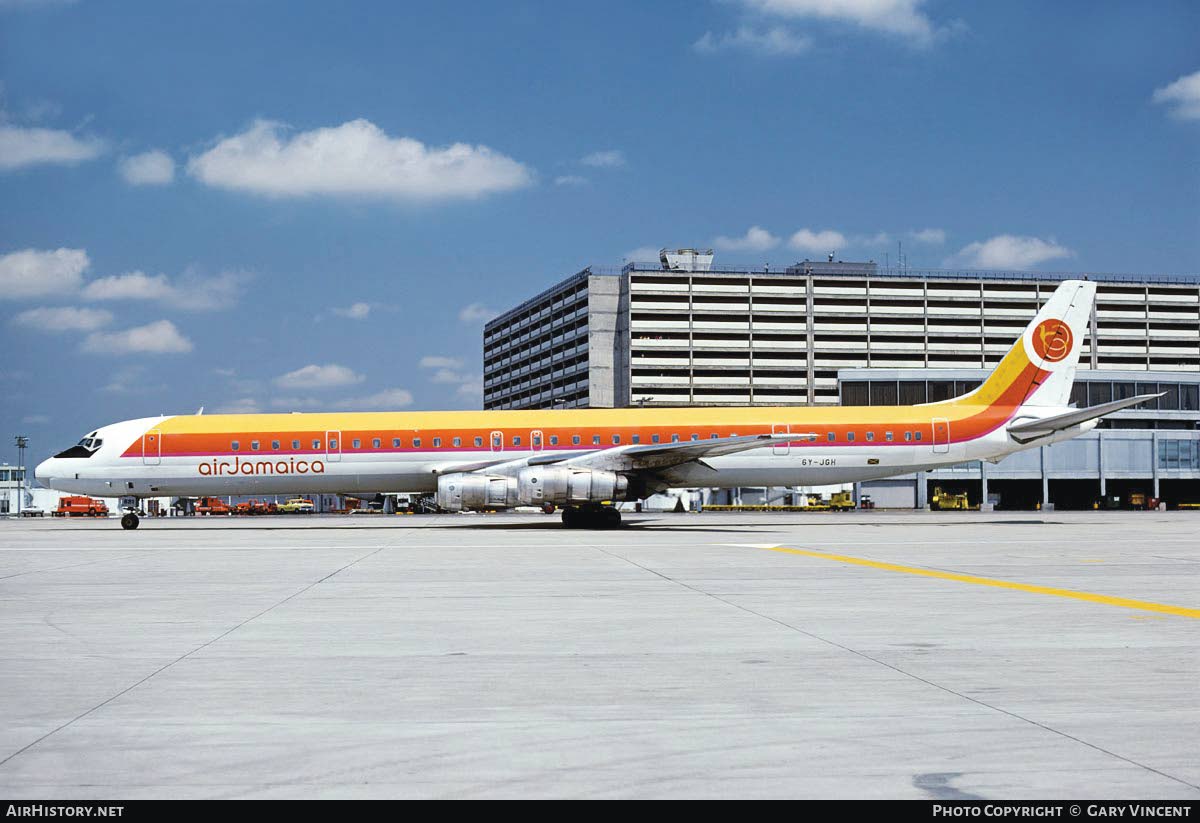
An Air Jamaica aircraft before controlling interest in the airline was acquired by a group led by Gordon “Butch” Stewart in 1994. Stewart, like many Jamaicans, had fallen in love with the airline that carried the hope and pride of the nation — adorably tagged ‘The little piece of Jamaica that flies’.
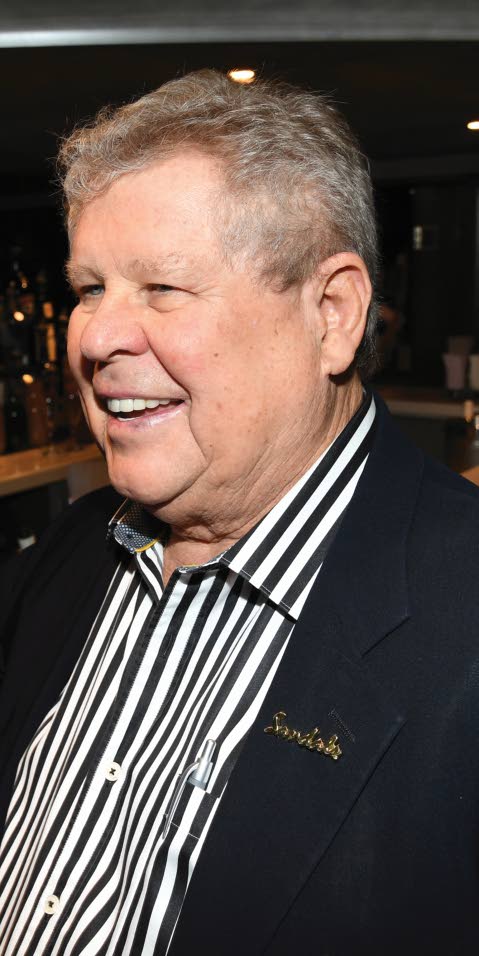
STEWART… after a group led by him acquired controlling interest in Air Jamaica he quickly reimaged the airline, introduced unprecedented innovations such as on-time no-line schedules, champagne flights, and the flying chef


