



Medical records mess
Hurricane highlights need to speed up planned digitisation project as hospitals struggle to retrieve patients’ data
MONTEGO Bay, St James — On any sunny day in recent weeks, a peek at the back of Falmouth Hospital’s records department reveals an unusual sight: medical records drying on a sheet of blue tarpaulin.
It has been more than two months since Hurricane Melissa’s wind and rain wreaked havoc on the hospital in Trelawny and others in the west, but the recovery continues.
“We have to be putting out medical records on the ground to dry,” Western Regional Health Authority (WRHA) Regional Director St Andrade Sinclair told the Jamaica Observer on the margins of a medical workers’ health fair at Pier One in St James last Friday.
“Some of them are irretrievable, so it’s major losses down here,” added Sinclair.
These records cover visits, diagnoses, prescriptions, and other information on patients treated at the facilities. Recovery is vital, and where it is simply not possible, the database has to be rebuilt.
“How we will now deal with it in the interim, we will have to start new records and get the new information. It will cost — because you may have to do over some X-rays, lab work, and all of that,” Sinclair explained.
“We will just have to create new forms and new information and start a new file,” he added.
While this may be inconvenient for some patients, they are not expected to incur any additional expense. According to Sinclair, the Government has allocated funds for the recovery.
“Phase one of that, about $666 million, is allocated to the Western Regional Health Authority, and we have been getting that money to recover the health-care clinics, recover the hospital, and help with staff,” he told the Observer.
Sinclair argued that though the Category 5 hurricane was unfortunate, it can be used as an opportunity to press ahead with planned digitisation of medical records across the country.
“What this will do is encourage us, and the Ministry of Health and Wellness to move to the next level where health-care information technology is concerned. That is like bringing on stream electronic medical records systems that can deal with the data,” he stated.
“What we are doing now is outdated. We are 25 years or 30 years behind where that is concerned, and it will just encourage us to move to that level quickly,” Sinclair added.
Two years ago, the Government launched an Electronic Health Records (EHR) System, a historic move in public health for the island, which is designed to operate a paperless system of record keeping.
The implementation of the EHR — which features a patient-registration system for appointment setting and assignment of patients in the triage process of a facility — will mean shorter wait times for patients, lower costs in providing services, increased productivity, reduced staff frustration, and increased service satisfaction levels.
Other features to make the process seamless include the interface of critical diagnostic imaging that will enable health-care professionals to see X-rays and CT scans on computers and tablets provided within the facilities.
Implementation of the system was initiated at May Pen Hospital in January 2024, with the test phase having started in November 2023.
The EHR is being implemented as part of the Health Systems Strengthening Programme, for which Jamaica has received funding of US$50 million from the Inter-American Development Bank. A portion of that sum was used for the acquisition of the EHR System.
Other facilities to benefit in this first phase of the implementation of the EHR were May Pen West Health Centre, Chapelton Community Hospital, May Pen East Health Centre, Mocho Health Centre, Greater Portmore Health Centre, St Jago Park Health Centre, Old Harbour Health Centre, St Ann’s Bay Health Centre, Ocho Rios Health Centre, and Brown’s Town Health Centre. Ironically, the list does not include sections of the country hardest hit by Hurricane Melissa.
In addition to destroying medical records, the October 28, 2025 storm also ruined personal documents of some health-care workers whose homes were damaged. They received support during the health fair which brought various agencies together in one location.
“Driver’s licence, passport, land papers missing, titles, any little thing, all those representatives are here,” Sinclair said during the recent fair.
“We have photographers, justices of the peace, we have legal representatives, we have RGD (Registrar General’s Department), we have PICA (Passport Immigration and Citizenship Agency), the NHT (National Housing Trust) is here as well and a number of different government agencies,” Sinclair said, adding that a number of private sector entities, such as Courts furniture store, were at the fair offering services.
“They are here to help and assist the staff,” he said.
The WRHA regional director praised staff who continued to care for patients during and after the hurricane, even when they were facing tremendous personal challenges.
“Over 200 and odd workers have been homeless since that, contrary to what others may believe. And we’re not talking about the over 1,200 and something people who were affected — whether their roof blow off or damage to their house somewhat. For a lot of people, inside of their houses are compromised, everything soaked, wet up, mash up,” he said.
“We recognise that the staff, who is our most respected and treasured asset that we can ever have, they have been affected badly. It took about maybe a month for some of them to recover and come back. Some of them were marooned in different areas and we had to take all of that into consideration,” added Sinclair.
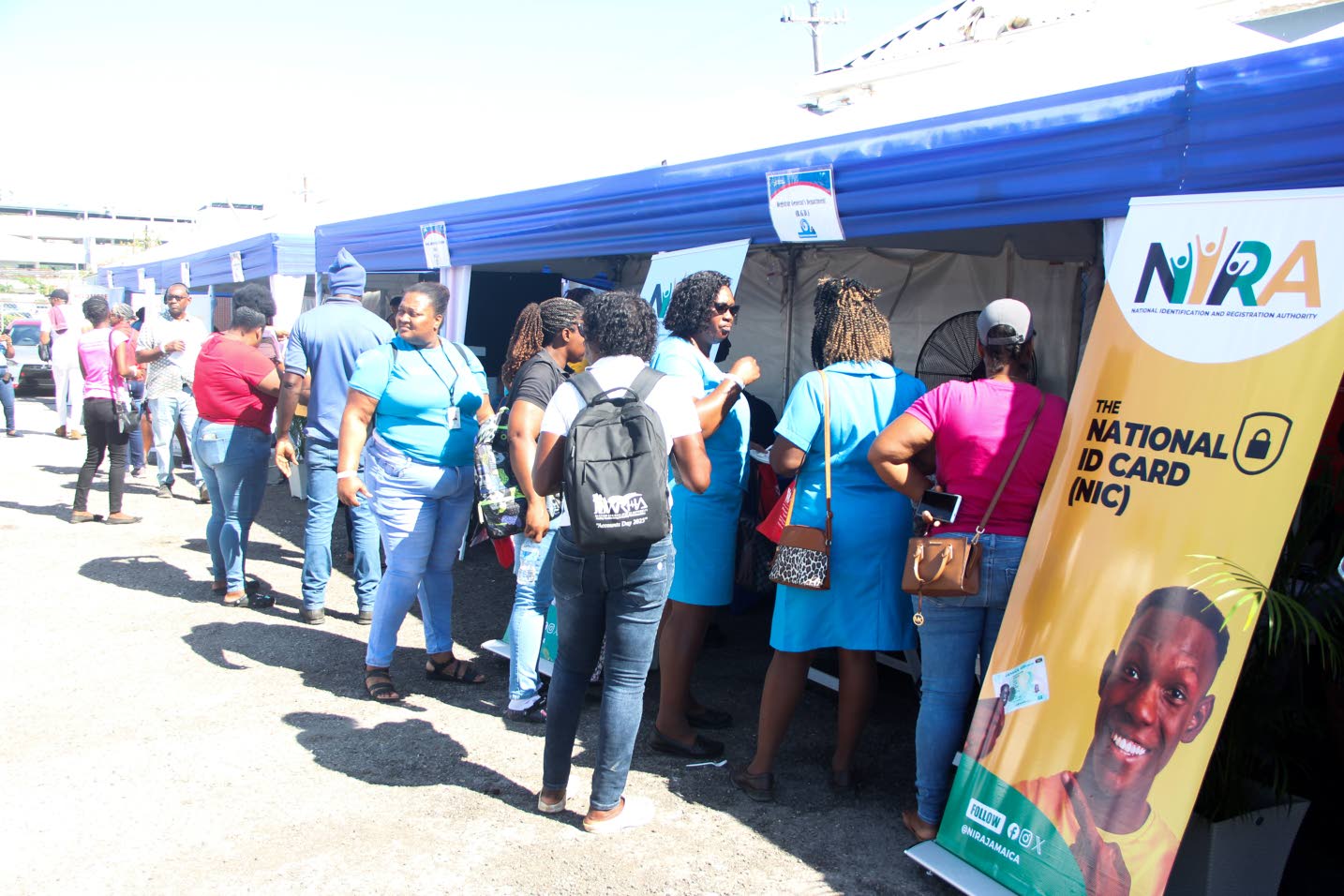
Health-care workers in the western region line up for services provided during a support fair staged for them at Pier One last Friday.
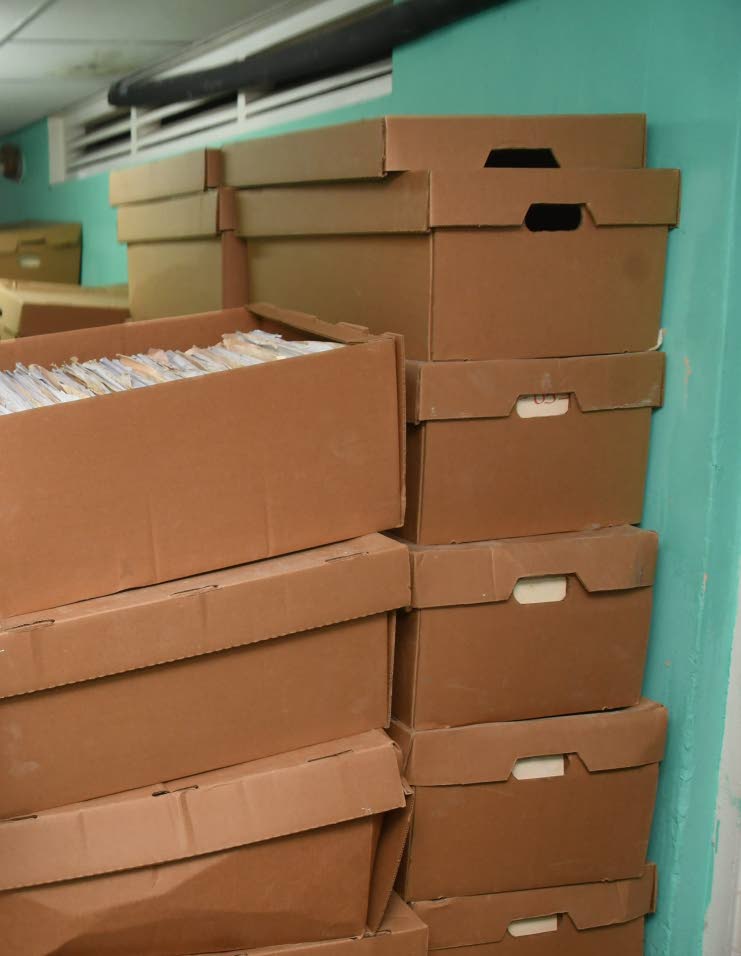
A stack of dockets at May Pen Hospital that healthcare workers would have to sort through to find patients’ medical records before the implementation of the Electronic Health Records system.


