



The PNP is at a crossroads
Dear Editor,
At the heart of the People’s National Party’s (PNP) current predicament lies an unresolved ideological tension. Born as a democratic challenge to imperialism in alliance with segments of the local capitalist class, the party has struggled to define a coherent position within the neoliberal order that now governs political and economic life.
Unable to decisively confront that system or articulate a transformative alternative, the PNP has become trapped between its radical memory and its cautious present — invoking change while managing continuity and celebrating a past it has not yet translated into a future.
In Jamaica, this contradiction has played out repeatedly — from bauxite dependency and International Monetary Fund austerity to a tourism-finance economy that concentrates wealth, exports profits, and treats Jamaican land and labour as inputs rather than stakeholders. The structure has remained consistent: external power aligned with local capital, producing growth without transformation.
The PNP emerged from a black middle-class nationalist impulse to replace colonial rule. Yet it was also shaped by the Drumblair elite — an intelligentsia steeped in Eurocentric thought, Cold War anxieties, and Fabian respectability. Its ideological grammar was never fully decolonised. Even at its most radical moments, the party sought legitimacy through European frameworks rather than grounding itself firmly in African epistemologies and Caribbean political economy.
Former PNP President Michael Manley remains the party’s towering symbol — its moral compass and political myth. But legacy has hardened into ritual. Revered rather than interrogated, Manley’s memory now functions less as a political engine and more as ideological shelter. The party speaks fluently about Manley, but hesitates when speaking to the present.
That hesitation is fatal in a generational moment defined by rupture.
Gen Z — born between 1997 and 2012 — is tech-native, justice-driven, globally connected, and impatient with nostalgia. This generation does not want recycled slogans or symbolic radicalism. It demands authenticity, cultural grounding, digital fluency, and structural change. It understands power intuitively — how it circulates through platforms, finance, culture, and global systems — and it is deeply sceptical of institutions that speak the language of transformation while practising the politics of delay.
Rupture is not, in itself, the enemy of political transformation. No meaningful political rupture has ever occurred without a moment of collective emotional awakening. History moves when people feel — when resignation gives way to urgency and private frustration becomes shared conviction. In this sense, political rupture can function as a catalyst for change, jolting societies out of inertia and compelling action where reason alone has failed.
Political rupture describes a heightened collective state in which people feel that history is opening, that the present order is no longer fixed, and that participation matters. It generates energy, courage, and mass engagement. It is the spark that turns scattered grievances into movements.
The PNP has experienced rupture before. The Manley era was marked by a genuine emotional awakening among the masses — a belief that dignity, justice, and sovereignty were possible. But that rupture was never fully institutionalised into a durable political economy or a deeply decolonised ideological framework. When the emotional tide receded under external pressure and internal contradiction, the party retreated into caution rather than renewal.
This unresolved relationship to rupture continues to haunt the PNP today. The danger is not emotional awakening itself, but mistaking emotional intensity for ideological clarity or mass enthusiasm for structural transformation. Rupture can open political space — but without discipline it collapses into nostalgia, personality worship, or moral absolutism.
If the PNP is to survive as a living political force — and not merely as a museum of past glory — the burden of renewal cannot rest on memory alone. Memory is not strategy. Legacy is not vision. Renewal must be carried by those willing to confront the party’s contradictions without reverence or fear.
That moment now rests with Damion Crawford, Isat Buchanan, and Allan Bernard.
Each represents a different doorway into renewal. Crawford brings policy intelligence sharpened by contemporary economic realities. Buchanan embodies constitutional courage rooted in justice and the unfinished work of decolonisation. Bernard represents organisational clarity and movement discipline — an understanding that political power is built, not inherited.
Together, they symbolise the possibility — not the guarantee — of a PNP capable of speaking in the language of the present: digitally fluent, culturally grounded, politically literate, and morally decisive. A party able to engage Gen Z not as heirs to a frozen past, but as architects of a new future.
But symbolism is not enough.
This is a summons, not a coronation.
The call is clear: Break with inherited caution. Interrogate neoliberal orthodoxy honestly, not quietly manage it. Reclaim the African redemptive tradition not as ornament, but as ideological spine. Speak directly to Gen Z, not as apprentices to history, but as partners in transformation.
This is not a call for cosmetic rebranding. It is a demand for political courage.
History will not wait. And neither will the generation now coming into its power.
O Dave Allen
odamaxf@yahoo.com
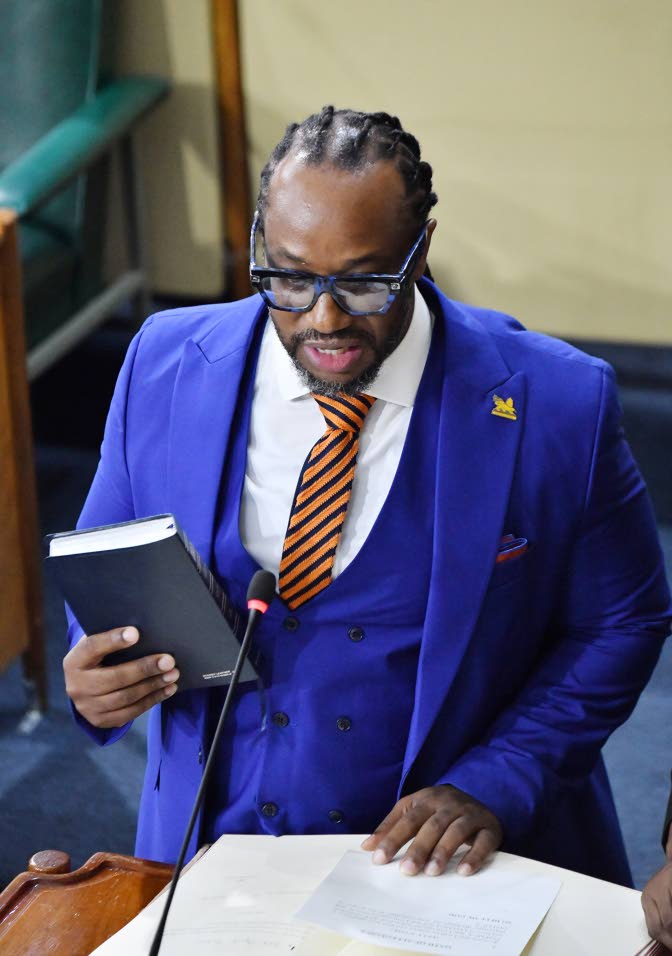
Isat Buchanan (Photo: Naphtali Junior)
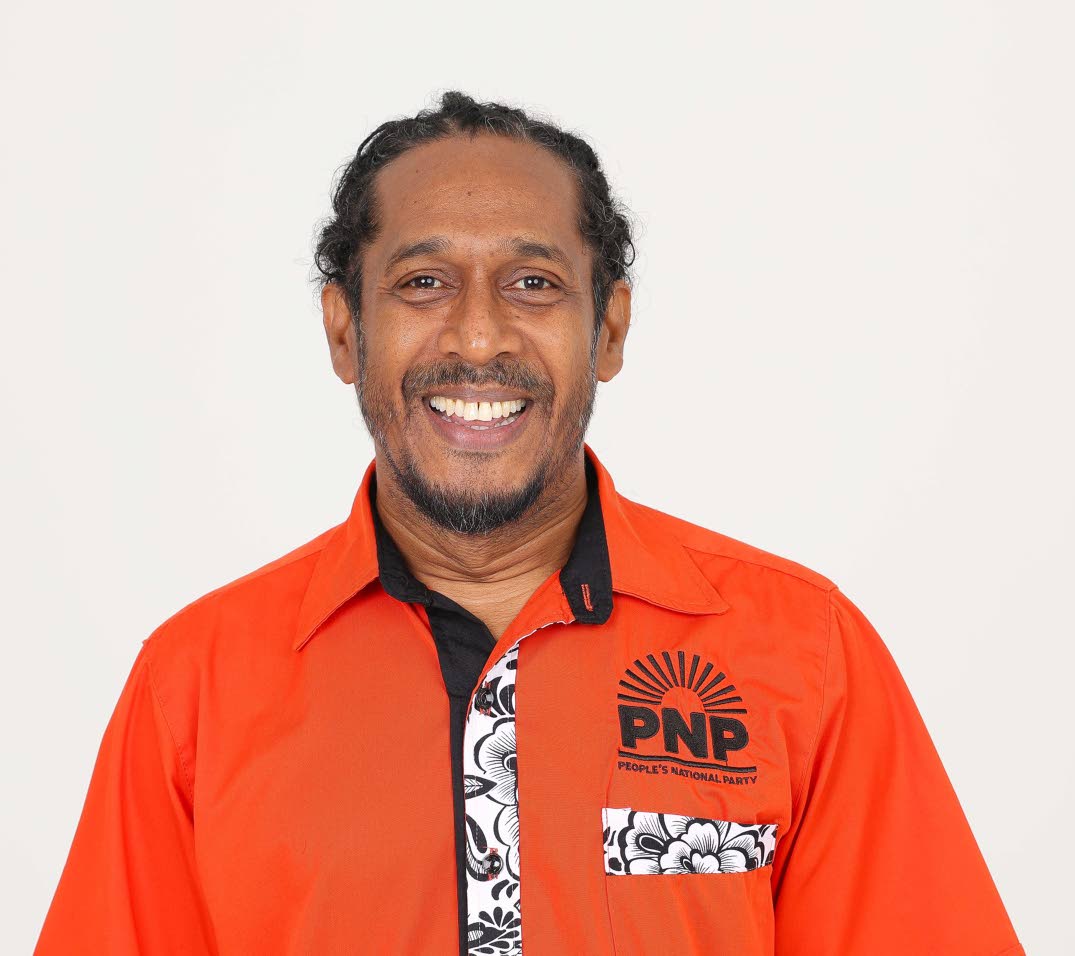
Allan Bernarda
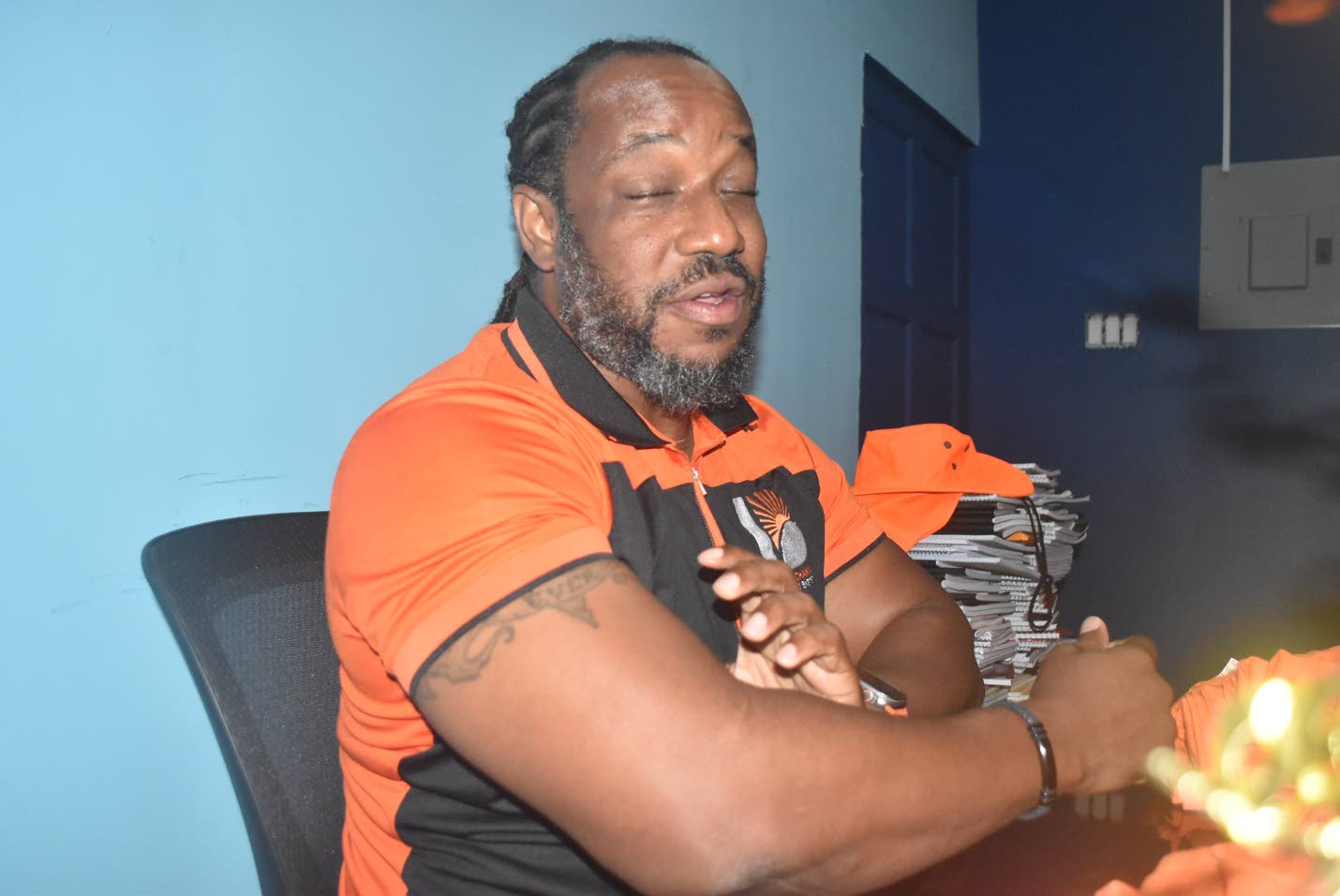
Isat Buchanan (Photo: Everard Owen)


