



Teens ditch school for work
St Elizabeth institutions experiencing low, fluctuating student turn-out after Melissa
BLACK RIVER, St Elizabeth — Two weeks following the resumption of schools in this south-central parish, leaders at some secondary institutions are concerned about the fluctuating turn-out of students.
For the administration at Black River High, Newell High, and Maggotty High, the turn-out remains low in some instances on a consistent basis, with principals saying the teenagers have taken on jobs including construction, and others have relocated to other parishes.
Principal at Newell High Audrey Ellington said of the approximately 700 students enrolled, the school has so far only accounted for just over 400.
“Last week Tuesday and Wednesday we had over 400 students attending and then it went back down to about 365… [Some] days it is 200 and odd students, which is pretty low for us, especially at the beginning of a term,” she said on Monday.
Ellington said it is concerning that the turn-out is not over 400 students, and recently called a Parent-Teacher Association (PTA) meeting focused mainly on upper school students.
“It is a fluctuation, and that is something that we are looking at. Last week we had a PTA meeting with the parents of grade 11 students, because we wanted to speak with them about School Based Assessments and it was disappointing for us, because I was looking for at least 30 to 40 parents, but we only had 19 parents coming out. That was somewhat daunting for us, but we carried on and we continue to send out text messages hoping that the parents will respond soon,” she said.
She added that the reason given for the low attendance is that the students have become labourers on construction sites amid the rebuilding efforts underway in the parish.
“We are not getting the feedback that we would want. I know we have reached out to parents and they promised us that they will send the children. What we find happening though is that the older students, grades 10 and 11, many of them are working, especially the males. They are engaged in construction work and you know with getting $5,000 a day or $6,000 a day some of them see that as big money at the moment,” she said.
“Our guidance counsellor has also been going out to encourage them to come back, because we offer construction [through] National Council on Technical and Vocational Education (NCTVET) and [they can] get their certification,” she added.
Ellington said efforts to reach some parents by telephone have also been challenging due to communication issues.
“We are thinking of creating teams that will go out into the different communities. We still have some unreliable connectivity, so sometimes the calls don’t go out as we would wish and some people are still without electricity, so charging [devices] may be a problem for them,” she said.
Prior to category five Hurricane Melissa’s wrath on October 28, 2005, Newell High saw on average 500 students consistently attending school. However, over two months since the storm wreaked havoc, some families are still living in substandard conditions, forcing children to move to other parishes.
“We know that some of them were relocated, so because the houses got damaged families that have relatives living outside of the parish would have taken a child in, and then the parents would bounce around under the tarpaulin trying to get things back together,” said Ellington.
“I have seen students on the street. They say, ‘we coming back, but we are not ready yet, so you will see us next week’. Then the other thing for the grades 10 and 11, we find out that they are working, so they don’t come as we would want them to,” she said.
The school leader also expressed concern over the low registration for external exams.
“Our cohort of grade 11 students should be 123 students. We can account for 90 who came even for one day since the hurricane and we are registering students for examinations. We got some students to register for Caribbean Secondary Education Certificate (CSEC), but with NCTVET, where we expected the numbers to be up, we realised that we did not have the numbers and it is only 19 parents who came and it is disheartening for us, because we are saying that is the cheapest of the exams. Even if they can’t [pay], we are not going to turn them back. The school will absorb [the fees] if the ministry doesn’t pay, yet still the students are not turning up,” she said.
“I have spoken to other principals in schools similar to ours and it is the same challenges they are having, even in parishes that were not affected as much as we were, so something is not right somewhere.”
Principal at Maggoty High Sean Graham shared similar sentiments.
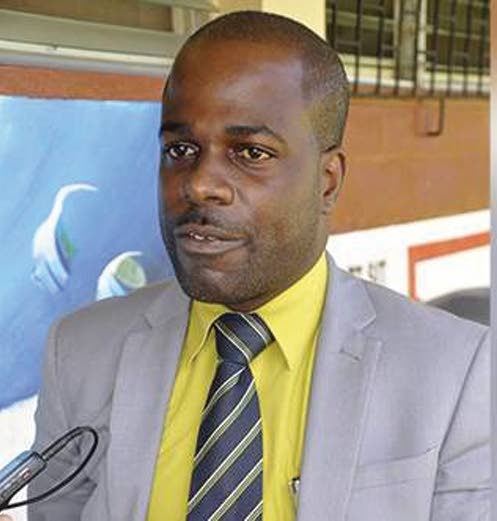
“I am concerned about the numbers that I am seeing, especially for grade 11,” he told the Jamaica Observer. “This was an issue from November, because when we had emergency school where we only had grades 11 and sixth formers, out of a cohort of about 230 students, the highest we saw on any given day was 120 students,” he said.
“There is a slight drop off with the other grades. One of the things I have asked the guidance counsellors to do is to give me some feedback as to what is happening, because we know that students naturally would be displaced, but then there are other things,” he added.
He is pushing for support for students’ nutrition, as he cited it as a possible reason for the low and inconsistent turn-out of students.
“I am encouraging the Government to look at finding ways, especially for the rest of the school year, not to allow students in these [affected] schools and their parents to have to worry about certain things [like] fare, and also to provide a hot meal as we did when World Central Kitchen was at the school,” he said.
He too said the absence of some students may be linked to them being employed, or having relocated to other parishes.
“Everything comes down to economics. Many of those boys and even some of the young ladies, if they have job opportunities they are going to take them, because now the house needs support, [they need to] buy furniture, repair roofs, and all of that. Some are [working] legally and some illegally, that is what we have to consider,” he said.
He continued: “Parents won’t necessarily tell us, but the general issue is economics. They can’t afford to send them. For the rest of the school year the Government should provide support for nutrition.“
Graham is also hopeful that work will begin soon to rebuild and repair 16 classrooms that were damaged following an assessment done by the National Education Trust.
“It was done in the first week since we returned to school. We have had visits from sub-contractors, engineers, and the project manager. We are discussing some things, because ours won’t be any easy fix… I am to push all the necessary stakeholders so we can have as many students inside so they can learn and also get the necessary tools for social development,” he said.
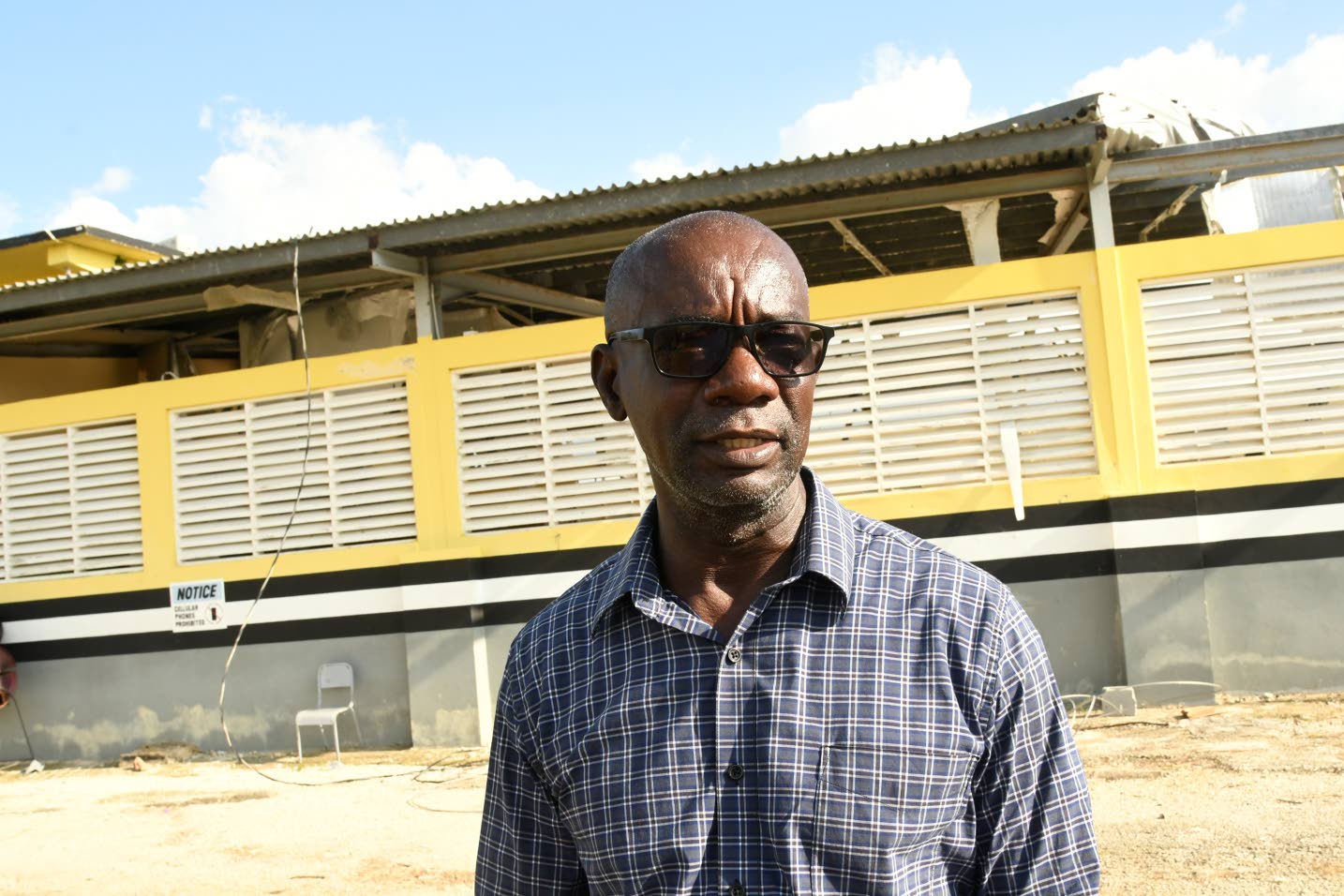
Meanwhile, Principal at Black River High Christopher Romans said while he couldn’t account for the number of students working, he has received reports of it happening.
“There are a few students who are working. I have seen a grade nine report that there is one boy listed there as working. The extent to which others are working I can’t quantify, but some students have not returned and some students may not be attending frequently, because they could be working some days of the week,” Romans said.
“Since January, the attendance rate per grade varies, between grades seven, eight and nine, it is about 74 per cent of the students attending on a daily basis. For upper school, it is about 65 per cent on a daily basis,” he added while pointing to an ongoing uniform drive to assist students.
“We also give them school jerseys, because we want some level of normalcy at school,” he said.
For his part, Principal at Sydney Pagon STEM Academy Milbert Miller said the institution is seeing a steady increase in the turn-out of its 750 students, after focusing on follow-up interventions.
“We are about 60 per cent of the cohort now. The first week we had a maximum of close to 300, last week we were closer to 500, so the numbers are increasing,” he said.
“One of the things we are tracking is to see those who came the first week and did not return the second week and those who came just one or two days and we are also tracking those who haven’t returned any at all, so our guidance counsellors are on it to do the home visits and calls to find out what is happening. We are doing that and we are seeing the numbers increasing gradually,” he added.
Principal at Black River High Christopher Romans said while he couldn’t account for the number of students working, he has received reports of it happening (Photo: Karl Mclarty)

MILLER…we are about 60 per cent of the cohort now.
GRAHAM…I am concerned about the numbers that I am seeing, especially for grade 11.


