



Bauxite blow
...Opposition challenges fairness of $350-m compensation payout over six years
QUESTIONS are mounting over whether communities affected by bauxite mining are being fairly compensated, after Parliament was told that thousands of residents have shared less than $70 million annually over the last six years.
Mining Minister Floyd Green, while responding to questions asked by Opposition Member of Parliament Peter Bunting, told the House of Representatives on Tuesday that compensation paid to residents for dust, noise and other nuisances caused by mining between 2020 and 2025 totalled approximately $350 million.
The figure triggered pushback from the Opposition over whether the payments reflect the scale of disruption experienced in bauxite communities.
Bunting, the Member of Parliament for Manchester Southern, argued that the compensation figure falls far short of what families endure daily from the disruption linked to mining operations.
“Does the minister believe that given the thousands of households that have been impacted by bauxite mining in South Manchester…that 50-something million a year in total compensation… is adequate compensation for the dislocation, the dust, the noise, and other nuisances which they suffer in their day-to-day lives? And further, is the minister aware that when you break down what they pay by household, that the amount per day is a mere 60-something dollars, not per person, per household?” Bunting questioned.
“This is people who live beside haul roads with heavy equipment going by their house every day, coating everything in dust. Their children are suffering from sinus [and] that 60-something [dollars] cannot even buy two Panadol tablets at the local shop, it cannot even buy a dose for one person, so is the minister prepared to champion the rights of these residents to ensure that they get fairer compensation from these companies?” queried Bunting, who had also sought answers on the compensation to farmers for crop damage by the bauxite companies.
Responding to that question Green said there is currently no centralised record detailing the extent of crops damaged by mining activities between 2020 and 2025, or their assessed value.
He explained that compensation is handled on a case-by-case basis, largely through community councils or direct engagement with mining companies.
According to Green, assessments are typically informed by the Rural Agricultural Development Authority (RADA), which evaluates factors such as crop type, maturity, quantity, and prevailing market prices before compensation figures are agreed.
However, Green admitted that no standardised system exists for tracking losses or ensuring consistency in payments across affected communities.
The disclosure drew concern from Bunting who argued that the absence of a formal database, or uniform assessment method, leaves farmers vulnerable and undermines transparency in how compensation is calculated.
“Minister, I don’t think that is acceptable because of the power imbalance and because of the information asymmetry. I don’t know why we can’t determine a measure [for] RADA [or] one of our experts to say — if it’s pumpkin is the crop — what is the compensation per acre, hectare of pumpkin and so on. That can’t be beyond us to develop a standard that is used to guide this compensation. Of course each farmer may have a different mix of crops, so we know that it will be different, but the question is: Can’t we establish an objective basis for compensation for replacement of crops?” Bunting queried.
But Green did not concede that the compensation framework was inadequate, telling the House that many of the payments were negotiated through existing community structures and that the Government was now examining ways to strengthen oversight and accountability.
While he did not directly dispute Bunting’s breakdown of the figures of payments made to communities, the minister said the issue of compensation could not be viewed in isolation and must be considered alongside how mining operations are regulated, how communities are engaged, and how land is managed after mining has ended.
Bunting also raised concerns about the slow pace of land rehabilitation in areas already mined, warning that communities were being left to live among scarred landscapes long after mining is completed.
He told the House that large sections of South Manchester remain unreclaimed years after mining activity ceased, despite repeated assurances that rehabilitation would follow.
“There are sections that look post-apocalyptic. The areas are mined out, they look like a bomb fell on them. They have not been rehabilitated, although no mining has taken place for over a decade in some cases; you see no rehabilitation,” he said.
Bunting also questioned why some bauxite pits remain uncertified despite being largely exhausted, and charged that companies are using technical excuses to delay rehabilitation.
The Opposition legislation also pressed the Government on whether penalties for delayed rehabilitation are being enforced, as he pointed out that companies could face a US$25,000-per-hectare penalty if lands are not certified within three years of mining being completed.
In response, Green said the Government had begun tightening oversight of the sector and had ordered a full audit of bauxite lands to determine what had been mined, what had been rehabilitated, and what remains outstanding.
“I have mandated that we do a full audit of the bauxite lands that either have been mined and reclaimed but not yet handed back to the Government,” Green said.
He added that lands no longer earmarked for mining would be returned to the commissioner of lands.
Green said the Administration is now taking what he described as a “zero- tolerance approach” to delays in certification, noting that more than 70 hectares should have been rehabilitated by the end of 2025.
He confirmed that the commissioner of mines had already written to companies that missed deadlines and said penalties could be applied where delays could not be justified.
However, he acknowledged that some delays stemmed from unresolved land ownership issues and technical challenges associated with mining, including the blending of ore from different sites.

GREEN…compensation paid to residents for dust, noise and other nuisances caused by mining between 2020 and 2025 totalled approximately $350 million (Photo: Karl Mclarty)
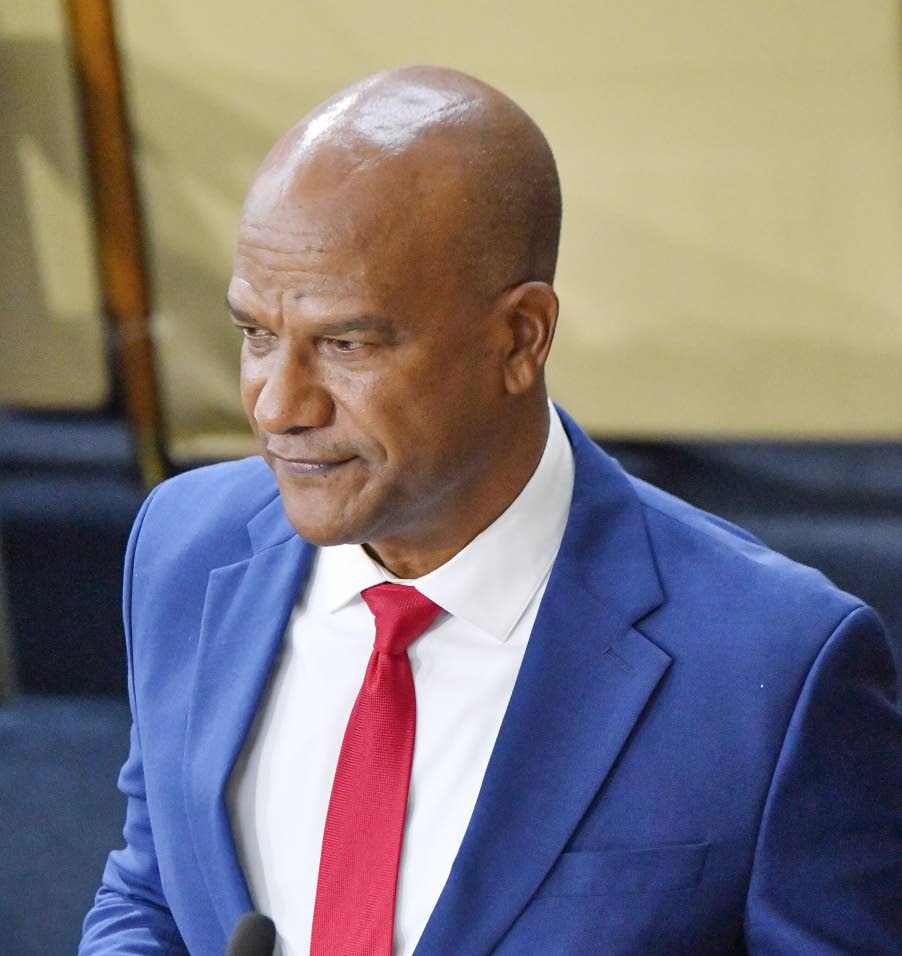
BUNTING…the compensation figure falls far short of what families endure daily from the disruption linked to mining operations


