



Realigning Jamaica’s early childhood sector in a time of crisis
Hurricane Melissa did more than damage roofs and classrooms across western Jamaica, it exposed long-standing fractures in our early childhood education sector that we have learnt to tolerate for far too long.
In communities where basic schools were already operating on the margins — under-resourced, unevenly supervised, and heavily dependent on goodwill — the storm merely accelerated an uncomfortable truth: Early childhood education in Jamaica remains structurally fragmented, inequitable, and misaligned with the standards we publicly claim to uphold.
This moment, painful as it is, presents an imperative — not simply to rebuild what was lost, but to refocus, realign, and reform a sector that sits at the very foundation of national development.
Early Childhood Cannot Be an Afterthought
Early childhood education is not a peripheral concern. International research has long established that the most critical cognitive, emotional, and social development occurs before the age of six. Countries that demonstrate strong educational outcomes invest deliberately at this stage, recognising that early intervention yields the greatest long-term returns.
According to UNESCO, children who participate in quality pre-primary education are up to twice as likely to achieve minimum proficiency in reading and mathematics in later years compared to those who do not. This finding reinforces what educators have observed for decades: Early childhood education does not merely prepare children for school, it shapes their entire learning trajectory.
Locally, the Ministry of Education, Skills, Youth and Information has reported near-universal enrolment at the early childhood level. Yet enrolment alone does not equate to quality. The devastation caused by Hurricane Melissa has magnified disparities that already existed between institutions serving the same age group, often within the same communities. While some infant schools — fully supported by the State — will recover through structured public funding and intervention, many basic schools, owned and operated by churches or private entities, now face uncertain recovery pathways.
The call to align Jamaica’s early childhood sector with international standards is not theoretical. I recently attended the National Association for the Education of Young Children (NAEYC) conference and was struck by the depth of resources, innovation, and professional respect afforded to the sector internationally. From curriculum design and inclusive learning strategies to infrastructure planning and practitioner development, early childhood education was treated not as a preparatory phase, but as a fully professionalised and essential sector.
That exposure was made possible through a partnership between the Jamaica Teachers’ Association and Walden University, whose sponsorship enabled Jamaican educators to engage directly with global best practices. This type of professional investment matters. It broadens perspective, challenges complacency, and demonstrates what is possible when early childhood education is properly resourced and prioritised.
What was most striking was not simply the availability of materials or technology, but the coherence of the system — clear standards, consistent funding models, strong professional development pathways, and deliberate institutional support. These are not luxuries, they are foundational elements of quality. The experience reinforced a critical truth: Jamaica’s early childhood sector does not lack commitment or talent, it lacks alignment, equity, and sustained investment.
A Dual System Serving One
One of the most persistent challenges within Jamaica’s early childhood sector is its dual structure. Infant schools operate as formal government institutions with salaried staff, consistent oversight, and predictable funding. Basic schools, by contrast, are largely community-based, relying on subventions, fund-raising, and voluntary support to meet operational needs.
This arrangement, while historically rooted in partnership and goodwill, has produced uneven quality, inconsistent infrastructure, and variable standards of care and instruction. Hurricane Melissa has laid bare the consequences of maintaining two parallel systems for children of the same age. Schools with stronger institutional backing will rebuild quickly; others may not recover at all.
As someone who has worked closely with schools across varying governance structures, I have seen first-hand how these disparities affect children long before they enter grade one. These are not abstract policy gaps, they translate into real differences in readiness, resilience, and opportunity.
Revisiting the Patterson Recommendations
The Jamaica Education Transformation Commission report articulated the need for stronger coordination, equitable resource allocation, and clearer accountability across all levels of education, including early childhood. Central to its recommendations was the principle that quality education should not be determined by geography or institutional ownership.
Years later, many of these recommendations remain partially implemented. The current crisis demands renewed urgency. Aligning basic schools more closely with infant schools in terms of governance standards, teacher support, infrastructure requirements, and accountability mechanisms is no longer optional — it is essential if Jamaica is to meet both national development goals and internationally accepted benchmarks.
Alignment does not mean dismantling the community and faith-based identity of basic schools. Churches and private operators have played a historic and invaluable role in early childhood education. However, alignment must ensure that all children — regardless of where they are enrolled — benefit from minimum standards and consistent support.
This includes enforced infrastructure standards, financial predictability, professional parity for practitioners, unified monitoring systems, and disaster-resilient planning embedded across the sector. Post-hurricane rebuilding must be guided by these principles, not by short-term fixes or uneven recovery.
Crisis as Catalyst
Moments of national disruption often reveal what routine governance conceals. Hurricane Melissa has forced us to confront uncomfortable realities about how we value our youngest citizens. Rebuilding early childhood institutions without reform would be a missed opportunity of historic proportions.
This is the imperative before us: to use this crisis not merely to restore buildings, but to realign systems, address inequities, and elevate early childhood education to the status it deserves. The future of Jamaica’s children — and, by extension, the nation — depends on what we choose to do now.
Maureen Mullings-Nelson is president of the Mico Academic Staff Association at the Mico University College. Send comments to the Jamaica Observer or maureen.mullings-nelson@themico.edu.jm
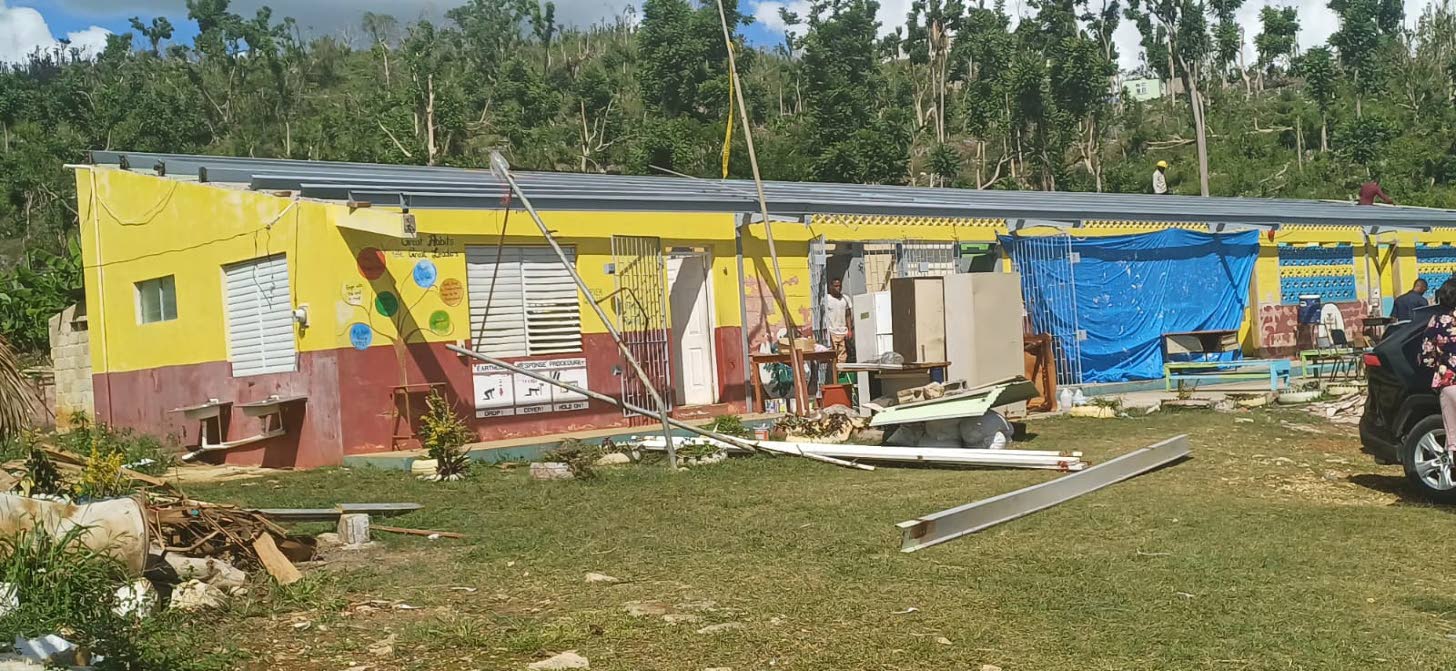
A section of the Clapham Primary and Infant School in St Elizabeth, which was damaged during the passage of Hurricane Melissa last year. (Photo: JIS)
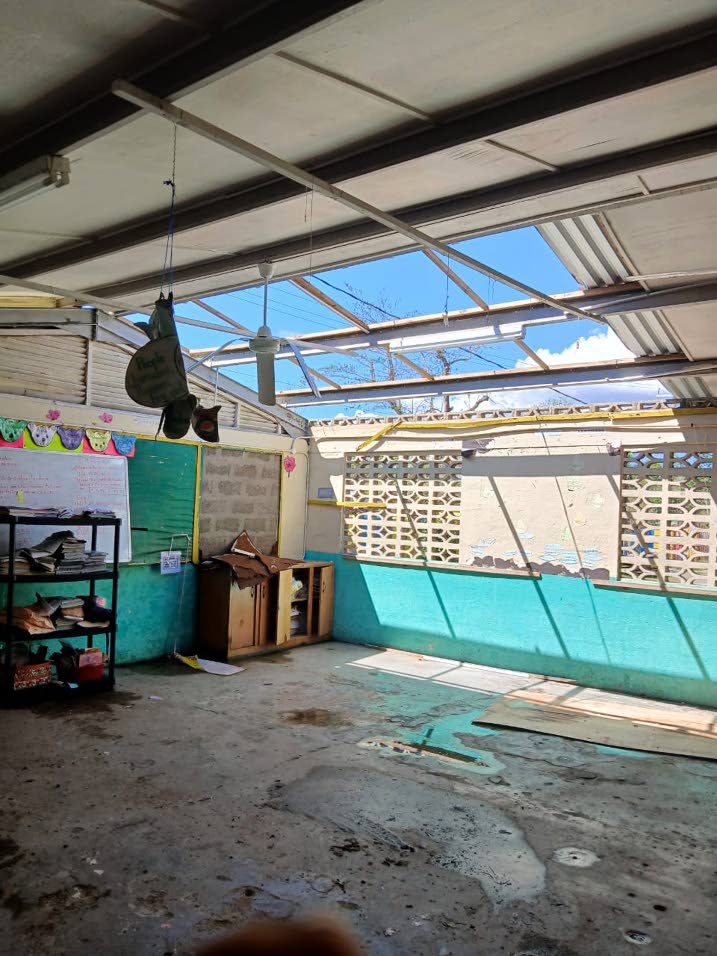
Williamsfield Primary and Infant School’s roof, furniture, and teaching aids were damaged following Hurricane Melissa.


