



Tips turn tide on crime
Jamaicans feeding MOCA, FID with leads to help secure convictions
FROM anonymous letters to tips delivered via social media or bold office visits, Jamaicans have been audaciously feeding forensic criminal investigation agencies with leads, enabling sleuths to build airtight cases and help secure convictions.
“You’d be surprised how many people come to us with information while a case is happening. That’s how people are. Some of them come because they genuinely want to help, some of them come because of fear that they think they might get involved [during the probe], so they come and try cut if off from early. But we do have a lot of people who come in,” Dennis Chung, chief technical director of the Financial Investigations Division (FID), told this week’s Jamaica Observer Monday Exchange.
According to Chung, many individuals are mistaken in believing that their clandestine acts are known only to them.
“This is why I say to people all the while: When you believe that you have done something wrong, you feel that it is not being talked about, people are coming to us and discussing it. And it happens in all the cases I’ve seen,” Chung indicated.
According to the FID head, major operations like those linked to embattled investment house Stocks and Securities Limited (SSL) have served to further embolden Jamaicans to tell what they know.
“We do get a lot of people calling — particularly after the SSL arrest, a lot of people called in. People have been coming for interviews,” Chung said.
In noting that some tips “amount to nothing”, as some individuals leak because they have “a personal agenda”, Chung said for the most part, there is merit.
“We’ll sit down, we’ll interview people, we’ll discuss it, but we’ll look at the merit of it. If something does not have any merit we’re not going to take it forward; we’re going to tell them, ‘You need to go see a lawyer…it’s not for us.’ But we do see a lot of that happening, and we do have a lot of cases being investigated because of that. You would be surprised to see who calls in,” Chung disclosed.
The FID head, in the meantime, said there are other invaluable sources of data which add to the weight of the evidence for the cases.
“We actually do get filings every month of suspicious transaction reports or suspicious activity reports from financial institutions. We get a lot of information through that. So if money is deposited in cash, for example, past a certain amount, or the bank will see that someone has unusual activity, the report comes in to us and we will investigate based on that. One of the things I can say is that a lot of people out there, we will be talking to them every day and they don’t know they’re under investigation,” Chung stated.
Heassured that the FID is serious about preserving the integrity of the cases it undertakes.
“We have a strict process within FID…when you’re investigating someone who is well known, their reputation can take damage, and therefore you have to be careful about it…we have to make sure that we cross all t’s and dot the i’s because there’s a possibility also not only of reputational damage for the FID but also the possibility of a lawsuit hitting us if we don’t do it the right way. So when we come out with something, we need to preserve our reputation of [the] 90 per cent conviction [rate] that we have,” Chung told editors and reporters.
Meanwhile, Colonel Desmond Edwards, director general of the Major Organised Crime and Anti-Corruption Agency (MOCA), who was also a guest at the Monday Exchange, said the “high level of public trust” enjoyed by the agency has been beneficial to its probes.
“What we find is that whenever we have a significant operation, it fuels a kind of thrust of information coming in to us. We signed an agreement with Crime Stop in 2022 and that has also fuelled a significant [amount of information]… we do get a lot of referrals from the public through Crime Stop,” Edwards told the Observer. He said leads also come in via the agency’s online platform and from individuals visiting the entity.
“I get on average, I would say, two or three anonymous letters per month of people giving information,” Edwards disclosed.
MOCA’s Senior Director, Legal and Prosecutorial Services Unit Nigel Parke was quick to point out that all tips are critically assessed.
“We have a robust case development process where we test the evidence rigorously. And remember, the end product is not just that you have a good investigation, but you must be able to mount a viable prosecution,” he pointed out.
“Based on the code of conduct from the DPP’s [Director of Public Prosecutions] office, no prosecution ought to be initiated unless it’s based on sound, cogent, strong evidence capable of being believed. So with those sort of metrics in the background, that is the constant aspiration of every investigation,” Parke emphasised.
As to whether they face struggles getting individuals to mount the witness stand when matters are being tried, both agency heads said there are no significant challenges.
“We do ask people if they want to be a material witness. If they don’t, they just want to give us information. And in most cases people say they don’t mind being a witness… some of them will say no, they don’t want to get involved, but in most cases people will give us a witness statement,” Chung said.
“Culturally, we find that people don’t mind telling you stuff but they don’t necessarily want to go to court. Once you’re able to assure them of their security and their safety and all of that, we find that they will generally cooperate. What you require, though, is a very good witness management programme — and we try and do that at MOCA. We meet with our witnesses in the matters we are pursuing and investigating, and certainly when it gets to the point where the matter is now going to court, the prosecutors who are involved also want to manage the witness to ensure that their confidence is maintained,” Edwards stated.
Between 2018 and 2025 MOCA conducted 245 operations, made 256 arrests, and laid 240 charges. There have been 200 convictions in that time.
In 2025 the FID seized $164.1 million in cash and a significant amount of assets, with the courts ordering confiscations exceeding $33 million and US$35,000.

CHUNG…you’d be surprised how many people come to us with information while a case is happening.
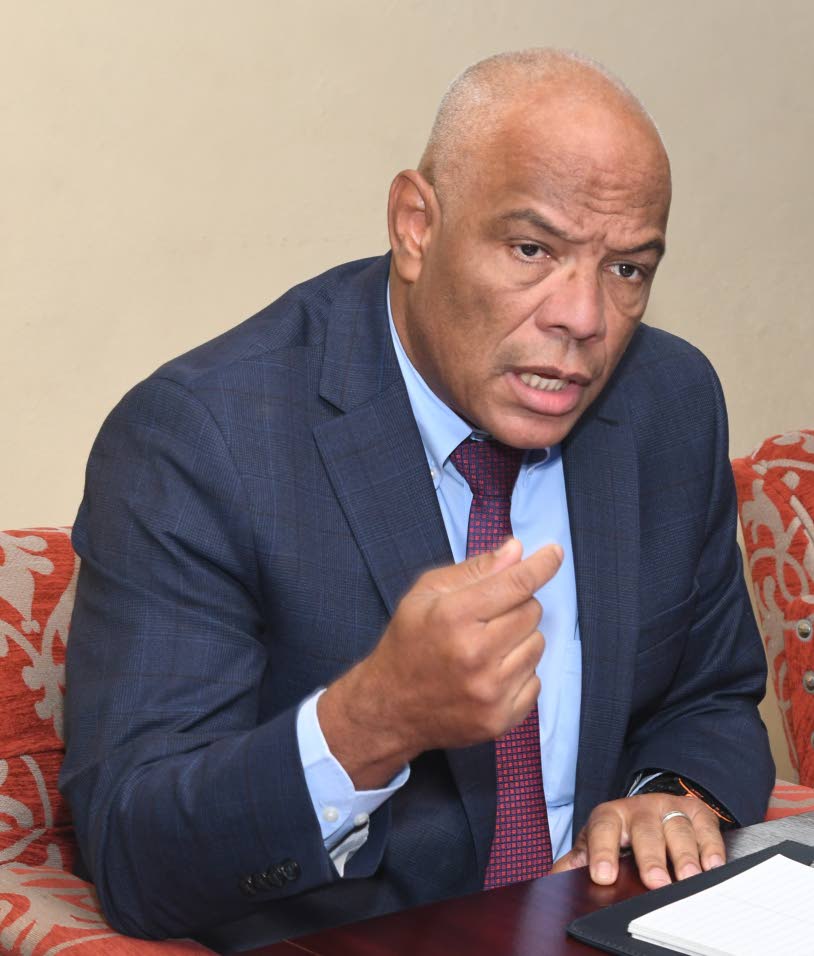
EDWARDS…said the “high level of public trust” enjoyed by the agency has been beneficial to its probes.


