



Lessons from Dad
‘Cat’ Coore was guiding father before reggae ambassador
In an era where the path of a musician was often met with scepticism, Stephen “Cat” Coore chose stringers over the status quo. It was a decision he made with absolute certainty; turning down even the opportunity at a first-class education at the world-renowned The Juilliard School in New York, USA.
Coore, reggae legend in his own right, chose to stay rooted in the rhythms of his homeland. While he may not have obtained a prestigious classical degree, the musician earned something far greater — the title of “Reggae Ambassador” and the respect of a nation.
Reflecting on her late father’s legacy, Kanna Coore told the Sunday Observer that her father took immense pride in his role as a cultural torch-bearer.
Outlining that he ignited global stages with the same passion and precision that he would have brought to the finest concert halls, Kanna said her family is at peace knowing her father’s destiny had been fulfilled.
“Music was his life. He ate, drank, slept, breathed music, and Jamaica was special to him. He toured a lot and wasn’t really here as much as he would have wanted; he believed in Jamaica as if it were a religion,” Kanna said. “Whatever he could do for the country was important to him, and so even off the stage, no spotlights, he embodied a musician. It’s no coincidence he gained the title of Reggae Ambassador… He was Jamaican to the core. It was his dream to play reggae music, and it was out of the ordinary because he was classically trained, got a scholarship to Juilliard and decided not to take it. He decided to start a band instead, and he was never ashamed of that.”
“Reggae Ambassador was the perfect title for my father. The title found him because he embodied that,” Kanna continued. “I look back now with gratitude that he was able to impact so many in so many different ways, and I am honoured to be related to him and have his genes flow through my body.”
Beyond his own career, Coore extended his philosophy of personal freedom to his family. As Kanna tells it, though, two of her brothers — Stephen and Shiah — ended up pursuing music careers. They were never forced to follow in their father’s footsteps.
“He was a very relaxed, happy, easy-going person. He had great relationships with his kids. There was a lot of trust in our home. He never expected us to pick something conventional, even though our grandfather was a lawyer. Dad was never like, ‘Oh, you have to go to law school or be this or that.’ My brothers discovered music on their own. He never pushed that on any of us. Stephen plays the guitar, and Shiah plays the bass, and they discovered music on their own. He trusted our decisions and our choices. He trusted us as humans.”
Watching her father prioritise self-belief and risk-taking became one of Kanna’s most valuable life lessons, she shared with the Sunday Observer. By watching her father follow his dreams relentlessly and without fear of judgement, Kanna said that she learnt that true success comes in forging a path that is uniquely your own.
“He taught us to really follow our dreams. It was his dream to play reggae music, and he did, turning down Juilliard. That kind of dream and risk-taking was one of the many lessons he taught. We knew we could take risks because his life showed us that there is always the possibility of things working out,” she said.
Kanna shared that while the world hailed him as a co-founder of the iconic Third World and a master of the cello and guitar, her father was a devoted dad, a philanthropist, and a humanitarian.
His sudden passing on January 18 has undoubtedly left an emptiness across the local and international reggae scene. The ambassador’s’ legacy lives on.
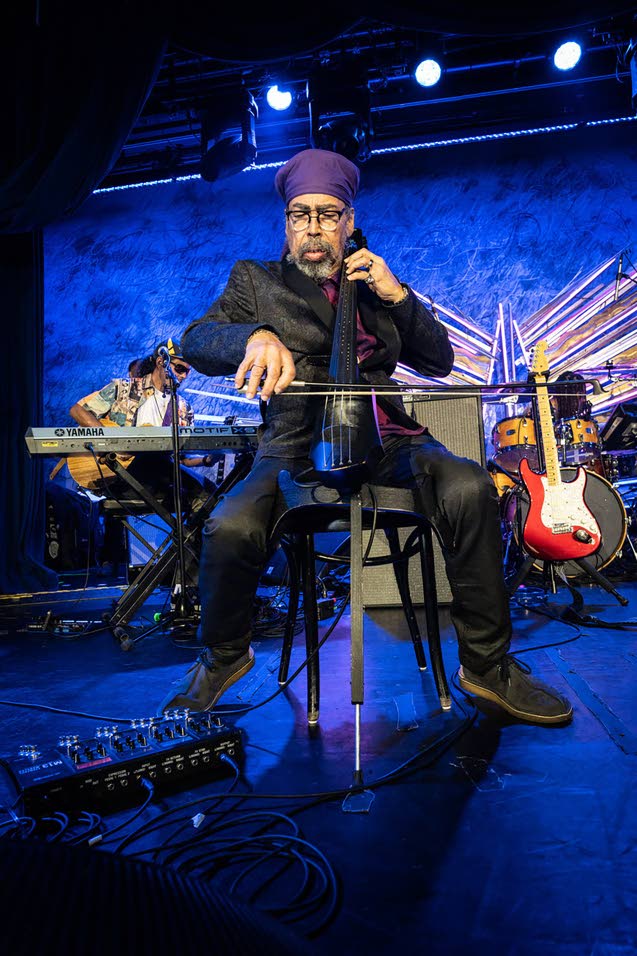
Stephen “Cat” Coore (Photo: Travis Keyes)


