



Sly Dunbar ‘lived for the music’
Iconic drummer joins Jimmy Cliff, Cat Coore in reggae’s celestial hall of fame
Jamaica’s music fraternity slowed to another grinding halt on Monday morning as news spread of the passing of yet another reggae icon — Lowell Fillmore “Sly” Dunbar.
Just a week after the death of Third World’s Stephen “Cat” Coore, the industry was again plunged into mourning with the passing of the legendary drummer.
Described as a pioneer whose sticks helped to shape the soundtrack of the 20th and 21st centuries, Dunbar passed away suddenly, leaving behind a legacy that transcends Jamaica’s shores.
“Jamaica has lost a true visionary,” said producer and recording/mixing engineer for Sly & Robbie’s Taxi Records camp Rorey Baker. “Sly and Robbie were more than just musicians; they were pioneers of this great genre. We lost Robbie in 2021, and Sly continued the work. Today the industry is sad and heartbroken, and this is just another sign that things will never be the same.”
Baker went on to lament that the rapid departure of Jimmy Cliff, Cat Coore, and now Sly marks a historic shift in the foundation of reggae music.
“The people who craft the music are dying. Our legends are leaving us. This is the death of an era, the final chapter in the foundation of the music as we know it,” he continued. “Sly lived for the music. He never shied away from the stage or the spotlight. He was a role model, a father figure to many, a humble creative who always took every opportunity he got to teach others. He wasn’t one to hold back on knowledge, and so he gave of himself generously. This is a huge loss.”
Baker said Dunbar’s impact was made evident in the outpouring of love and support in the hours after his death. He shared that as news spread tributes have been flowing abundantly as colleagues and government officials alike paused to remember Dunbar’s legacy.
Confirmation came with a statement from Dunbar’s family which made the rounds online.
“It with deep sadness that our family shares the passing of Lowell “Sly” Dunbar, beloved husband, father, and legendary musician on January 26, 2026.
“As one half of Sly & Robbie, Sly helped shape the sound of reggae and Jamaican music for generations. His extraordinary talent, innovation, and lasting contributions will never be forgotten…
“[W]e are deeply grateful for the love and support during this difficult time.”
Prime Minister Andrew Holness was among those paying tribute. He said the world lost a “titan of music”, describing Sly as an architect of sound.
The PM shared that, alongside Robbie Shakespeare, Dunbar “established a foundation that defined the era of reggae and dancehall”, outlining that “from the Taxi label to his work with international superstars like Grace Jones and The Rolling Stones, Sly’s influence was global.
“His contribution to our cultural heritage is immeasurable. His legacy lives on every time a drum kit is played or a reggae record spins,” Holness continued.
For her part, Minister of Culture and Entertainment Olivia “Babsy” Grange said that the passing of the musician and record producer is “a great loss for the music”.
She described him as “one of the greatest drummers ever”, adding that, “Sly and Robbie produced some of the best Jamaican music, they appeared on many records and backed some of our most outstanding artistes, including Bunny Wailer, Black Uhuru, Jimmy Cliff, Beenie Man, Chaka Demus & Pliers, Grace Jones, Omi, among others.”
Crediting Dunbar for the success of one of his biggest hits, dancehall veteran Bounty Killer expressed gratitude for the time spent creating musical masterpieces with the late drummer.
“Safe trod on to Zion, godfather Sly with Robbie right there by your side too. My biggest and most successful recording in my career so far, Hey Baby, No Doubt featuring myself, thank you for all your musical and personal contributions to me and the music industry.”
Dancehall artiste Patra also took to social media to pay her respects.
In her post, Patra dubbed Dunbar “one of Jamaica’s greatest musicians, along with his brother Robbie”, and said she was very happy to “have them on board for my remake of Pull Up To My Bumper, originally done by Grace Jones and produced by this same duo”.
For over four decades Sly Dunbar was inseparable from bassist Robbie Shakespeare, forming the legendary “Riddim Twins”. Their partnership was more than a professional collaboration, it was a musical team that served as the backbone for thousands of recordings and, through their label, launched and sustained the careers of giants like Gregory Isaacs and Black Uhuru.
Dunbar’s dedication was recognised with Jamaica’s highest honours. The Government honoured his “outstanding and important services” to the nation by conferring upon him the Order of Distinction (Officer Class). In October 2015, the Institute of Jamaica further cemented his legacy by awarding him and Shakespeare the Musgrave Gold Medal for “distinguished eminence” in the field of music.
His contributions continued to garner international academic acclaim late into his life. In May 2025 the University of Minnesota bestowed him with a Lifetime Achievement Award for his role in making reggae a global brand.
The legendary duo won on the record for the the first-ever Grammy awarded for reggae as a category in 1985 working as producers of Black Uhuru’s Anthem. They would again earn the ‘gramophone’ in 1999. They would gain 13 nominations on various releases.
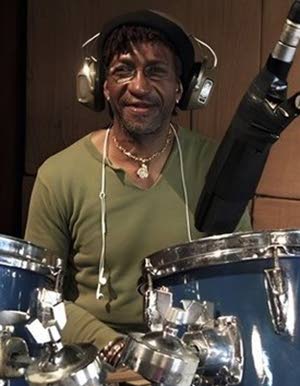
Sly Dunbar .


