



Jamaica Broilers edges toward US meat pull back in turnaround push
Jamaica Broilers Group has yet to make a final decision on the future of its US poultry meat business, but comments from president and chief executive Christopher Levy suggest the company is leaning towards stepping back from the segment as it works to stem losses and restore profitability.
“I think it would be wise to take a step back, deal with the meat business in terms of plugging the hole, stopping the cash drain on it, and then we reassess, get our feet back under us and start moving again,” Levy told shareholders at the group’s annual general meeting at its McCook’s Pen, St Catherine, headquarters on Friday.
“What that looks like, I can’t tell you right now. But without a doubt, we’re going to have to take a decision on the meat business in the short term.”
The comments reinforced that scaling back or exiting the US meat operation — an option first flagged earlier in the group’s restructuring — remains very much under active consideration, as management shifts its focus from scale to cash flow in addressing the group’s US challenges.
Levy said the US business now effectively operates as two units — fertile eggs and meat — with the earnings pressure concentrated in the meat segment.
“In the US, we have two real business units; one is the fertile eggs and the other is the meat business. The challenge that we face today is primarily in the meat business. In actual fact, it’s only in the meat business,” he said.
He explained that the meat operation carries a structural cost disadvantage, with the processing plant located far from both the hatchery and the feed mill. While those logistics costs were manageable when market conditions were stronger, they have become more difficult to absorb as pricing in the US poultry market has softened.
“The challenge is a logistics one,” Levy told shareholders. “Our chicken plant is far from our hatchery and far from our feed mill, so we have a lot of internal logistics costs. That can be covered when the market is strong. But the market in the US has turned significantly, and then it exposes the weakness of the business.”
Those operational pressures have played out alongside a broader clean-up of the group’s US operations following the discovery of accounting irregularities that delayed financial reporting and prompted a forensic review. The company has previously described the issues as involving fraudulent activity in its US poultry meat business, including overstated inventories and off-balance sheet financing uncovered after a whistleblower-triggered investigation.
Against that backdrop, Levy said continuing to operate the meat business in its current form would likely require significant new investment to restructure the operation — a step the board is now weighing against the alternative of stepping back to stabilise cash flow.
“I think without a doubt, shareholders, we are going to have to make a decision,” he said. “I think it would be foolhardy for us to think that without significant investment to restructure this business, we could make a run at it.”
The trade-off, Levy acknowledged, is scale. He said the meat business represents about a quarter of group revenue — roughly half of the US operation — and that production has already been reduced from two shifts to one, cutting weekly revenue.
“It represents about 25 per cent of all corporate. So about 50 per cent of all US business right now,” Levy said, adding that the meat unit’s revenue has stepped down to about US$4 million a week, from two shifts to one. Without the meat business, the US operation would generate roughly US$2 million to US$2.5 million a week.
“It’s definitely a step back. But I’d rather a step back and be profitable and cash flow positive than to try and just fight this thing like this,” Levy said.
By contrast, Levy said the group’s US fertile egg business remains profitable and is showing a stronger sales outlook.
“Our egg business is going to be profitable tomorrow. It’s very profitable and has a very positive outlook. We’re booked out in sales over about eight, nine months,” he said.
“If we got rid of the meat business today, we’d be profitable tomorrow,” he added.
The latest financials help explain the focus on the US decision. For the six months ended November 1, 2025, Jamaica Broilers reported group revenue of $50.3 billion and a net profit of $1.2 billion, despite recording a net loss in the second quarter. Jamaica operations delivered a segment result of $3.6 billion, while the US segment continued to weigh on overall performance amid cost and pricing pressures.
Looking ahead, Levy said recent market signals have been encouraging, particularly on the local front, even as the group remains cautious about the pace of recovery.
“I do feel that what I’m seeing for the tail end of January and into February, March and April is encouraging — very encouraging,” he said, adding that a clearer earnings picture could begin to emerge over the coming quarters if corrective actions hold.
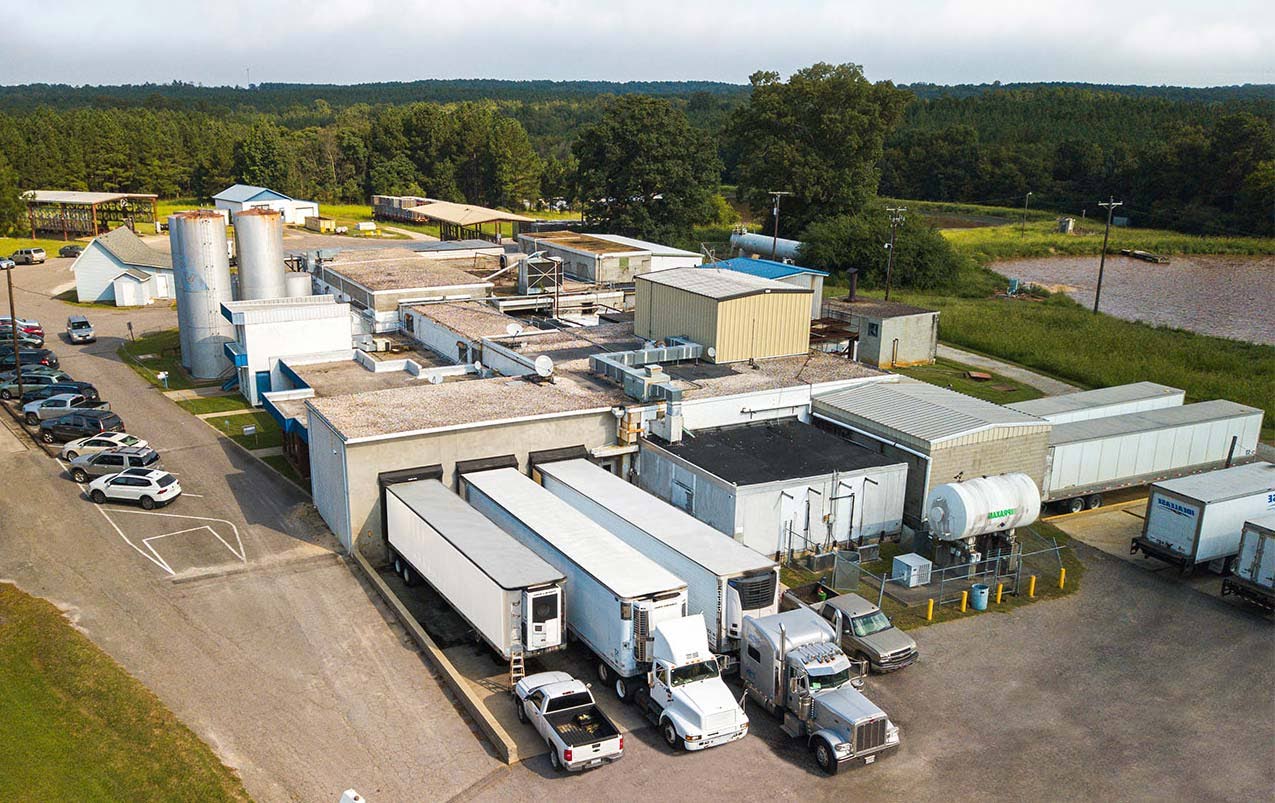
“Jamaica Broilers Group considers exiting US poultry meat operations amid logistics costs and losses, while fertile eggs thrive — backed by $15-b NCB bailout for restructuring.


