



One road authority makes sense
The creation of a one road authority by which all major roads throughout the country will be placed under a single governance makes eminent sense. This is a subject that has been long talked about by our political leaders yet nothing tangible has emerged from such discussions. Like so many other matters of national importance, we have been long on talk and short on action. This time around, the Andrew-Holness led Administration seems determined to bring it to fruition.
It has been a source of distress and pain among the citizenry to hear the constant noise as to which entity owns which piece of road and whose responsibility it is to fix it. One cannot be sure at any given time whether it is the responsibility of the central government, municipal authorities, or developers. The net result of this confusion is that many roads have been neglected and fallen into disrepair, causing tremendous pain and cost to the commuting public. When no clear ownership can be established, no clear line of responsibility exists. The citizenry is thus regaled by blame games as different interests haggle over which road belongs to whom.
Furthermore, the tendency towards corruption is heightened when there is this fragmentation of ownership of roads, and everyone gets to do whatever he/she wants without any overarching authority looking over their shoulders. This may be one of the most important reasons for a single authority. It will be better able to manage funds that are disbursed for road projects throughout the country. But all of this can only work if it has real authority and strong teeth to enforce the necessary rules and safeguards to make the system work.
At long last we may be seeing an end to this fragmentation if the Government holds firm and brings all roads under a single management authority. Needless to say, there will be negative voices raised against this endeavour. Expectedly, there are soundings already being made from municipal corporations. Some have begun to negatively critique the decision of the Government to move in this direction. The thinking seems to be that removing roads from under the ambit of parish councils removes from them one of, if not the major undertaking of that body, suggesting that this move will leave little for them to do. But my understanding is that this is not the case, as they will still have responsibility for repairing and reconstructing roads in their divisions, but there will be a centralised authority attending to the disbursement of funds for these projects. They would now have to show the requisite accountability contingent upon the receipt and spending of these funds.
And this is where the real rub is. Let us call a spade a spade and not a machete. Road repairs and reconstruction constitute a cash cow that has been used by successive governments to keep their adherents happy. Because of the political tribalism that has attended this process on both sides of the political fence, it is not unknown for communities of a particular political hue to be starved of proper road resources when that community’s party is not in power.
Certainly, the work to be done is similarly distributed to political contractors and also to those who are employed to do the work. Over my many years of doing public commentary, I have known of several instances in which this has been the case. It is one of the most disgusting and distasteful things to hear any road being referred to as “PNP” or “JLP”. Yet this state of affairs has persisted for several decades and continues to haunt us today.
The net result of this politicisation of road work is that shoddy work becomes the order of the day. You will see, for example, a piece of road fixed to a certain point and sections skipped and left in ruins only for work to continue on that same stretch of road, a little farther on. The story is told of a strong political adherent who was given a piece of road to patch. As the story ran, the man and a few assistants could be seen in the night with his car trying to press the road. This story might not be true, but it does capture the narrative of the abysmal lack of supervision that often attends road construction and repair in Jamaica. There is hardly any proper supervision of the work done, and most of it is not done to any exacting standard.
So, as the rain comes and the floods descend, these roads are left in a worse state than hitherto existed. The bottom line is that citizens suffer as a result of these poor road conditions as costly motor vehicle repairs become standard practice. Needless to say, the national coffer suffers as more taxpayers’ money is spent to correct this reckless negligence.
This is a problem a single road authority can seek to cauterise. Not only should it establish mechanisms by which money given and spent must be accounted for, but stern and robust mechanisms must be established to ensure that the work is properly supervised and we, the people, get value for our hard-earned tax dollars. In fact, the supervisory aspect must be seen as one of the most vital roles of this authority.
Of equal importance must be a strong provision for ongoing routine maintenance of our road network. Roads will go bad, however strong they are built, but we should not have to wait until they become ponds before they are attended to. As citizens we must not insist on anything less.
Municipal corporations will always remain central to road construction and repair in Jamaica, so they need not fear that they will be sidelined. No one, and certainly not this writer, is arguing for them to be sidelined, but they must understand that in order for us to get the best results things cannot continue as they are. What is being argued is the need for a cultural transformation, a revolution in our thinking, in doing the best for the country. For too long we have been bedevilled by a political culture of convenience that has not served us well.
In almost every sphere of endeavour, everything that is being corrected today has come as a result of our mishandling of national affairs along political lines. The seeds that were sown by earlier generations of political leadership that was wedded to a decadent political culture are now bearing fruits that cannot be eaten. Some of us warned about this, but we were largely ignored. A grand divorce is underway.
Collaboration with stakeholders must be sought so that we can engineer the best systems to make this authority robust and productive. Just as it tackled the rural school bus programme that was maligned by some, so must it approach this task with vigour and determination. For this, the minister with responsibility for works, Robert Morgan, may do well to consult with Minister of Science, Energy, Telecommunications and Transport Daryl Vaz in this respect. Everything helps.
Now that we have arrived at this spot we have to correct it. One hopes that the Government will have the necessary fortitude to get on with the project despite the naysayers.
Dr Raulston Nembhard is a priest, social commentator, and author of the books Finding Peace in the Midst of Life’s Storms; Your Self-esteem Guide to a Better Life; and Beyond Petulance: Republican Politics and the Future of America. He hosts a podcast — Mango Tree Dialogues — on his YouTube channel. Send comments to the Jamaica Observer or stead6655@aol.com.
Raulston Nembhard
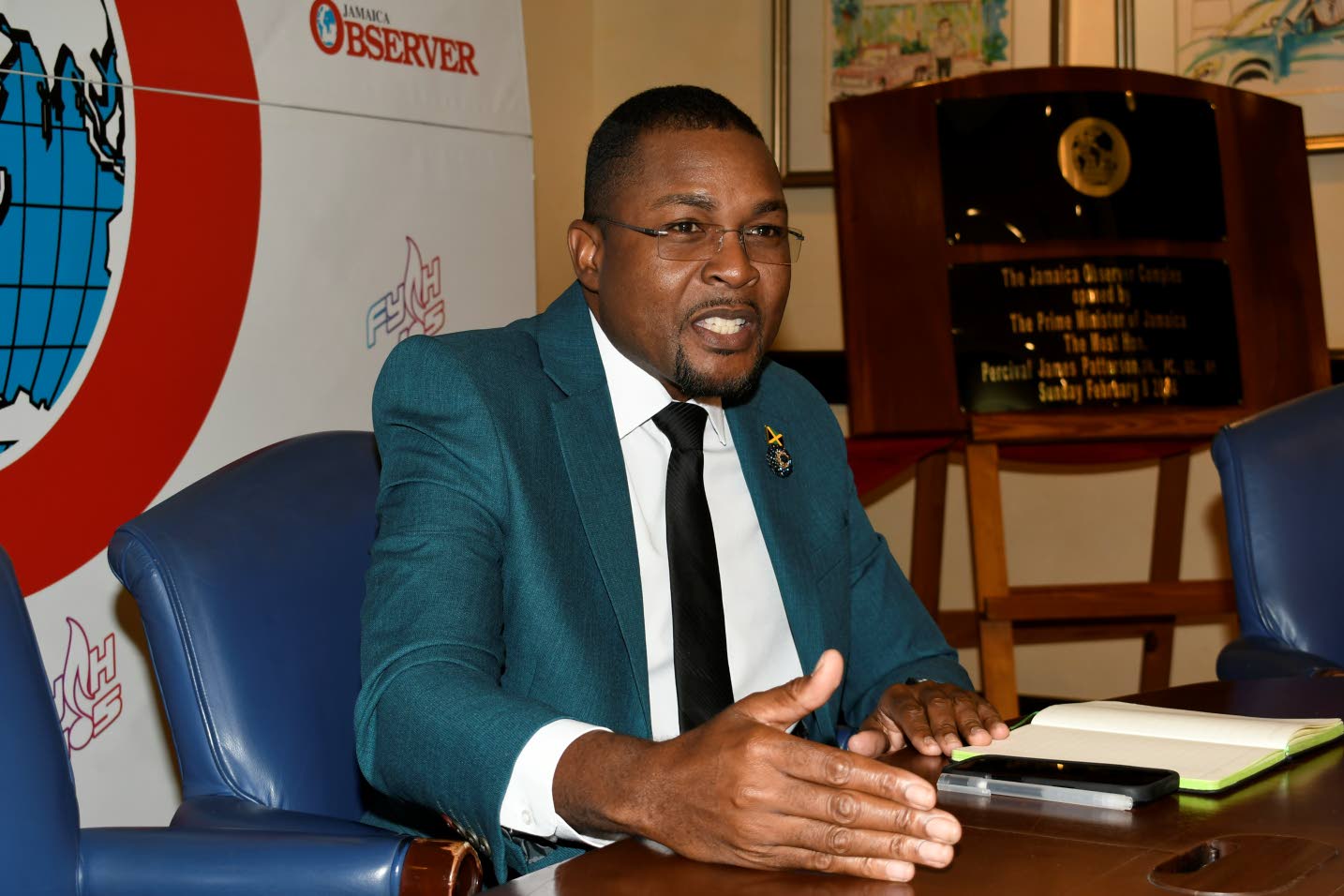
Robert Morgan (Photo: Karl Mclarty)


