



Turning post-Melissa confidence into growth
The annual Jamaica Stock Exchange (JSE) conference at Jamaica Pegasus, January 20-22, was unusually well attended, even in the late afternoon of the last day of the conference. The new JSE CEO Livingstone Morrison and his team are to be congratulated.
However, two of the key presentations from the launch of the conference on Tuesday evening, January 20, have, so far, not been well covered, namely that of keynote speaker Prime Minister of Jamaica Dr Andrew Holness and key conference sponsor Caribbean bond king Gregory Fisher of US investment bank Jefferies.
Interestingly, there was significant overlap in their presentations.
Prime Minister Holness noted that a powerful indicator of Jamaica’s market confidence was that all three major international credit rating agencies — Standard & Poor, Moody’s, and Fitch — reaffirmed Jamaica’s sovereign credit standing. Fisher agreed. He noted particularly Moody’s surprising upgrade of Jamaica on December 19, just over one month after Hurricane Melissa hit, leaving behind massive human and financial losses. He quotes Moody’s: “Jamaica’s upgrade is underpinned by the strengthening of institutions and governance over the past decade. The Government has consistently adhered to the fiscal responsibility framework, sizeable primary surpluses, and a medium-term debt target of 60 per cent of GDP [gross domestic product].”
In his own speech, the prime minister noted: “In the aftermath of a Category 5 hurricane, this is extraordinary. Just imagine how the same ratings agencies would have viewed Jamaica just over a decade ago. A shock of this magnitude would have inevitably resulted in ratings downgrades and pushed Jamaica into macroeconomic and debt crisis.”
Fisher agreed, observing that sourcing other desperately needed recovery funds would have been massively more expensive if Jamaica had been forced to secure the needed funds via the public markets, he adds that Jamaica arranging the recent US$6.7-billion financial package was also “a brilliant by-product of aggressive planning”.
It is worth outlining again, as the prime minister did, the actual financial package: Roughly $6.3 billion was from internal resources — namely the Contingency and National Natural Disaster Reserve funds. Insurance, US$91 million, from the Caribbean Catastrophe Risk Insurance Facility and US$150 million from the Catastrophe Bond were triggered automatically based on parametric thresholds, “delivering liquidity without delay, negotiation, or conditionality”.
At the contingent credit level, US$285 million from the Inter-American Development Bank’s Contingent Credit Facility was increased to US$300 million, and the World Bank Group’s Catastrophe Deferred Drawdown Option was doubled to US$84 million. Altogether, approximately US$662 million in “pre-financed” liquidity was available immediately following the hurricane.
In addition, as the prime minister noted, the International Monetary Fund, the World Bank Group, the Inter-American Development Bank, CAF – Development Bank of Latin America (the latter are holding a donor conference in Panama this week showing their commitment), and other partners, such as the Caribbean Development Bank as well as some G20 members (which will include the UK and Canada), provided another US$3.6 billion in sovereign debt financing and US$2.4 billion in private capital. As the prime minister said, this was “the largest and most comprehensive development-financing package ever assembled in Jamaica’s history”, agreed “just one month after a Category 5 hurricane.”
A critical element of our recovery will be the role of the National Reconstruction and Resilience Authority (NaRRA) — an institution mandated to coordinate post-disaster reconstruction and long-term resilience building. My view is that all Jamaicans — both here and abroad — need to pay particular attention to who is selected to become its chief executive officer. The position was advertised last Sunday, with job applications to be sent in by February 13.
The prime minister observed that NaRRA will be designed as a centre of technical excellence, a single point of coordination, a platform for public-private partnership, and a bridge between climate resilience and economic development.
“Reconstruction will be guided by a simple but powerful principle…We will not rebuild what was vulnerable. We will build forward — stronger and smarter…stronger building standards; climate-resilient infrastructure; smarter land-use planning and improved productivity.”
Of particular note to his audience, the prime minister promised “investment-ready projects aligned with private capital”. This last point chimes perfectly with Fisher’s view that “the solution does not solely ride on the shoulders of the Government. It’s time for the private sector to jump in, and with full force”.
Remarkably, for an investment banker, in his own call to action, Fisher argued that for Jefferies and its competitors, “It’s time to take off our hunting cap for fees on transactions and work together…unified as a team” in order “to bring outside capital to help in restoring Jamaica to normalcy. The banking fees will take care of themselves, but we must now put our sole focus on doing our part in the rebuilding process. I will bring to the table everything Jefferies has to offer in this challenge…I’m pleading that everyone else in the banking business here this evening does the same.” He added, “Let’s use our smarts and our experience for the good of the people that are still suffering.” He observed that the fees “will follow, but they can’t be thought of in their usual format as the initial starting point”.
One of the key points made by the prime minister was that the policy direction of ‘Pivot to Inclusive Growth’, announced in November 2024, had not been derailed by Hurricane Melissa. “The shock of Hurricane Melissa has only sharpened both the urgency and the scale of our ambition. It has reinforced the need to accelerate growth that is more resilient to shocks, more inclusive in its reach, and more productive in its outcomes.”
He added that with “the US$6.7-billion financing package now in place — anchored in strong governance, credible institutions, and global confidence — we are no longer constrained by means. Jamaica has never faced such a horizon of opportunity before”.
In pursuit of this objective, he advised that NaRRA will operate alongside ongoing programmes such as Speed — our national initiative to Streamline Processes for Efficiency and Economic Development — to reduce unnecessary bureaucracy, accelerate approvals and permits, lower transaction costs for investors, enable digital public services and faster capital deployment.
Prime Minister Holness also focused on the issues of energy costs, productivity, and competitiveness, correctly arguing that growth requires addressing our structural cost drivers.
Keith Collister
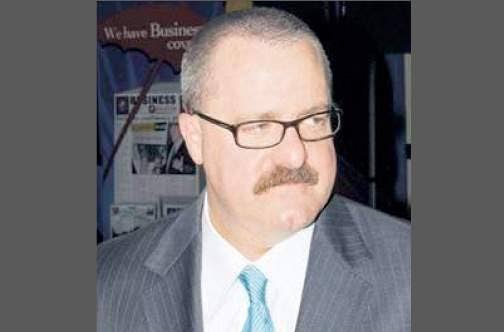
Gregory Fisher


