



Too little, too late
Opposition says amendments to Cybercrimes Act must keep pace with the technology it seeks to regulate
AS lawmakers debated amendments to the Cybercrimes Act in the House of Representatives on Tuesday, the Opposition warned that slow legislative timelines risk undermining the effectiveness of the change, arguing that cyber legislation must evolve as quickly as the digital threats it is meant to confront.
The proposed amendments, which were tabled as part of the Government’s wider effort to modernise Jamaica’s cyber laws, seek to strengthen penalties, improve investigative powers, and expand protections against emerging forms of online crime. The changes follow recommendations made by a Joint Select Committee in 2023, which reviewed the 2015 Act in light of growing cyber threats and the increasing use of digital platforms for criminal activity.
The legislation is intended to address issues such as online fraud, unauthorised access to computer systems, and the misuse of digital technologies, as well as to improve Jamaica’s ability to respond to evolving cyber risks. However, Opposition members argued that the long delay between the committee’s work in 2023, and the tabling of the amendments in 2026, has weakened the law’s relevance at a time when technology is advancing at an unprecedented pace.
Opposition Leader Mark Golding expressed disappointment that the amendments being debated in 2026 were based on recommendations made nearly three years ago, before major developments in artificial intelligence and digital manipulation had taken hold.
“For a Bill dealing with cybercrimes to be brought to the House in 2026 which is addressing the contents of a joint select committee report written in the first half of 2023, and which does not fulsomely address the very serious issues which have arisen with the advent and pervasiveness of artificial intelligence, is a great disappointment,” Golding told the House.
He argued that the pace of technological change demanded faster and more comprehensive legislative action, particularly in protecting individuals from emerging forms of digital abuse.
“The law needs to more fulsomely protect person’s images, the image of an individual, their reputation and the use of their appearance and their voice and other biological manifestations through manipulation to denigrate them to spread falsehoods either about them or others, or things that they have alleged to say which are complete fabrications. These are very serious problems and I think for the Bill to come here and not address that is a disappointment,” Golding added.
While acknowledging the intent behind the amendments, the Opposition leader said the legislation does not adequately confront the most pressing digital threats now facing society, particularly those linked to artificial intelligence.
“We cannot say that we are protecting our society and keeping on the cusp of technology when we are not. We support these amendments but they’re dated. They are not dealing with the most pressing problem that has arisen in the last two, three years and I hope minister that you will give a commitment… that the government will move rapidly to convene another joint select committee to update this legislation to address the pressing issues which have emerged in the last two or three years,” Golding warned.
Furthermore, Member of Parliament for St Andrew South Eastern Julian Robinson stressed that cyber legislation differs from most other laws because of the speed at which technology evolves.
He reminded the House that the Joint Select Committee had completed its work in May 2023, yet the amendments only returned to Parliament in 2026.
Robinson argued that such delays are particularly problematic in the digital space, and warned that cyber laws must be reviewed and updated far more frequently than other pieces of legislation if they are to remain effective.
“The lack of timeliness of moving from a joint select committee to a report to amendment affects this particular legislation more than others because the nature of technology evolves so quickly and so we have to ensure that particularly for legislation of this nature, that we conduct the reviews and do the amendments in a timely fashion,” he said.
Meanwhile, Member of Parliament for St Andrew South Western Angela Brown Burke raised concerns about the scope and strength of the proposed amendments, particularly in relation to penalties and enforcement.
She argued that existing sanctions for cyber offences remain too lenient to serve as an effective deterrent.
“There are a number of individuals who believe that the penalties for offences, that they are not sufficient deterrent for unauthorised access to computer systems. Currently, it’s two million dollars and up to two years, when we have similar jurisdictions to ours that have five to 10 years, and so I think that that is something for similar offences that we should be looking at,” she said, suggesting Jamaica should move closer to international standards.
Brown Burke also pointed to challenges in enforcement, noting that limited investigative capacity continues to undermine prosecutions under the Act.
She further called for broader consideration of emerging cyber threats, including spam and digital exploitation, and supported proposals to empower authorities to seize devices used in cybercrime.
At the same time, she stressed that any future review must balance enforcement with rights protections.
“I believe that any review, revisit of the Bill, should really ensure that it focuses broadly on protecting human rights and that it doesn’t have a narrow focus on the misuse of computer networks and dissemination of objectionable information. I think that where we are in the world and what’s happening in cybercrime, it needs to be more broadly focused,” Brown Burke said.
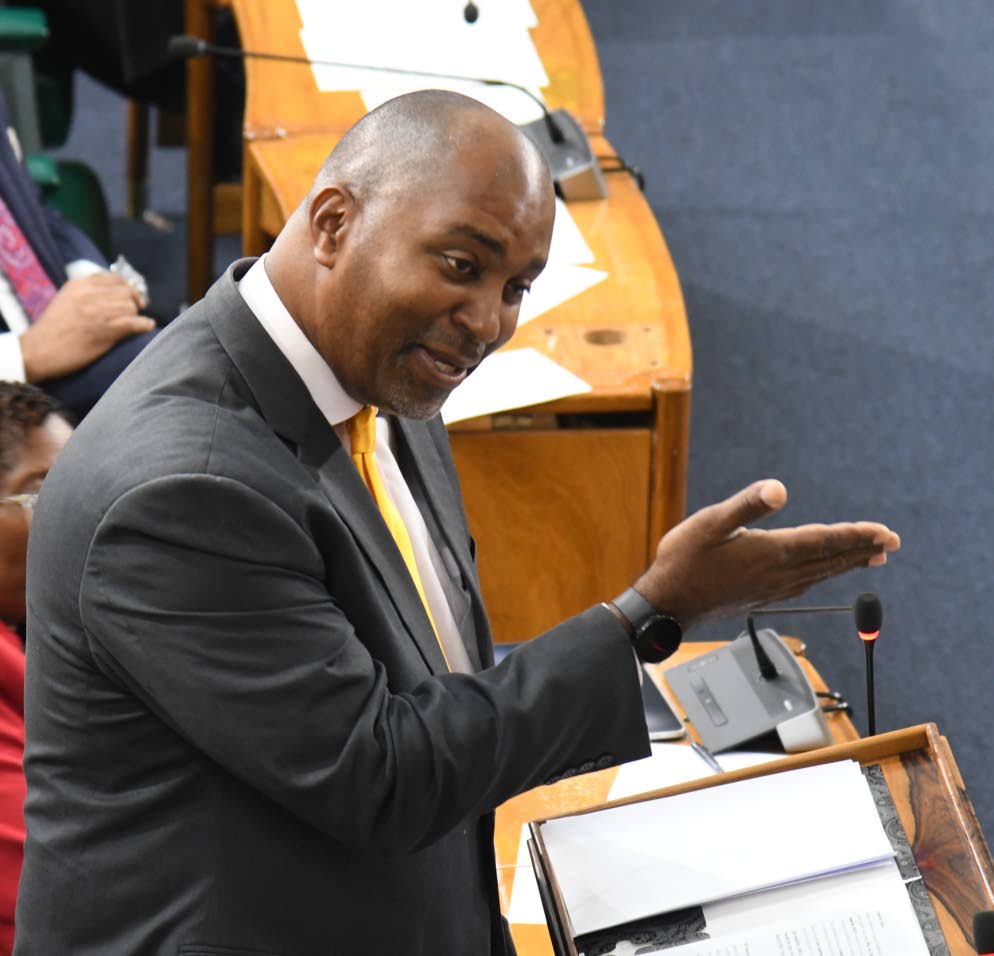
ROBINSON…stressed that cyber legislation differs from most other laws because of the speed at which technology evolves.

BROWN BURKE… raised concerns about the scope and strength of the proposed amendments, particularly in relation to penalties and enforcement.


