Beyond the numbers: What peace must mean for Jamaica
As crime trends downwards, Jamaica enters the next stage of its crime-reduction strategy, requiring a cultural shift towards peace, prevention, and lasting public trust.
Jamaica has made meaningful progress in reducing crime. This progress is not accidental. It has been driven by the hard work of our security forces, sustained government investment in security infrastructure, and community-based interventions.
But as we begin to make headway, we must ask ourselves a deeper question: What comes next?
Peace is not simply the absence of crime. Peace is a condition. It is something people feel when they trust the systems meant to protect them, when order is consistent, when opportunity feels real, and when violence is no longer normalised as part of daily life.
This is the shift Jamaica must now make.
For too long our national conversation on security has been narrowly framed around enforcement alone. Policing is essential, but it cannot carry the entire burden of peace. When a society relies only on force to maintain order, it treats the symptoms of violence while leaving its causes untouched.
We must be honest about those causes.
Violence in Jamaica did not appear overnight. It has been shaped by years of inequality, inconsistent enforcement of the law, breakdowns in family and community structures, limited economic opportunity, and unaddressed trauma. In many spaces disorder has been tolerated, rules have felt optional, and citizens have not always felt equal before the law. Where legitimacy weakens, informal power fills the gap.
One of the clearest signs of this breakdown is how we resolve conflict. Too often in Jamaica violence is treated as the default response to disagreement. We see it in long-standing disputes, including what we commonly refer to as “dead leff” conflicts rooted in family land or inheritance, as well as in minor everyday disagreements. In a recent case in Mandeville, police reported that a man was killed following an altercation that began “over the price of eggs”. When disputes over such minor matters can escalate into fatal violence, it is clear that this is not only a crime problem, but a conflict-resolution problem. A peaceful society cannot exist when disagreement so easily turns deadly.
It is precisely this reality that informed Prime Minister Dr Andrew Holness’s decision to expand the Ministry of National Security to include a dedicated Peace portfolio, formally recognising that national security and peace are inseparable. The transition to the Ministry of National Security and Peace signals a deliberate shift from responding to violence after it occurs to addressing the conditions that allow it to take root in the first place.
Importantly, Jamaica is not beginning this shift without a foundation. The Government has invested in programmes designed not only to contain violence, but to rebuild communities and redirect lives. The We Transform Youth Empowerment Programme brings together many of these efforts, including violence prevention initiatives, literacy and numeracy support, case management, and family engagement. It reflects an understanding that violence is rarely isolated to an individual, but often rooted in households, schools, and communities.
This approach has been most visible through the zones of special operations (ZOSOs), which were designed to stabilise communities and then follow security measures with social intervention and community rebuilding. While the scale of resources used in ZOSOs cannot be replicated everywhere, the principle behind them can be applied more broadly. As crime patterns shift, there is value in applying this targeted model more strategically by identifying communities at risk of violence escalation and intervening early with the programmes we already have, particularly for at-risk youth and families. Case managers are central to this work, helping connect households to education support, social services, and mental health care in partnership with the Ministry of Health and Wellness.
At the heart of this approach is a simple truth: People are less likely to turn to crime and violence when they feel they have options. Literacy and numeracy initiatives, alongside programmes such as Liv Gud, are essential to building lasting peace. When education feels attainable, when support is visible, and when communities see tangible investments, trust in the system begins to grow. In this sense, peace depends on equity, rooted in a belief that fairness means meeting people where they are, not pretending everyone starts from the same place.
Peace, therefore, requires more than arrests. It requires legitimacy.
It requires that laws are applied fairly and consistently, not selectively. It requires that children learn conflict resolution before they learn confrontation. It requires that schools do more than teach, serving instead as spaces of guidance and support. It requires that prisons focus on rehabilitation rather than simply confinement. And it requires confronting the deep emotional and psychological wounds rooted in family breakdown, absence, and unresolved childhood trauma that continue to shape behaviour well into adulthood.
Other societies that have faced deep violence have learnt this lesson. While Jamaica’s history is different, experiences from countries such as Rwanda show that peace is sustained when order is paired with inclusion, responsibility, and collective effort. Enforcement without prevention breeds resentment. Prevention without order breeds chaos. Sustainable peace demands both.
As crime trends downward, Jamaica has a rare opportunity to pivot. To move from crisis response to long-term transformation. To redefine national security as not only protecting borders and streets, but strengthening families, rebuilding trust, and creating pathways to dignity and purpose.
This is not a soft approach. It is a serious one.
Peace will not emerge on its own. It must be deliberately built, protected, and sustained. As Government, we have a responsibility not only to reduce crime, but to dismantle the conditions that produce violence. This means enforcing the law fairly and consistently, investing early in our children, and restoring confidence in the institutions meant to serve the people.
The shift toward peace is not theoretical. It is already underway, and it will require continued leadership, discipline, and national cooperation. Government will do its part. But peace, ultimately, is a shared responsibility, one that calls on all of us to reject disorder, uphold fairness, and invest in the society we want to become.
This is how crime reduction matures into lasting peace. And this is the work we must now commit to together.
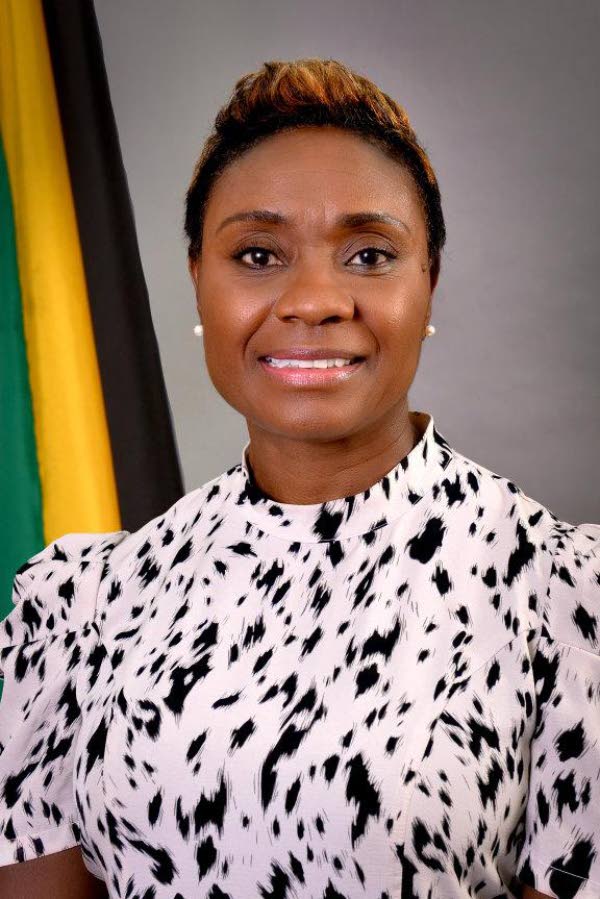
Juliet Cuthbert-Flynn is minister of state in the Ministry of National Security and Peace.