Crafted in scarcity: Irie Arts
SCARCITY is often the reason small businesses in Jamaica are formed. Built with limited resources, shaped by uneven demand, and tested by climate shocks, one Negril-based craft enterprise reflects how micro operators learn to survive long before they learn to scale. That enterprise is Irie Arts, founded by self-taught artist Michael Livingston under the parent company Irie Nature.
Livingston, who is widely known by the nickname Michael Original Sandman, says creativity emerged early in his life as a necessity rather than a choice. As early as age seven, access to basic materials was limited. Paper was hard to come by, so cardboard became the alternative. Drawing late into the night with his sister, Livingston says those moments quietly formed the foundation for a lifelong commitment to art.
“Night-time when everybody sleeping, me and my sister would be up drawing whatever come to wi head,” Livingston recalled.
By 2002 Irie Arts had taken shape as a small enterprise focused primarily on wooden carvings sold in tourist areas along the beaches in Negril, Westmoreland. Livingston explained that it was during this period when sand first became part of his creative process, even unintentionally. He said he would place his carvings on the beach sand, and when the wind blew, sand would settle naturally into the creases of the wood. The interaction between nature and the artwork left a lasting impression and influenced his later decision to work deliberately with sand. The transition to sand as a core artistic material came after Livingston moved operations into a shop. While cleaning some carvings, he said a moon face piece sparked a new idea.
“It just come to my head, ‘Put sand on it,’ ” he told the Jamaica Observer. “Glue came into my head; I had some glue and I just use the brush and brush on the glue inside the shop.”
With sand already on the shop floor, Livingston said he picked it up and threw it onto the glued surface, marking the first intentional, sand-based piece created by Irie Arts. That moon face, he said, was later purchased by a couple from Ethiopia, where it now remains. Today, Irie Arts is best known for ocean-and sea-inspired pieces, particularly crafts resembling marine life.
“The product I sell most is fish,” he said.
Livingston said the business has experienced fluctuating revenues over the years, with profits peaking before the pandemic and declining thereafter. Despite these challenges, he continued operating, viewing the craft as both livelihood and therapy during difficult periods. Following Hurricane Melissa in October 2025, Livingston said sales and foot traffic declined further, particularly due to reduced activity in tourist areas. However, he said the downturn has not deterred him.
“It’s not the money why I’m in it, because I could do a lot of different things to make money; mi just love art,” he said confidently.
Currently, Livingston is physically stationed at Waves Beach in Negril every day except Saturdays, from where he sells his work directly. Irie Arts also maintains an online presence on
Facebook. Looking ahead, Livingston said his goal is to build a museum featuring this style of artwork, creating a space from which others can learn and draw inspiration. He said he has taught the technique in high schools and participated in expos as part of that effort. His daughter, who is a shareholder in the company, previously assisted with the business before migrating. Although he now operates alone, Livingston said he remains hopeful that future generations will continue the work.
“I expect she and my granddaughter — who really love art — to carry it on,” he said.
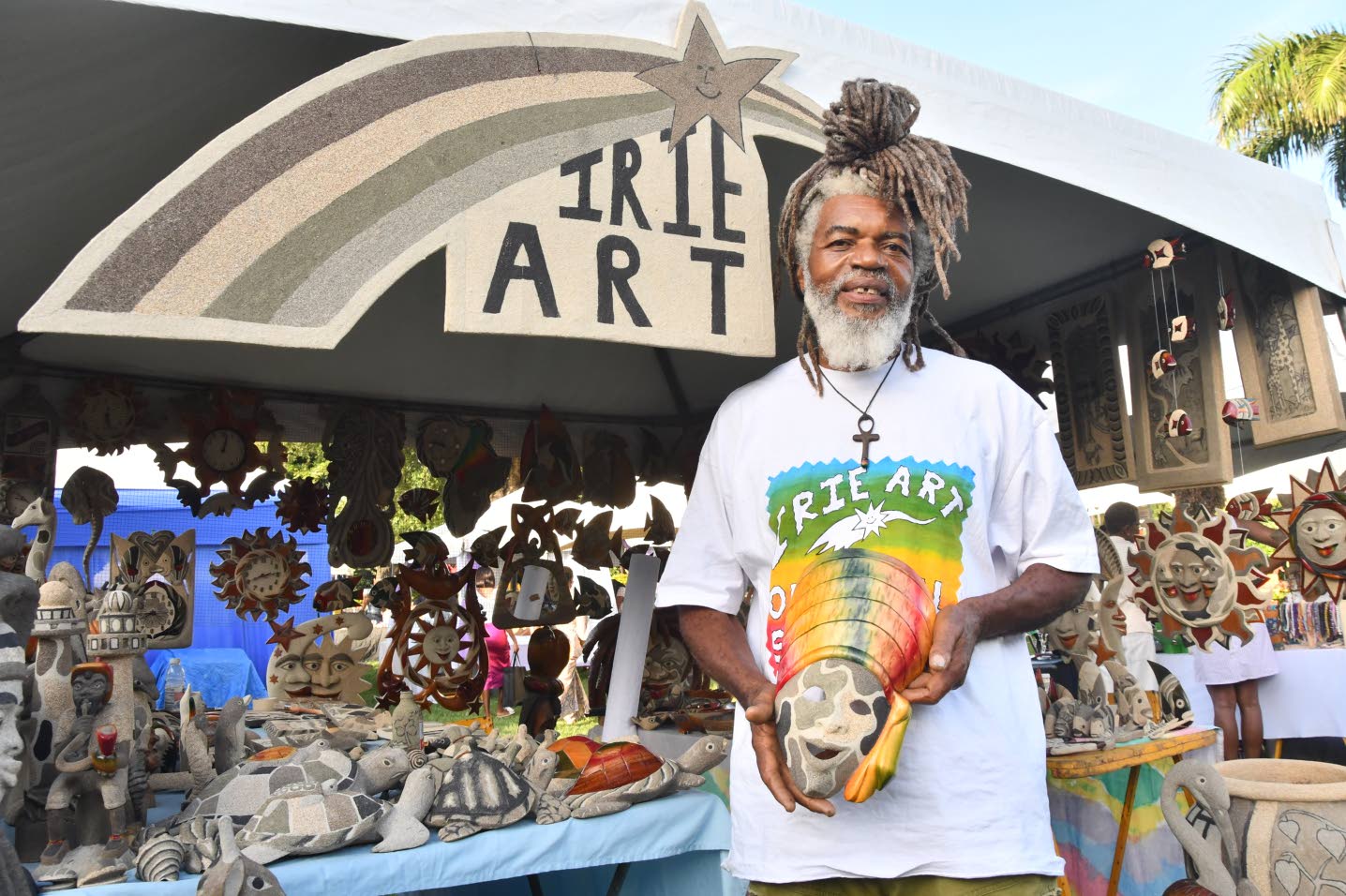
LIVINGSTON…it’s not the money why I’m in it, because I could do a lot of different things to make money; mi just love art.
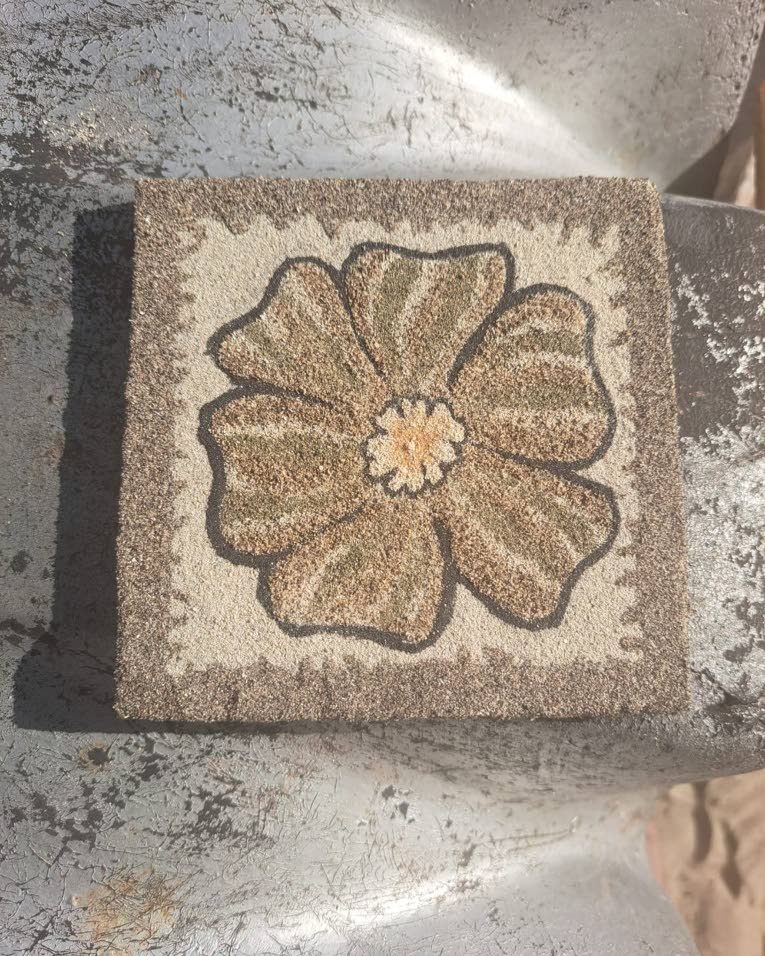
A close-up of a sand-based artwork created by Irie Arts.
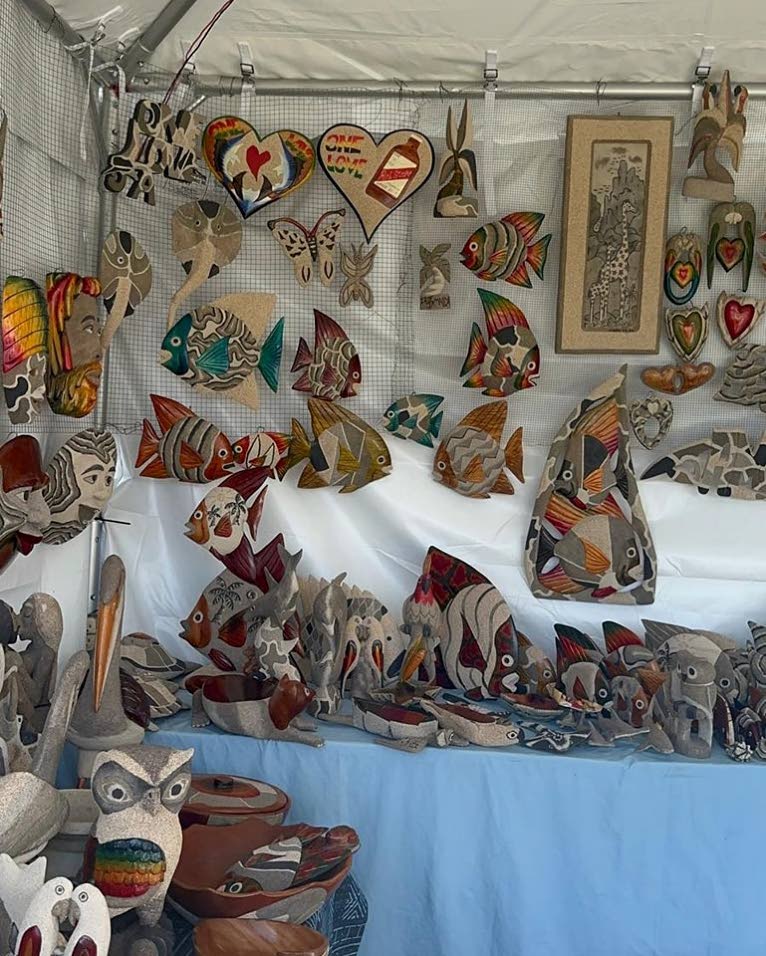
A wide selection of sand-based craft on display at an Irie Arts booth, featuring marine life and nature-inspired designs.
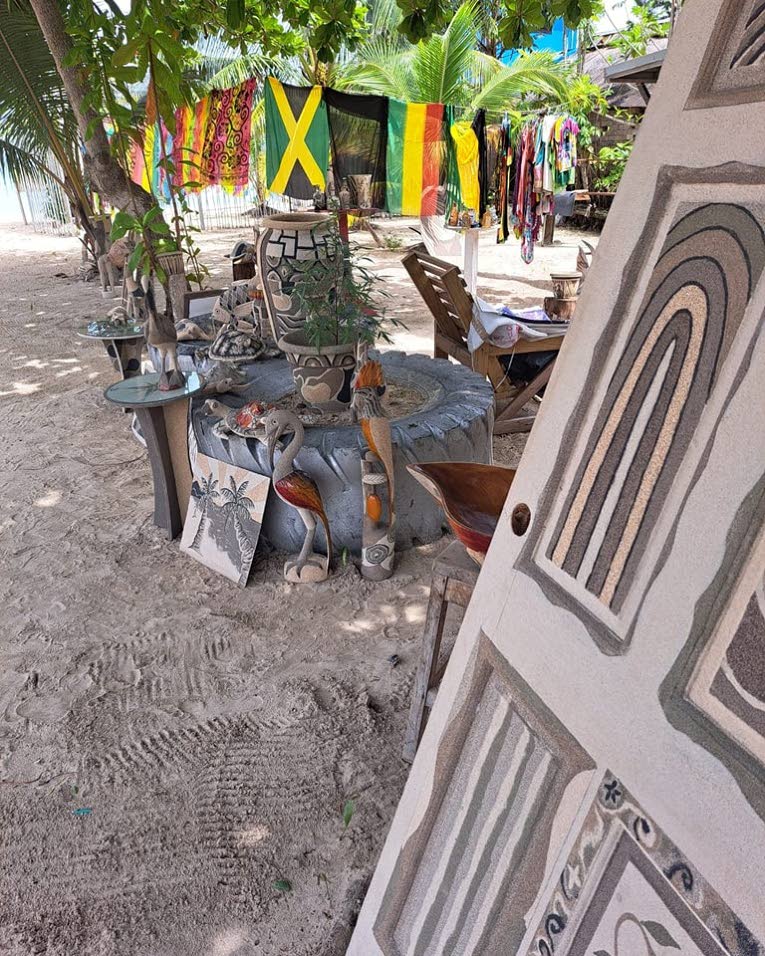
Sand and wood craft displayed at a beachside set-up in Negril where Irie Arts relies heavily on tourist foot traffic.
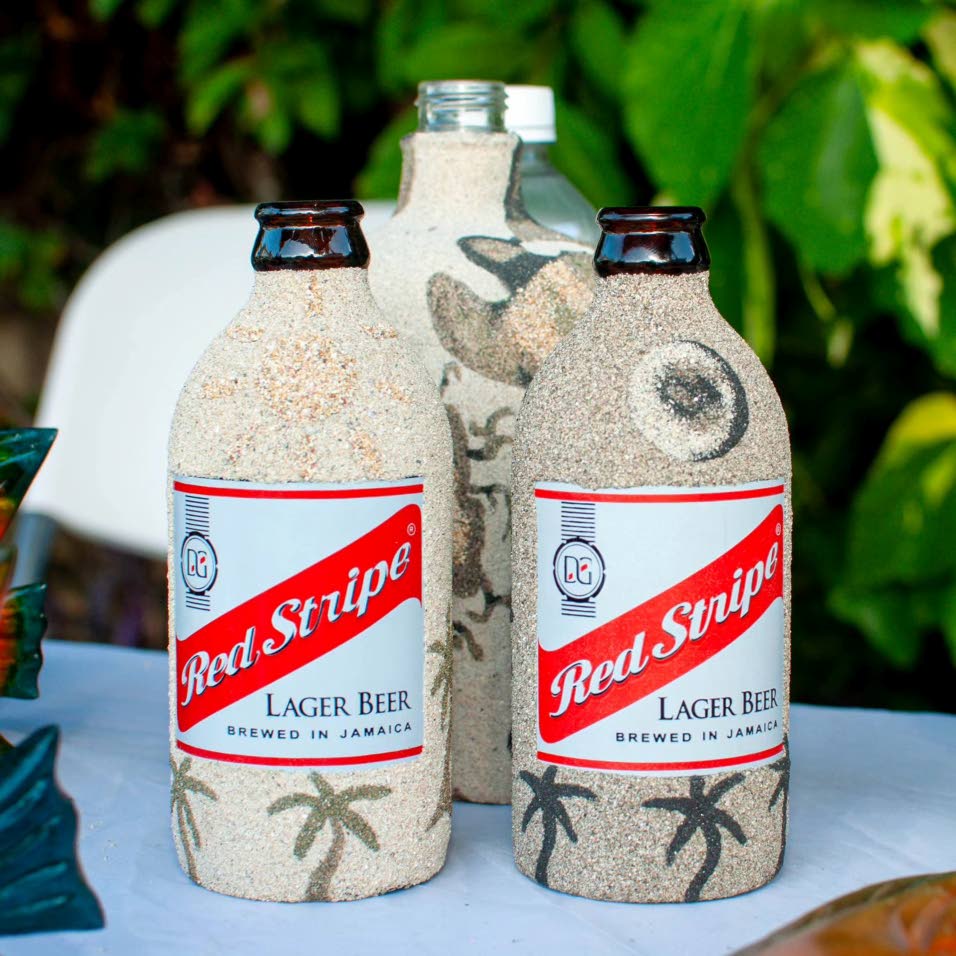
Sand-coated bottles produced by Irie Arts — one of the customised, decorative items created using Livingston’s sand-art technique.
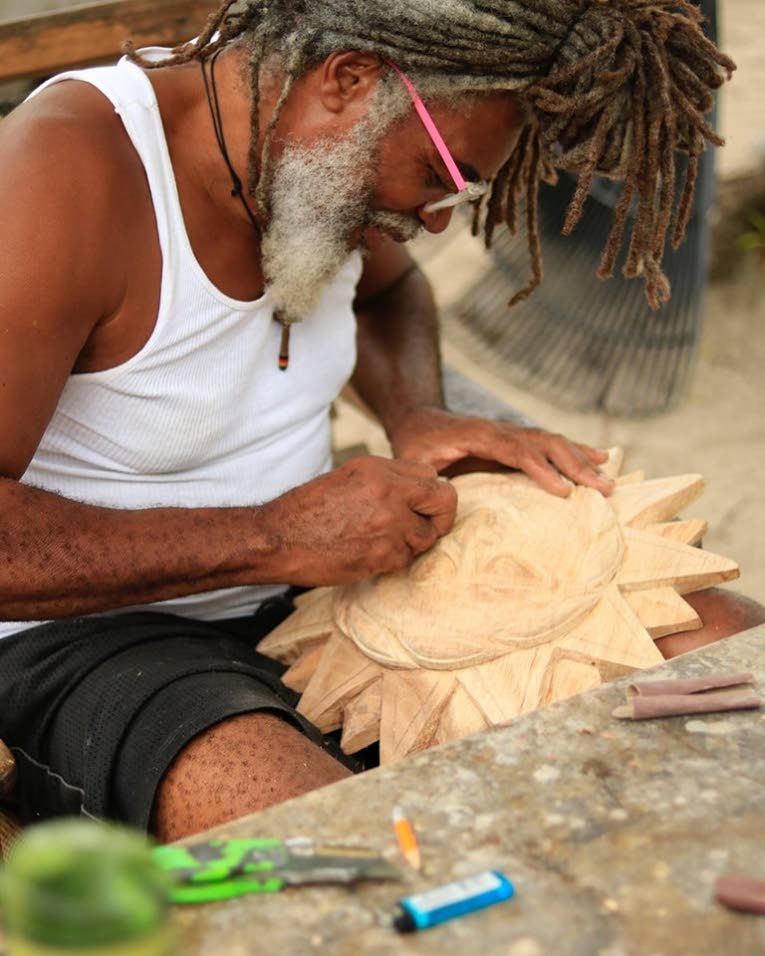
Michael Livingston works on a wooden carving, an early medium used in his craft before Irie Arts evolved into predominantly sand-based creations.
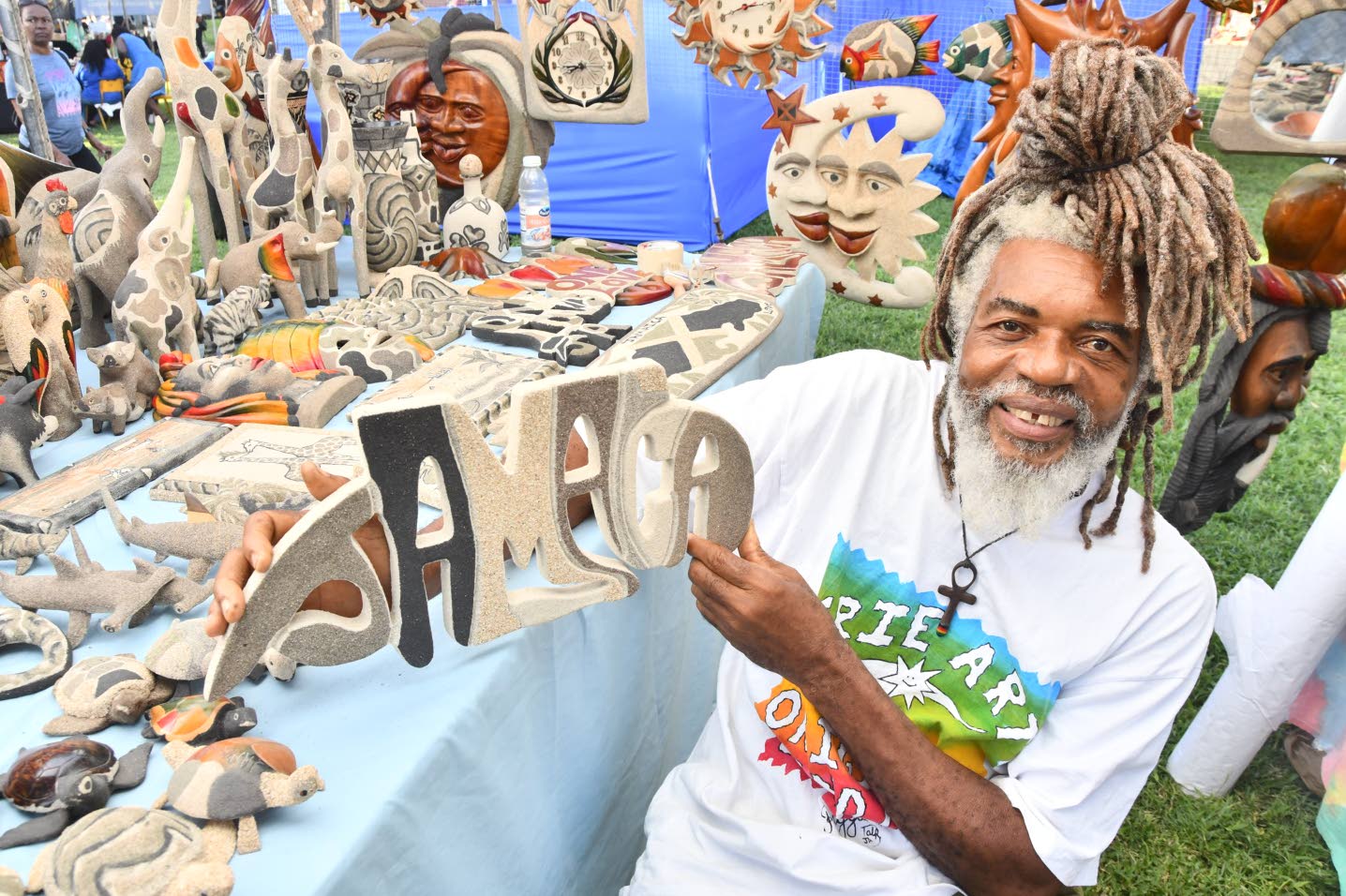
Michael Livingston holds a sand-crafted ‘Jamaica’ sign at a pop-up shop.