



House clerk blames robbery for fleet breach
PAC told safety concerns fuelled Parliament manager’s use of Gov’t vehicle
Weeks after the auditor general reported that a parliamentary fleet vehicle was kept off-site on 173 occasions, the clerk to the Houses of Parliament has disclosed that the arrangement stemmed from a late-night robbery of the employee at the centre of the probe, saying verbal permission was granted in “extenuating circumstances” to ensure his safety.
The disclosure came during Tuesday’s sitting of the Public Accounts Committee (PAC), as Chairman Julian Robinson pressed for clarity on one of the report’s most contentious findings: the lack of documented approval for the overnight retention of a Government vehicle, even as the audit pointed to sustained off-site use.
Giving background, Clerk Colleen Lowe told the committee that the official was a part-time student at The University of the West Indies (The UWI), often working late before returning to complete duties, and became “the victim of crime” after leaving work one evening.
“He was deprived of his personal things in the downtown area and it was known to us that he would often stay here until late in the night and therefore permission was granted to him that he could have access to the vehicle to ensure his safety in those extenuating circumstances,” she said.
However, she stressed that approval was never given for any personal use of the vehicle or for the recording of false information in the log books.
But the auditor general’s special report paints a more troubling picture of the use of the 2022 Prado and the controls that should have governed it. The audit concluded that the facilities and operations manager used the fleet vehicle for 173 of 183 days between June 20 and December 19, 2024, including weekends and public holidays, and that log book times suggested it was parked at his residence overnight on the same 173 occasions.
The report also said management provided no evidence that the accounting officer conducted the required assessment for safe custody, and “no evidence of correspondence” granting permission due to “extenuating circumstances”.
It was that gap, between what the audit team said it saw and what the clerk told MPs on Tuesday, that set up a tense exchange at the committee.
Seeking to define the boundaries of the arrangement, Robinson asked whether the approval allowed the vehicle to be kept overnight. Lowe indicated that this was permitted only on occasions when the employee was on duty well after regular working hours.
When he pressed further, she elaborated that the arrangement was meant to cover late finishes and safety concerns, not general use.
“For the nights when he was here until very late he would have permission to drive the vehicle home in those circumstances for purposes of safety but certainly not to use the vehicle for any personal or private use,” she said, adding that he sometimes helped with official duties because Parliament had limited drivers.
Yet the audit report’s own summary states that the allegation of private use was substantiated, finding the vehicle was used for private purposes “to attend classes at the university” and then parked at home.
It noted that on 26 occasions the log book showed trips to The UWI, with many entries listing the purpose as “meetings” without further detail.
Auditor General Pamela Monroe Ellis told the committee the clerk’s account introduced information the audit had not treated as established evidence.
“As the clerk shared her position I was actually consulting with… the audit principal with responsibility for the audits because what she shared just now that she granted permission for the vehicle to be used in some circumstances, that’s actually new to me, so it is not something that I would have given contemplation to. My understanding up to this point is that there was no evidence that permission was granted for the use of the vehicle,” Monroe Ellis said.
“This matter is here as an issue because there was no such evidence that any permission was granted and my understanding is that the clerk had also denied giving any such permission. I’m hearing something else though, Mr Chairman, that I really do not want to provide any opinion on that until I have better particulars of really what existed,” the auditor general added.
Lowe, however, insisted that the circumstances surrounding the officer’s robbery were disclosed to auditors during the review, even while acknowledging the central weakness — the permission was never put in writing.
“What is clear is that there was no written permission and what is also clear is that no permission was ever granted for there to be any breach of the FAA Act or for any incorrect entries to be made in the log books,” Lowe said.
She reiterated that point later, confirming that while the issue had been discussed with the audit team, there was no formal authorisation on record.
“There is no permission in writing, that is correct, but disclosures would have been made to the auditors… of what transpired when he was held up after leaving work very late one night,” Lowe added.
She also confirmed that a formal police report was made and promised it would be submitted later to verify the circumstances of the incident.
Following the meeting the Parliament’s administrators issued a statement reaffirming its commitment to transparency, accountability, and institutional renewal.
“The engagement with the Public Accounts Committee was both necessary and constructive. It provided an important opportunity to place the facts on record and to demonstrate the deliberate steps now being taken to strengthen governance, improve controls, and ensure full compliance with the Government of Jamaica’s financial and administrative frameworks,” the statement quoted Lowe.
The House also said that since the audit it has “embarked on a clear programme of reform aimed at strengthening internal systems and restoring public confidence. These measures include the establishment of an audit committee to enhance oversight and accountability, improvements to procurement planning and budget management, and the implementation of more rigorous fleet management and asset control arrangements under the direct supervision of a newly appointed transport manager.
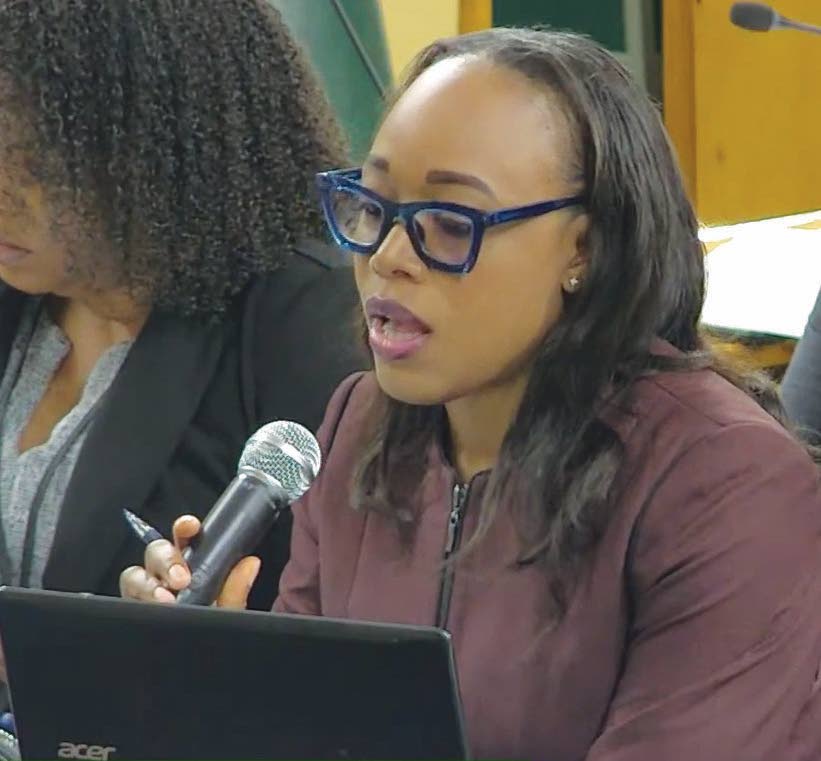
This video grab shows Clerk to the Houses of Parliament Colleen Lowe explaining to the Public Accounts Committee on Tuesday why an officer of the Parliament was given access to a Government vehicle.
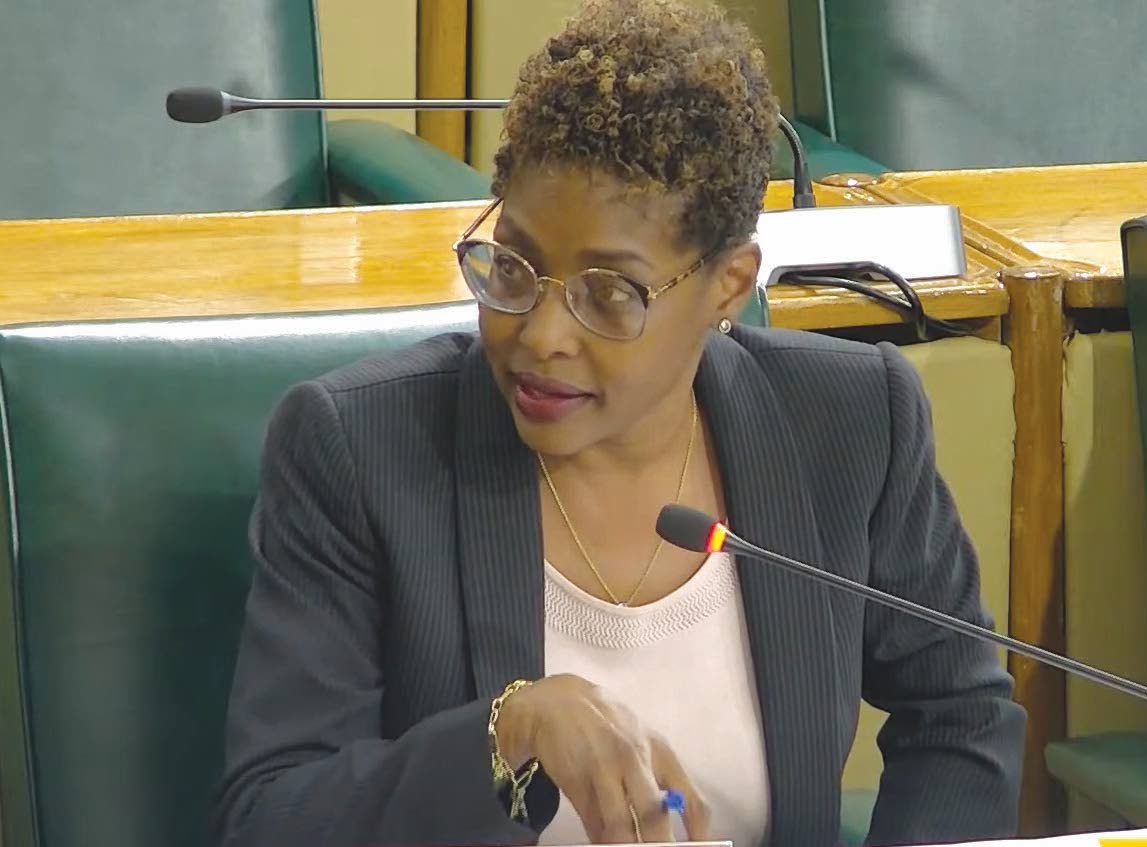
In this video grab Auditor General Pamela Monroe Ellis is seen telling the Public Accounts Committee, during Tuesday’s meeting, that the House clerk’s account of why an officer of the Parliament was given access to a fleet vehicle introduced information that her audit had not treated as established evidence.


