



Clicks over cradles
Tufton cites social media influence in declining birth rate
Health and Wellness Minister Dr Christopher Tufton on Thursday reiterated his appeal for Jamaicans to have more children as he argued that social media — digital platforms and apps that let people create, share, and interact with content and with each other in real time — is contributing to the country’s declining birth rate.
“One of the challenges with families or parenting today is the pressures that have emerged from a society that has become more modern and exposed,” Tufton told guests at Percy Junor Hospital’s baby-friendly accreditation ceremony in Spalding.
“Positives out of modernisation, positives in exposure, positives in technology, but it adds significant pressure on many of us who feel that unless we reach a particular height and achievement and wealth we can’t have children. Is a serious thing,” Tufton said.
“Social media is a double-edged sword, because everybody thinks the best things in life you can pull out of social media, and they should be there too and oftentimes between Photoshop and misinformation, social media will discourage anybody from taking any chance on anything that they think may involve responsible behaviour, but requires some commitment and some discipline,” he added.
He urged health-care workers to combat the misinformation by taking the message of child-rearing and other social issues into communities.
“It is a topic that at some point we have to talk about, and that public health nurse and that community health aide will have to reorient their vision and outlook to going in the homes, sitting down, giving the advice more than they have ever done, because it is as true for infection, prevention, and control, as it is for resolving disputes, getting people to love each other, to live with each other, to feel comfortable with each other, and sometimes even to make the decision whether to have children or not,” he said.
“…We must leverage the credibility that we represent by spending more time in the community talking to people to encourage families to encourage responsible parenting, and indeed, I may say so with even the fear of courting controversy, to say to people it is okay to have children and there is a way to be responsible as a parent and to grow your child to the point where you can achieve the bragging rights that you deserve,” Tufton said.
The Percy Junor baby-friendly facility, located on the Manchester/Clarendon border, saw a decline in births last year when compared to 2024.
“I checked the stats of how many babies were delivered at Percy Junor, 201 in 2024 I am told, and… 71 in 2025, I am told. That is like a 64 per cent reduction, if the stats I was given are correct. At first glance I asked myself the question, ‘It looks like north-east Manchester not cold enough why the decline,’” he said, evoking laughter among the audience.
“It is a trend that is global in scope and that is afflicting all of us here in Jamaica — the decline in our birth rate. The decision is actively so for people to have less children. Every time I walk, because I talk about it so much people say, ‘Bwoy, yu a promote children, you can afford them?’ and that is not the conversation I want to have, because I want to make it clear, our job is to promote responsible parenting, not just to have children for children sake… It doesn’t necessarily have to cost too much either, depending on where you put your priorities and your emphasis,” added Tufton.
Last year, the United Nations Population Fund’s State of World Population report showed Jamaica as having one of the lowest fertility rates in the world.
The report said Jamaican women are now having an average of 1.3 children in their lifetime. That’s much lower than the 2.1 children needed to keep the population stable.
On Thursday, Tufton lauded the administration and staff at Percy Junor Hospital for their dedication and for attaining baby-friendly accreditation.
“The facility has been transformed, both in terms of staff sensitivities and training as well as in terms of infrastructure to accommodate, facilitate, and be welcoming to both mother and child,” the health and wellness minister said.
He said in 2016, of the country’s 23 public hospitals only one had baby-friendly designation.
“Today, there are 12 hospitals in the fleet that have baby-friendly designation, that is a big deal. It means that we are [achieving] the standard as far as being baby-friendly is concerned, it means that the teams in the respective institutions are doing the work [and] have been provided with the support, whether through our external agencies, our region, [and] the ministry,” said Tufton.
He issued a challenge to the remaining 11 hospitals to attain baby-friendly status within three to five years.
“… I don’t see any reason if 12 hospitals can achieve baby-friendly status, 23 hospitals can achieve [it too]. The people in the 12 [hospitals] can do the work to get it done. The remaining 11 can do the work to get it done,” he said to applause from the audience.
“I think that is a good challenge, it is a fair challenge,” said Tufton.
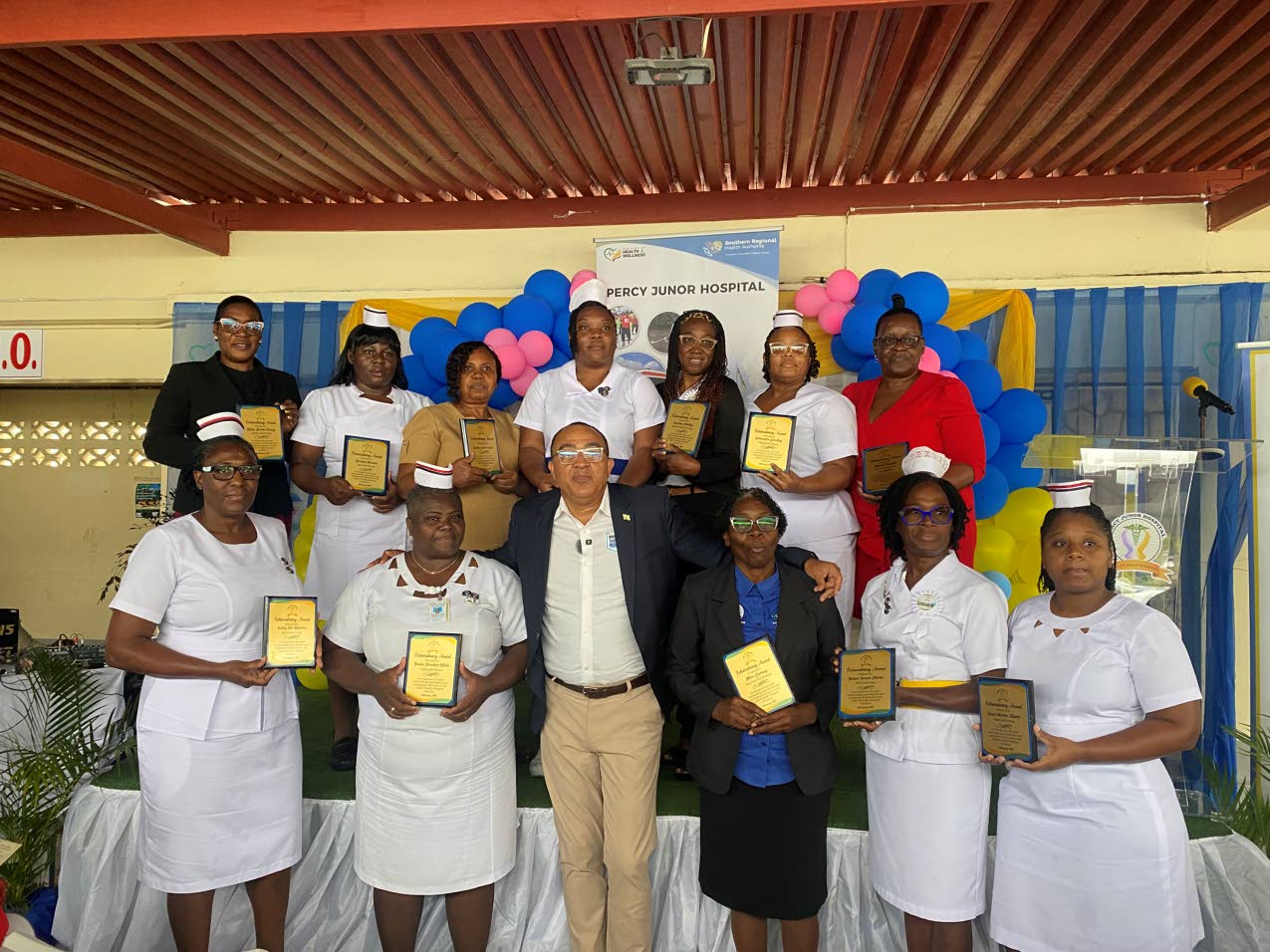
Health and Wellness Minister Dr Christopher Tufton (third left, front row) with health care workers at Percy Junor Hospital who were awarded on Thursday. (Photo: Kasey Williams)
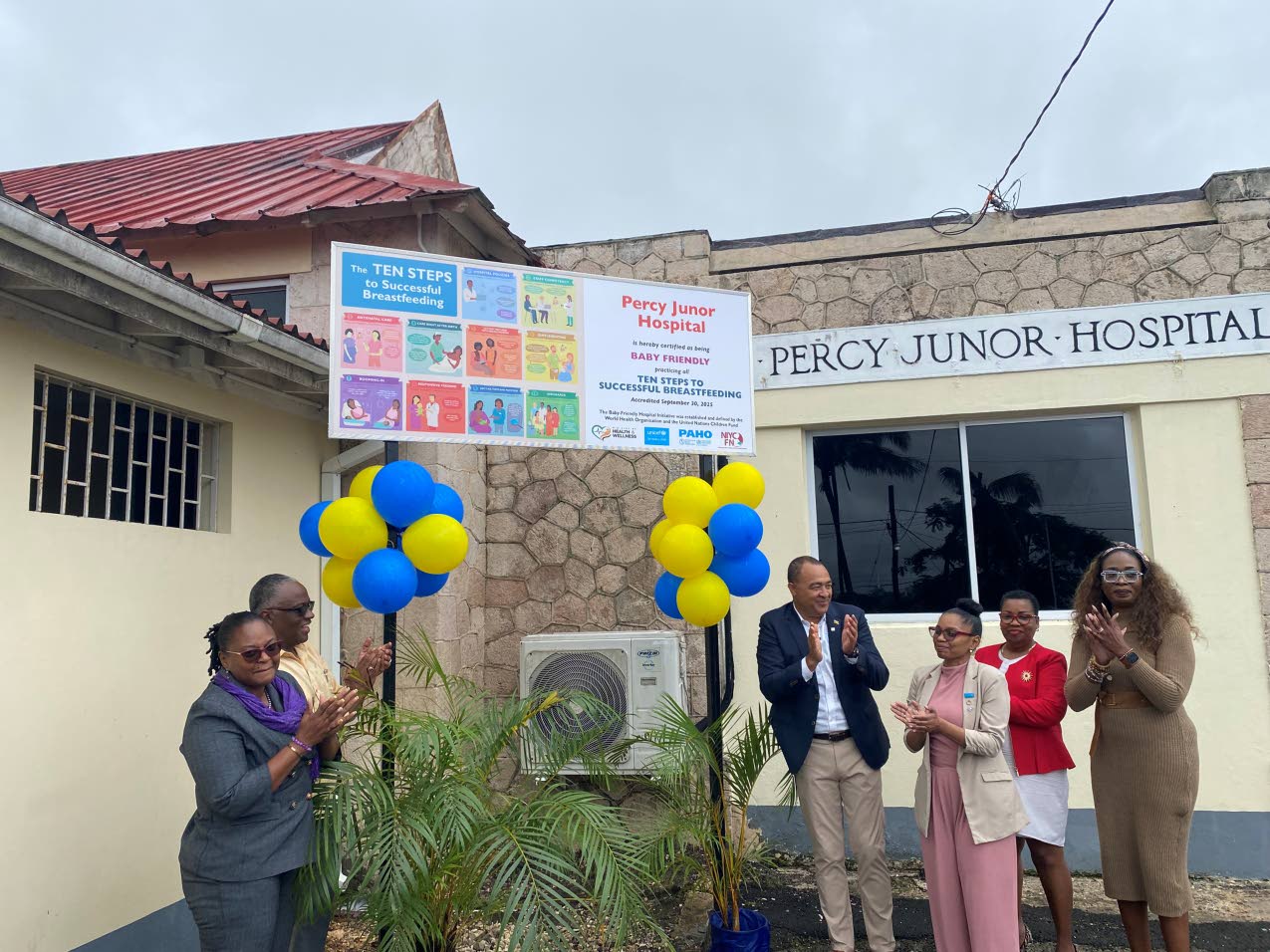
Health and Wellness Minister Dr Christopher Tufton (third left) as well as (from left) acting chief executive officer at Percy Junor Hospital Faith Sterling; Custos of Manchester Garfield Green; nutrition officer and UNICEF representative Vonetta Nurse; Nicole Dawkins-Wright, director of emergency disaster management and special services at the Ministry of Health; and Dr Simone Spence director of health promotion and protection branch at the ministry, applaud at the unveiling of the baby-friendly sign at the hospital on Thursday. (Photo: Kasey Williams)


