



Alexander Crooks: From student leader to practice-bound architect
ALEXANDER Crooks’ introduction to architecture began long before he understood the profession by name. As a child, he was fascinated by a simple wooden object he often saw older students carrying — The T-square. Curious, he would ask his mother what it was and why it mattered. When she explained it was a tool used for drawing, something clicked.
By the age of eight, Crooks had already decided that wherever he went to high school, technical drawing (TD) would be the one subject he would pursue with certainty.
At Campion College, that instinct proved correct. TD quickly became his strongest subject, earning near perfect grades term after term. The turning point came in 2019 when Crooks placed seventh in the Caribbean for Technical Drawing in the CSEC examinations. It was then that architecture shifted from a distant curiosity to a serious professional aspiration.
Motivated by this discovery, he founded an architecture club at Campion and began actively seeking internships at architectural firms, determined to understand the discipline beyond the classroom. That initiative eventually led him to apply to the Caribbean School of Architecture at the University of Technology, Jamaica (UTech), where he was accepted with the support of the GraceKennedy UTech Scholarship. The scholarship covered almost the full cost of his architectural education, easing a financial barrier that often prevents many talented students from pursuing architecture as a career.
The transition into architecture school was far from ordinary. While Crooks was accustomed to academic rigor, the realities of studio culture introduced a new level of intensity. Design projects were highly conceptual, deadlines relentless, and the workload immersive. Long nights in studio became routine, with students relying on one another for critique, motivation, and support.
The first semester was a period of adjustment, but once Crooks found his rhythm, he committed fully. He adopted a work ethic that prioritised strong conceptual development early in the design process, often pushing himself hardest at the beginning so later stages could be refined with clarity. This approach consistently paid off, producing projects that impressed lecturers for both ambition and resolution.
As he progressed into upper-level studios, projects became more grounded in real-world conditions. Two undergraduate works emerged as defining moments in his development, which coincide with an annual regional study tour in third and fourth year.
The first was El Centro Cultural de Renacentista (Renaissance Cultural Center), a cultural centre proposed for the Dominican Republic. The second was Cántaro (The Vessel), a ten-storey vertical culinary museum in Panama, named after the Spanish word for barrel or vessel. Both projects were rooted in Latin American and Spanish Caribbean culture and conceived as immersive environments that allow visitors to understand a place through spatial experience.
Through these projects, Crooks developed a deep appreciation for architecture as a narrative tool. Design became a way of translating culture, ritual, and history into form and space. Cultural identity increasingly shaped his design language and approach. He also became known for his conceptual model making where he would represent his concept ideas as physical abstract models and expressive digital collages.
These projects also validated his research-driven methodology. In his third year, El Centro Cultural de Renacentista earned him the Caribbean School of Architecture Head of School Drawing Award. In his final year, Cántaro received the same award, making him one of only two students to win it twice.
The award recognises bodies of work that successfully integrate storytelling, architectural quality, and presentation clarity. For Crooks, it affirmed that disciplined research and technical rigor could coexist with expressive design. It also became a strong motivator to continue refining his craft.
Alongside academic performance, leadership remained central to Crooks’ undergraduate journey. Over four years at the Caribbean School of Architecture, he served in several roles including director of fundraising for the faculty’s student union committee, school archive assistant, and class representative. His most significant role was president of the Caribbean Architecture Students’ Association (CASA).
CASA exists to unite architecture students across the region, amplify student voices, and foster professional growth. During his two-year tenure, Crooks championed initiatives that connected students with registered architects, hosted design competitions, and organised workshops and showcases that directly supported studio development.
His efforts were recognised through multiple awards, including being named Student of the Year in 2025. The recognition reflected not only academic achievement but sustained contribution to the school community, reinforcing his readiness for leadership beyond university.
Crooks’ academic record, leadership, and service culminated in his nomination for university valedictorian for the Class of 2025. For him, the nomination represented more than personal achievement. It highlighted the strength of the Caribbean School of Architecture and its teaching culture.
Late nights at UTech often reveal one building fully illuminated, the Caribbean School of Architecture, where lecturers and students work side by side in pursuit of excellence. That environment of mentorship and rigor played a defining role in shaping his professional maturity.
Even before entering university, Crooks interned at architecture firms which developed an aptitude in drafting, measured surveys, and small design projects. By his final-year internship, he was independently designing and documenting work, producing detailed construction drawings to professional standards.
This technical confidence translated directly into his studio projects. His ability to represent ideas clearly, learn new software, and refine graphic techniques allowed his work to reflect his conceptual intentions accurately. Education and professional practice increasingly informed one another. While studio projects allowed freedom to explore his personal utopias, professional work introduced the scrutiny and responsibility of building in the real world. Balancing both sharpened his design judgement.
Crooks’ design interests align strongly with tropical architecture, particularly within contemporary residential, commercial, and hospitality projects. This led him to Mosaic Architects, where such explorations are central to the firm’s practice.
Now working as an architectural designer, he is involved in design development, construction documentation, and site engagement. Hospitality projects in particular have offered some of the most immersive and creative opportunities, where spatial sequencing, materiality, and atmosphere are carefully crafted around the end-user experience. Under the mentorship of the firm’s principal, Crooks continues to expand his understanding of construction, coordination, and architectural decision-making, gaining insight into how ideas transition from drawings to built form.
Education at the Caribbean School of Architecture fundamentally shaped Crooks’ design philosophy. Students are taught to begin every project with climate, site, and physical context. Architecture must respond intelligently to the tropics.
The Caribbean’s rich blend of cultures, histories, and traditions is impossible to ignore as a design influence. This complexity has informed Crooks’ thinking around resilience, passive cooling, hurricane resistance, and culturally grounded architecture. He believes regional architecture should feel authentic, responsive, and recognisable, spaces that people can identify with and take pride in as distinctly Caribbean.
Crooks aspires to be an architect of change, committed to advancing Caribbean architecture through disciplined practice, cultural sensitivity, and meaningful spatial experiences. He believes strong education, mentorship, and public awareness are essential to shaping better built environments and stronger architectural identity across the region.
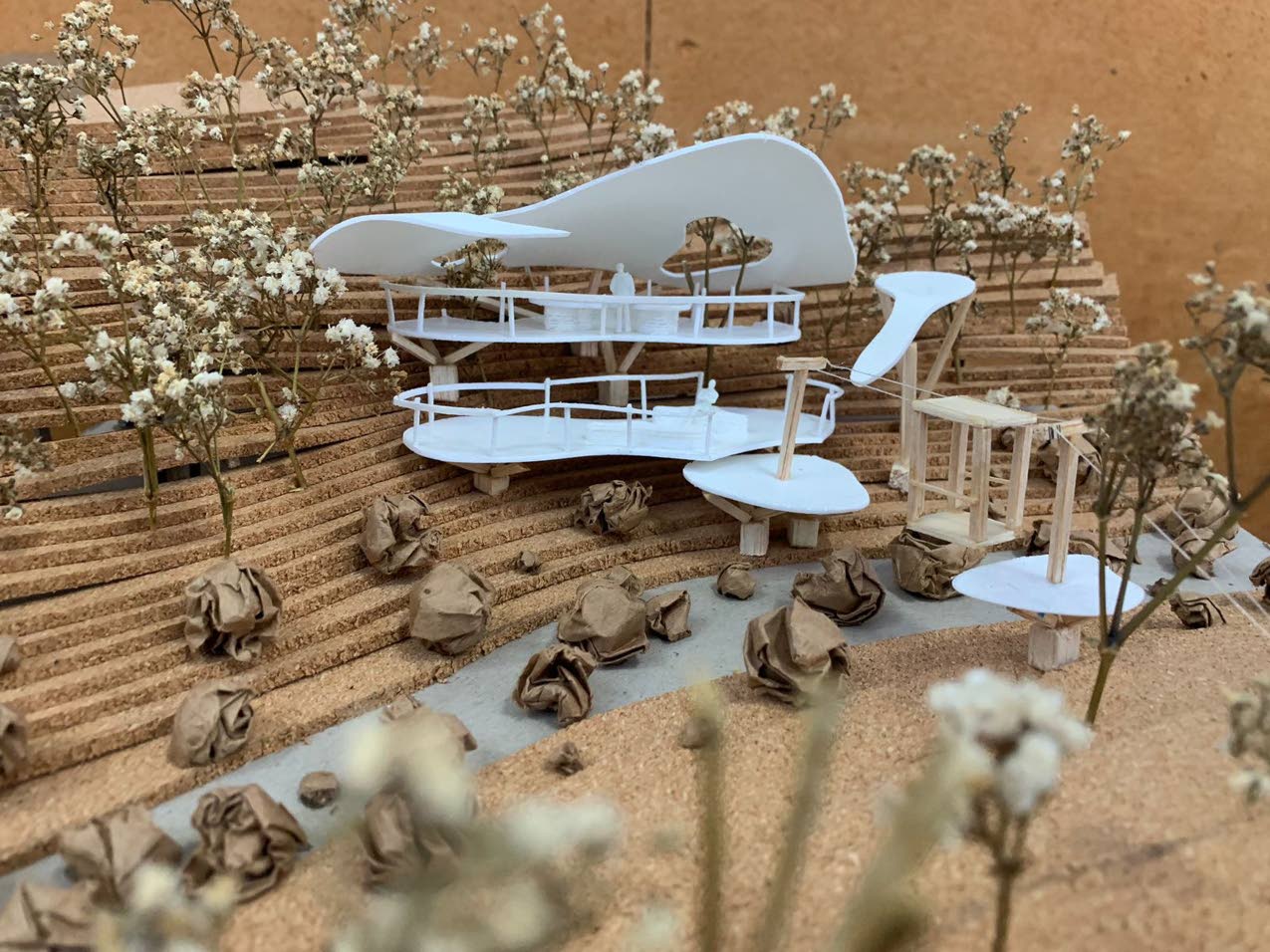
Design Studio Presentation — Rural Shelter Model.
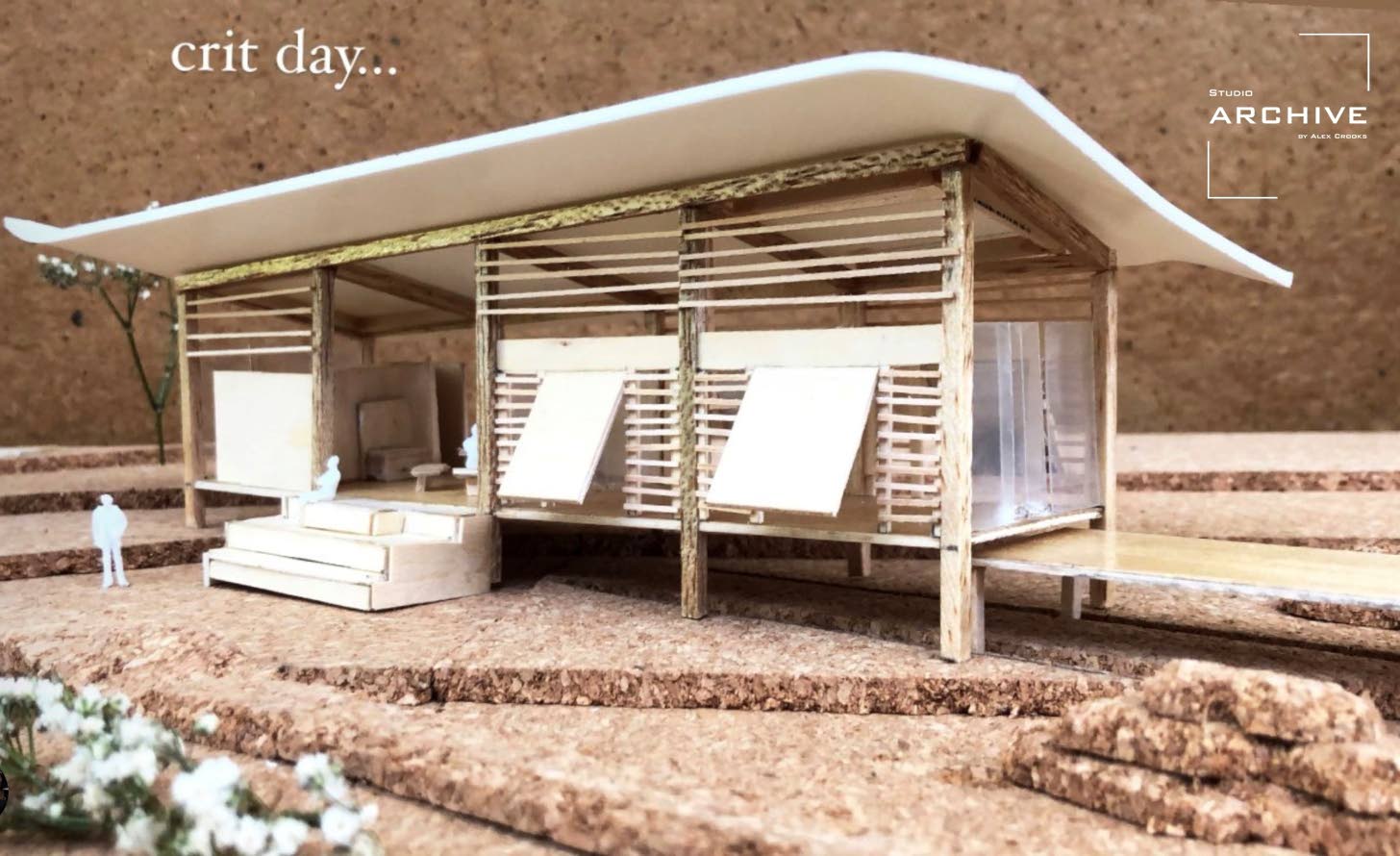
Design Studio Presentation- Pavilion Model.


