



It’s a capacity problem!
Curtailing jury trials not the solution to case backlog
“Trial by jury is the lamp that shows that freedom lives,” Lord Devlin famously said in 1956. Lord Devlin (Patrick Arthur Devlin) was a highly influential British judge and legal philosopher known for his swift rise in the judiciary. He presided over major cases.
What did Lord Devlin mean? He was underscoring the very vital role that juries provide as an effective check against institutional, elite, and government power and influence. Lord Devlin regarded trial by jury as a foundational pillar of democracy.
I do also.
He opined that trial by jury was critical to the maintenance of a healthy public conscience. He fervently argued that the people’s judgement in the justice system acted as a bulwark against tyranny, since public participation helped to safeguard liberty.
I fully agree with Lord Devlin. I am a firm believer in the wisdom of the crowd. And for that and related reasons I am extremely doubtful about recent calls — from high places, very high places, and even low — for the abandonment, sidelining, relegation (or whatever words mean reduction or trimming) of jury trials and replacing them with judge-alone or bench trials. I say no way!
THEIR REASONING
For especially the last five years, the clamour for the retirement or abandonment of trial by jury has been getting louder. Keeping the lamp of freedom burning bright is critical for a young democracy like Jamaica’s. We need to preserve trial by jury.
Consider this Jamaica Observer news item of January 8, 2022, ‘Chief justice renews push for end to jury trials’. It said, among other things: “According to the chief justice, with trials being ‘pushed further and further back’ because of the suspension of jury trials, because of the vagaries of the pandemic, ‘it is just a matter of time before someone is going to make the case that their constitutional rights to a fair trial within a reasonable time are being violated’.
In this context, the chief justice, while batting for jury trials to be struck out altogether, said: “The executive and the legislature really need to revisit this question of jury trials and if they are going to retain them, then you have to have all the financial and material resources necessary to make it work in the context of a pandemic because it is going to be costly.”
Ponder this also: ‘Sykes in favour of scrapping jury trials, encourages more plea bargaining’. The
Observer item of January 5, 2026 said this and more: “The argument of scrapping jury trials and using the plea bargaining system a lot more as possible ways to slash backlog in the courts has come to the fore, with Chief Justice Bryan Sykes pointing out that there is currently a backlog of 3,000 cases, out of which 1,000 are before the Home Circuit Court in downtown Kingston.
“Sykes was delivering remarks during the swearing-in ceremony for four judges and two masters-in-chamber.
“ ‘To see that the debate has occupied not just us, for those of us who have been following what has been happening in England and Wales, Sir Brian Leveson was tasked by the Government to solve the problem of a backlog of 78,000 cases. He was appointed in 2024, and they, like us, are setting cases four and five years down the road.
“ ‘The Government has recognised that this is not sustainable; something has to happen. Among the more controversial recommendations was the curtailment of jury trials. The home of jury trials is now saying maybe we need to rethink the jury system, having regard to the cases that are in backlog, and the estimate is that unless something is done, the backlog will reach 100, 000 by 2028, going into 2030,’ Sykes pointed out.
“ ‘The question now of timely justice is a significant one,’ he added.”
Chief Justice Bryan Sykes is absolutely right that the matter of timely justice is a significant one. But his diagnosis of the primary cause of the backlog in the court system is absolutely wrong.
I have a great deal of respect for Chief Justice Bryan Sykes. Credible media reports confirm that, since taking office, he has introduced changes — primarily through greater use of technology — that have improved several aspects of the judicial process.
Lawyers have told me that he has instilled a renewed sense of urgency in addressing the court backlog. This backlog has, among other effects, delayed or effectively denied justice to especially the poor and dispossessed — who constitute the majority of Jamaicans — and has also discouraged investment in the country.
THE CRUX
Understand this, the huge backlog in the court system which Justice Bryan Sykes inherited is not a jury problem; it’s one of capacity.
Do we have nearly enough courtrooms? No!
Do we have enough judges? No!
Do we have enough sitting days? No!
Do we have an abundance of crumbling court infrastructure of all types? Yes!
Jamaica is a developing country, and we must avoid what seem like quick fixes to especially long-standing problems.
Countries like the United Kingdom, the United States of America, Canada, and others have had the luxury of hundreds of years to evolve and develop their institutions, including robust court systems.
Jamaica has been independent for only 63 years. Are the physical infrastructure and, especially, technological resources in those countries far superior to Jamaica’s? Yes. They benefit from more judges, more sitting days, and far more courtrooms.
Where is the hard evidence that dumping trial by jury will solve our long-standing backlog? I have seen only some guesstimates, which amount to administrative utopianism. To me, replacing one massive problem with a potentially bigger one is not common sense.
I view Chief Justice Bryan Sykes’ proposed solution as a mere band-aid on a cancer.
Abolishing or severely curtailing trial by jury would strip our justice system of much of its public legitimacy. Why? Among other things, classism remains rife in Jamaican society — those denying it are in denial.
Our history of slavery and colonialism has bequeathed a profound residual distrust of the elites, whom many Jamaicans see as having simply replaced the old planter class. Abandoning jury trials would only solidify and deepen that existing societal distrust. Instead, we must work to build the opposite — greater trust and inclusivity in the system.
Relatedly, there is the matter of our democracy. The word democracy has its origins in the Greek language. It combines two shorter words — “demos”, meaning the people (or the citizen body) of a particular city-state, and “kratos”, meaning power or rule.
The wisdom of the common people is sacrosanct in a democracy.
Most of us accept — and I suspect Chief Justice Sykes is included here — that the common person is wise enough to choose who manages the affairs of his/her country. Then, if we trust the common man to decide at intervals who governs, why should he/she not also be trusted to sit on a jury and deliberate on matters of justice that affect his peers?
As I understand it, judge-only trials are more vulnerable to error and therefore provide stronger grounds for appeal.
Legal transplants from the UK, USA, and Canada are not the answer to the backlog in Jamaica. We have tried the transplant approach in several other areas since political independence in 1962. By and large, Jamaica has become poorer, weaker, and less respected as a consequence. Transplants do not often come with the institutional maturity and culture from which they originated.
Understand this, conviction and imprisonment are among the State’s most consequential powers. Why should ordinary citizens in a functioning democracy be shut out from this pivotal process? To me, dumping jury trials is patently anti-democratic.
Institutional bias is a massive problem in this country. Trial by jury is a necessary and hugely important safety valve to encourage and protect participation by especially minority interests. This crucial guard rail helps preserve public trust — and that trust fuels our court system.
It also helps prevent the system from being further alienated from ordinary Jamaicans. This is critical.
SELF-EVIDENT SOLUTIONS
The answer to effectively dealing with the backlog is not difficult to figure out. It is right before all who wish to see. That has been the reality for many years as well. We need more court infrastructure adequately equipped to meet our unique local needs.
These courts must also measure up to international standards. We need more sitting days. We need better digital case management. We need more judges. We need more court staff. They must be well-trained and competitively remunerated. If you pay people tuppence you get tuppence quality. We need considerably increased funding from the Government. We need more legal aid for obvious reasons. The solutions are self-evident: We must quickly expand capacity and modernise processes.
“Justice delayed is justice denied” is attributed to British Prime Minister William Gladstone. Others made similar statements long before him. Anyway, I agree with Gladstone. I would humbly add, though, that achieving speedy justice in Jamaica cannot mean sidelining the direct involvement of ordinary Jamaicans in State power.
PLAYING FOR TIME?
On the matter of State power, this banner headline did not escape my notice, ‘Parliamentary committee to deliberate on jury vs bench trials’. The Observer item of January 14, 2026 noted among other things: “A joint select committee (JSC) of Parliament will be established to consider the issue of jury trials versus bench trials, a move that would require an amendment to the Jury Act.
“Justice Minister Delroy Chuck is hoping that the JSC will be established as soon as the Parliament concludes the debate on amendments to the Jury Act.”
Here we go again, another JSC for a problem in which the answer is obvious to everyone but the blind. The backlog is not a jury problem; it is a capacity problem. As it is now, serious crimes such as murder, rape, arson, and wounding with intent are all tried by a jury. If those crimes were to be tried by judges the primary cause of the long-standing backlog in the courts — the lack of capacity — would still exist.
We have seen this movie several times before: Set up a JSC to deliberate on a crisis. The JSC takes an inordinate time to complete its work. When the JSC completes its work its recommendations are placed on a shelf and allowed to gather dust. To the man in the street, this repeat of a bad movie is tantamount to playing for time. Folks want to see the main presentation. We have been waiting for donkey years.
Consistent with Prime Minister Andrew Holness’s commitment to build back better post-Hurricane Melissa, I humbly suggest that urgent action be concentrated on solving the capacity deficits in the court system. Those who work in the court system — and, indeed, the general public — already know the answers to these questions:
* Do we have enough courtrooms? No!
* Do we have enough judges? No!
* Do we have enough sitting days? No!
* Do we have an abundance of crumbling court infrastructure of all types? Yes!
Let us use the precious opportunity which has been provided by the passage of one of the most powerful hurricanes in history to practically solve especially long-standing problems.
“We cannot solve our problems with the same thinking we used to create them,” said Albert Einstein.
I totally agree.
COMMENDATION
On the matter of purposeful thinking and matching action, I was very happy to see this development at the start of a new year. Applause!
“Legislation has been tabled in the House of Representatives to facilitate the much-anticipated increase in stipends for members of the public empanelled to serve as jurors. The amendments to the Jury Act were tabled by Minister of Justice and Constitutional Affairs Delroy Chuck during a statement to the Lower House on Tuesday, [January 13].
“ ‘The Bill before the House proposes to increase the stipend paid to jurors from $2,000 to $6,000 for each day or any part of a day that they serve on a jury. This represents a 200 per cent increase in the stipend,’ he said.” (Jamaica Information Service, January 14, 2026)
Jamaica must strive to make the administration of justice more publicly palatable, not less…
Garfield Higgins is an educator and journalist. Send comments to the Jamaica Observer or higgins160@yahoo.com
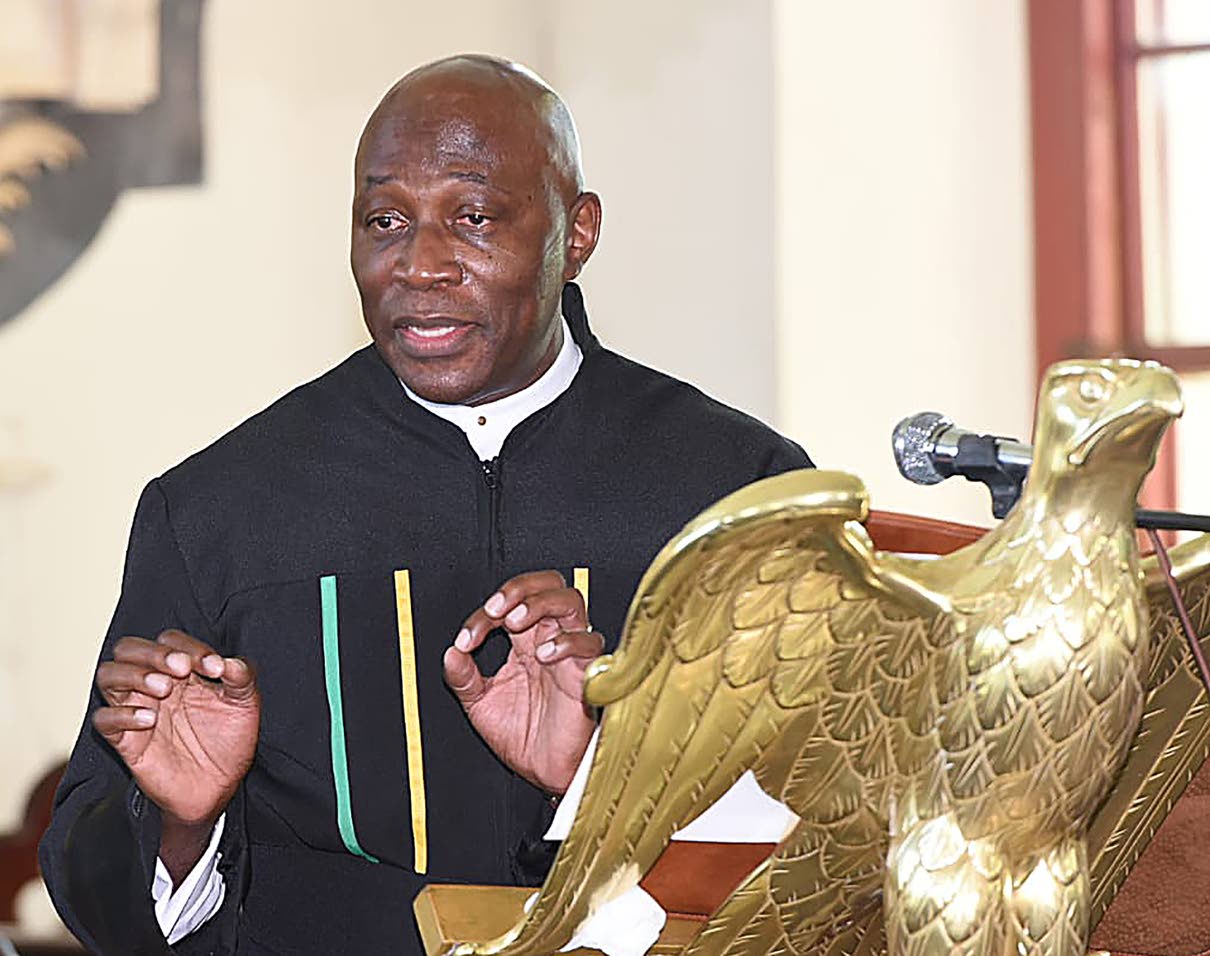
Chief Justice Bryan Sykes.
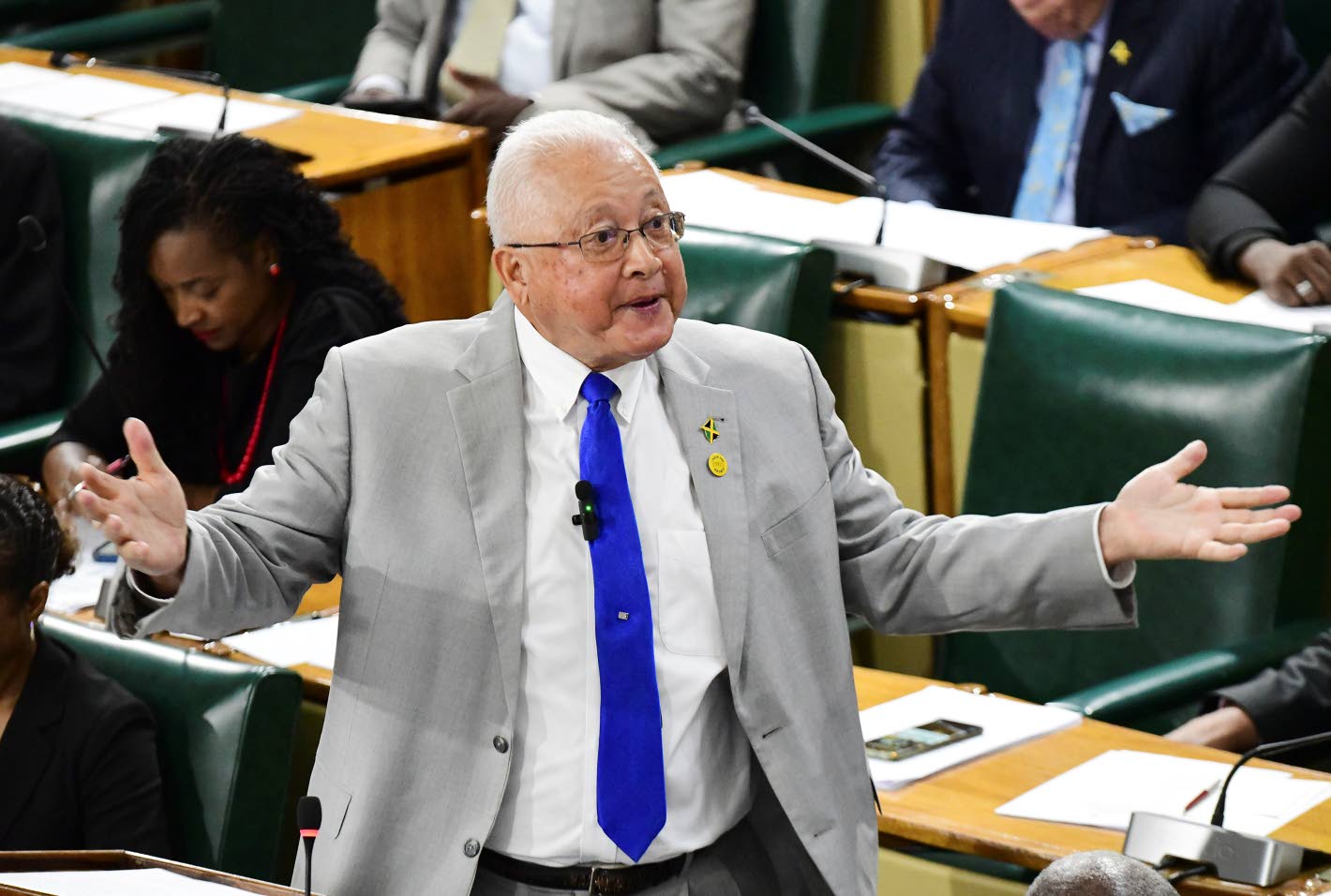
Minister of Justice and Constitutional Affairs Delroy Chuck (Photo: Naphtali Junior)
Trial by jury is critical to the maintenance of a healthy public conscience.


