



VOICE OF THE REGION
David Riley eyes global impact for Caribbean coaches after World Athletics appointment
AFTER being appointed to the World Athletics Coaches’ Commission, local coach David Riley says he plans to champion the concerns and recommendations of Caribbean coaches in an effort to further develop the sport globally.
Riley, Jamaica’s under-20 track and field team technical leader and Excelsior High head coach, was officially inducted in the newly formed commission last month by the World Athletics Council.
World Athletics says one of the coaches’ commission’s main objectives is to, “ensure coaches’ voices are integrated into World Athletics decision-making, and to ensure [there is] a dedicated forum to provide focus and drive forward identified elite coaching initiatives through proposed policies and projects”.
Riley, Jamaica’s only member of the eight-to-14-member commission, told the Jamaica Observer that he’s still taking in the significance of the honour.
“As I reflect on it, it’s evident that people locally respect the work that I’ve been doing and they see me as someone who can function in the capacity and indeed make a change,” he said. “The response and reaction has been very supportive and I hope to make sure I do exactly what caused them to have the confidence in me, and so I’m very happy for the level of support that I’ve received so far.”
He also received special commendation from World Athletics President Sebastian Coe who attended an Excelsior training session during his visit to Jamaica last month.
“David will serve with distinction on that commission and also bring his experience of coaching, particularly in this environment, to the broader discussions at World Athletics that, inevitably, coaching touches in development — and in competition, clearly — athletes and even some of the governance issues around safeguarding,” Coe said.
Riley, who also serves as president of the Jamaica Track and Field Coaches Association, says his appointment is a testament that local coaches can impact athletics on a wider scale.
“It helps to strengthen the route that we’ve taken which is to really recognise the coaches, to help provide them with the latest information regarding the sport and the development and what are the best practices, and we just support them in their journey,” he said. “It’s the move to professionalise coaching in Jamaica so that persons can choose that, and feel comfortable in their daily operations, and to be able to give or continue the sacrifices that they’ve been making to develop the athletes that bring so much glory to Jamaica.
“We certainly are among the best. Yes, there are things that we need to improve on — as you would think in any process and any organisation — but certainly we are on the right path with the level of recognition and the processes that we’ve been implementing to move our coaching to a higher level.”
While heavily invested in the sport locally, Riley says amplifying the voices of coaches across the Caribbean will be a priority.
“It’s not just local but regional — the socio-economic background and the cultural differences of the region needs to be reflected in the global strategy. So, it’s not just listening to the Jamaican coach, it’s the regional and the Caribbean coach, and getting those inputs so that there could be greater consideration for the concerns of the people from this region.”
Riley, a World Athletics Level 3 elite coach in sprints and hurdles, says the commission also has a responsibility to athletes by helping to provide modern and efficient information to the coaching population.
“With coaching education, what information does the athlete get? The guidance that we get to reach elite-level type performances,” he said. “Is that information age-appropriate? What’s the latest that we have found from the research with respect to diet and recovery? How do you streamline that? How do you get it to the coaches, and irrespective of where they are from, because World Athletics isn’t only interested in building the track and field in Jamaica, they’re looking at all 214 members. So providing that information, sharing it broadly, and developing the sport globally, is really what they are interested in.
“Some of the challenges also come from the coaching education and how pervasive the information is for coaches, regardless of where they are. So we have our own challenges locally with respect to coaching and the information that coaches are using to provide guidance to their athletes — how current is it? How scientific is it? Those are issues that we also have to address. Athlete welfare is also an issue that needs to be addressed by the coaches’ commission.”
RILEY..the response and reaction has been very supportive and I hope to make sure I do exactly what caused them to have the confidence in me, and so I’m very happy for the level of support that I’ve received so far
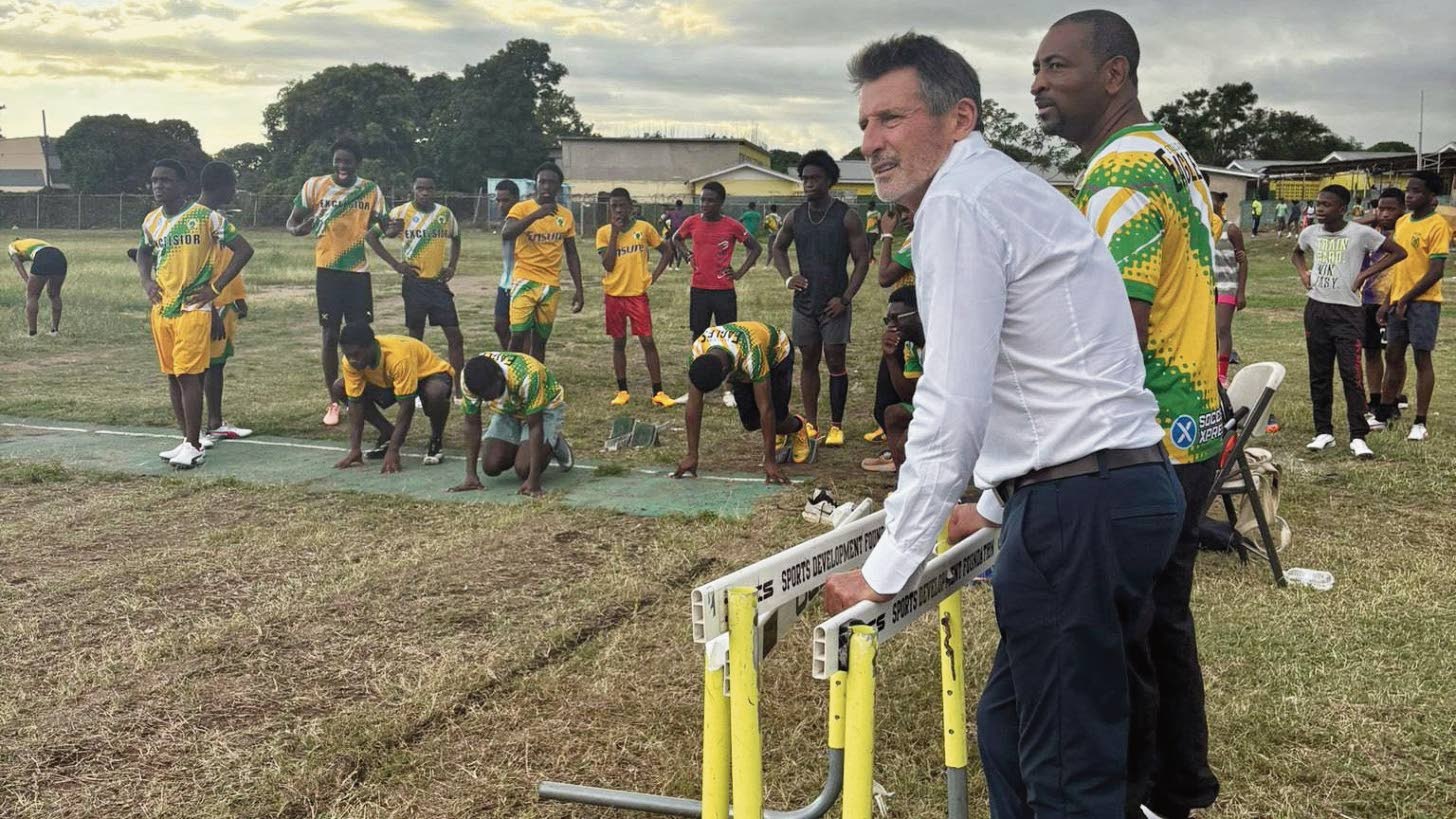
World Athletics President Sebastian Coe (left) and Excelsior High Head Coach David Riley observe track and field training at the school’s field in Kingston on Tuesday, January 6.


