



Address gambling problems before casinos open, Crawford urges
With one application already received for casino gaming in Jamaica, Opposition Members of Parliament (MPs) have raised concerns about the strength of the safeguards that will be put in place to protect Jamaicans from the negatives that are often associated with regulated gambling.
Among the most vocal was MP for St Catherine North Western Damion Crawford, who insisted that the problems should be addressed ahead of the facility beginning operations in Jamaica.
Crawford was speaking Tuesday in the House of Representatives during the debate on the Casino Gaming General Regulations 2025, which will govern the Casino Gaming Act which was passed in 2010.
Minister of Finance and the Public Service Fayval Williams opened the debate and the House subsequently approved the regulations.
Crawford questioned what systems would be put in place to protect Jamaicans. He highlighted that no national exclusion registry is in place, no third party reporting channel, and no mandatory intervention standards for people struggling with a gambling problem.
Crawford noted that while the regulations allow a person with a gambling problem to self-report, once that person has done so there is no national registry to document same.
“So it’s almost as if it is curtailed to that [particular] casino and that he can go to Caymanas [Park] tomorrow and continue his gambling negatives,” Crawford said.
He argued that a registry is necessary since at least three casino licences will be issued. He also expressed concern that, in the absence of third party reporting, people close to an individual with a gambling problem would not be able to intervene in a situation where a person fails to self-report.
“We recommend that a national self-exclusion registry, or a national exclusion registry should be in place and that third party reporting, especially from family and community members, churches, co-workers …and employers should be able to make such recommendations,” he said.
“We recommend that social workers should be able to participate, that mandatory staff intervention training should be there to identify problem gambling, and that we should have recorded intervention protocols and behaviour triggers,” Crawford added.
He pointed out that in the United Kingdom there were customer interaction rules and third party reporting, in Canada there are centralised exclusion registries, while Australia has a mandatory intervention trigger.
The Opposition MP also raised the issue of “debt gambling” and casino credit, declaring that “debt gambling is the strongest harm and one of the greatest negatives that we can have”. He said where credit gambling is allowed, “loss chasing” can develop, where a person who is losing “continues to chase, believing that they will win the next time”.
Crawford cautioned that the poor are more likely to be affected, as they often visit a casino “with the need to earn, and not just because of the entertainment value of gambling”. He emphasised that a low-income earner may visit a casino “with the need to get his rent [money], with the need to get his daughter’s school fee and therefore this leads to household collapse, this leads to multiple loan cycles, workplace misconduct, thievery; this leads to mental health risks and …even suicide”.
“We recommend, therefore, that we prohibit casino credit for Jamaica’s residents,” said Crawford while noting that this does not apply to the “big players” who will fly in from overseas. However, he insisted that Jamaicans should be restricted from having this access.
He also called for a ban on credit card gambling transactions for Jamaicans stating that “you allow only cleared, available funds for residents, tourists can do as they feel”.
Crawford pointed out that credit card gambling is banned in the United Kingdom, so too Australia, and restricted in Canada. And, he said there should be daily, weekly and monthly gambling limits for Jamaicans, a situation that now applies in some European countries and under consideration in Australia.
He also pointed out that the regulations are silent on the transfer of knowledge that would allow Jamaicans to develop their skills rather than the casinos being dependent on importing skilled labour. Separately, he called for employment quotas to ensure a certain number of Jamaicans are employed at these facilities.
The casinos, he argued, should operate a funded, training academy. “This is very important because to this point we have not had a conversation about the casino specific skills and we have casinos that are about to be opened,” he stated. He suggested that HEART/NSTA Trust could be tapped to provide training.
Another concern raised by Crawford is that the integrated resorts could become spending enclaves, choking off business from the rest of the tourism sector.
“It was indicated that they will have restaurants, they will have shops, they will have shopping, they will have casino, they will have rooms; they will have attractions and amenities.
“It therefore means a person doesn’t have to leave that space and that is a danger towards the tourism industry… A lot of our tour operators may be concerned that this is going to be a competitive activity more so than a complimentary activity,” he argued.
In closing the debate, Williams said some Opposition members raised issues that are already dealt with in the principal Act and Prime Minister Dr Andrew Holness said many of the issues will be addressed by the licence that will govern the running of the casinos.
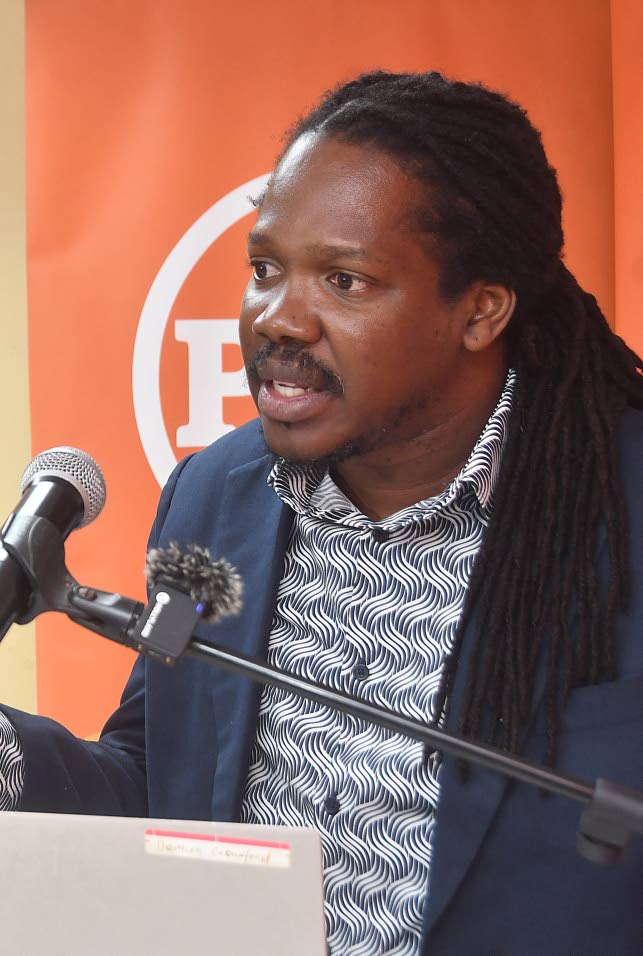
CRAWFORD… questioned what systems would be put in place to protect Jamaicans


