



Jamaica decriminalised ganja — but the industry that was promised never took root
NEARLY a decade after Jamaica decriminalised cannabis and set out to build a regulated industry around it, companies remaining in the legal market say the industry that was envisioned — export-driven, cultivation-led, and broadly inclusive — failed to take hold, forcing survivors to pivot away from farming rather than scale it.
One such operator is Jacana Wellness, a vertically integrated cannabis and wellness company licensed to cultivate, process, retail and conduct tours. Established in 2017-2018, the company operates its cultivation and processing facility in Orange Hall, St Ann, and runs four licensed apothecaries in Manor Park and New Kingston in St Andrew; Island Village in Ocho Rios, St Ann; and at the Princess Senses Resort in Green Island, Hanover. It shuttered another retail outlet in Portmore, St Catherine in 2024. Jacana also exports CBD products to overseas markets. Executives say its business model — and its limits — reflect structural constraints within Jamaica’s regulated ganja framework rather than isolated commercial choices.
“The boom is gone,” said Nicholas Deane, Jacana’s farm operations manager and head of product development. “What remains is whether the industry can actually survive under its current structure.”
The comments were made during an interview with the Jamaica Observer following a tour of Jacana’s cultivation and processing facility in Orange Hall, St Ann, which was still recovering from the impact of Hurricane Melissa, which struck Jamaica on October 28, 2026 and disrupted agricultural operations across several parishes.
The cost of legality
For licensed growers, the economics are unforgiving. Cultivation in Jamaica comes with mandatory fencing, surveillance and armed security, along with annual licence fees and inspections — requirements that sharply increase production costs before a crop is even harvested.
Stephen-John Brown, Jacana’s quality and compliance manager, said cultivation licence fees alone can exceed US$3,500 per acre annually, before factoring in security, transport, labour, energy and compliance across multiple government agencies.
“When you start adding it up — cultivation licence, processing approvals, transport permits, police records for staff, environmental permits — it becomes a very expensive business to run,” Brown told
Business Observer. “For a small farmer, those costs can kill the operation before the first harvest.”
Beyond compliance costs, access to finance remains a major constraint. Executives said licensed cannabis businesses continue to face limited access to loans and routine banking services, forcing many operators to rely heavily on cash and restricting their ability to invest in infrastructure, recover from shocks or scale operations. That financial bottleneck, they said, has compounded pressure on cultivators and reinforced consolidation among better-capitalised firms.
The result, industry participants say, has been a gradual thinning of the field. Many stand-alone cultivators have exited the sector or scaled back operations, while vertically integrated companies — able to grow, process and sell their own product — have become dominant.
“Vertical integration became survival, not strategy,” Deane said.
Exports that didn’t deliver
When Jamaica moved to regulate ganja, export markets were widely promoted as a key opportunity. In practice, Jacana’s experience suggests those markets have proved difficult to access for flower grown outdoors in a tropical environment.
International buyers, particularly in Europe and Israel, typically require pharmaceutical-grade specifications, including strict microbial limits designed for indoor, clean-room cultivation.
“The world wants Jamaican cannabis — until they send the specification sheet,” Deane said. “You cannot grow a plant in the ground and treat it like a pharmaceutical tablet.”
Executives argue that cannabis is regulated less like an agricultural crop and more like a pharmaceutical product, creating compliance expectations that are misaligned with outdoor farming and limiting the viability of cooperative or contract-farming models common in other agricultural sectors.
Meeting those standards often requires costly post-harvest treatment, such as irradiation, which can degrade product quality and reduce potency. Competing on price is also challenging, given that major producer countries operate at far larger scale and lower cost.
Several export-focused Jamaican operations that launched with overseas contracts have since shut down, industry participants say, underscoring the difficulty of making cultivation-led exports viable under current conditions.
The scale of the opportunity
The constraints are striking given the size of the global market Jamaica initially hoped to tap. Industry estimates suggest the global cannabis market already runs into the tens of billions of US dollars and is expected to expand sharply over the next decade.
Within that broader economy, the medical cannabis segment alone is estimated to be worth roughly US$15 billion to US$20 billion annually, with forecasts projecting growth to somewhere between US$60 billion and more than US$100 billion over the next decade as more countries adopt medical frameworks and expand therapeutic use.
Executives say that scale helps explain why Jamaican operators initially targeted medical and export markets — and why the difficulty of accessing them has had such profound consequences for the industry’s structure.
A pivot toward wellness and CBD
For Jacana, survival has depended on a different balance. The company’s THC-based products are sold almost entirely in Jamaica, while its CBD and wellness line accounts for roughly 70 per cent domestic sales and 30 per cent exports, a share executives say is growing.
“Our wellness line is growing because it works,” said Raihn Sibblies, Jacana’s commercial manager. “We’re seeing real benefits, real demand, especially in hospitality and spa settings.”
At its processing facility, Jacana produces a range of CBD-based and botanical wellness products, including tinctures, topical balms, lotions, body oils, facial serums and intimacy oils, many of which are infused with Jamaican botanicals and supplied to hotels, spas and resort retailers.
CBD products are exported regularly — in some cases monthly — to the United States and the United Kingdom, where federal legality and e-commerce platforms make distribution more straightforward. The company also completed its first export of medical cannabis products to the Cayman Islands earlier this year, following a process that took nearly two years from initial engagement to shipment.
Even so, Sibblies said cultivation alone could not sustain the business.
“CBD and wellness weren’t a pivot because it was trendy,” she said. “They were a necessity.”
A different outcome than intended
Jacana’s experience points to a broader contradiction at the heart of Jamaica’s regulated ganja industry. While cultivation was expected to be the backbone of the sector — creating opportunities for farmers and driving exports — the regulatory and economic framework has rewarded companies that minimise their exposure to farming risk.
Licensed operators are competing in a market where unlicensed cannabis remains cheaper, export requirements are misaligned with outdoor production, and access to banking and finance is limited.
The result is an industry that functions — but not in the way originally envisaged.
“Business is still business,” Deane said. “Cash flow is everything. If cultivation can’t stand on its own, companies will move where the model works.”
Nearly 10 years on, the question facing policymakers is no longer whether Jamaica can grow cannabis, but whether the framework governing its regulated ganja industry is aligned with the markets it was designed to serve.
Jacana’s story suggests that, for now, survival lies not in scaling the farm, but in moving beyond it.
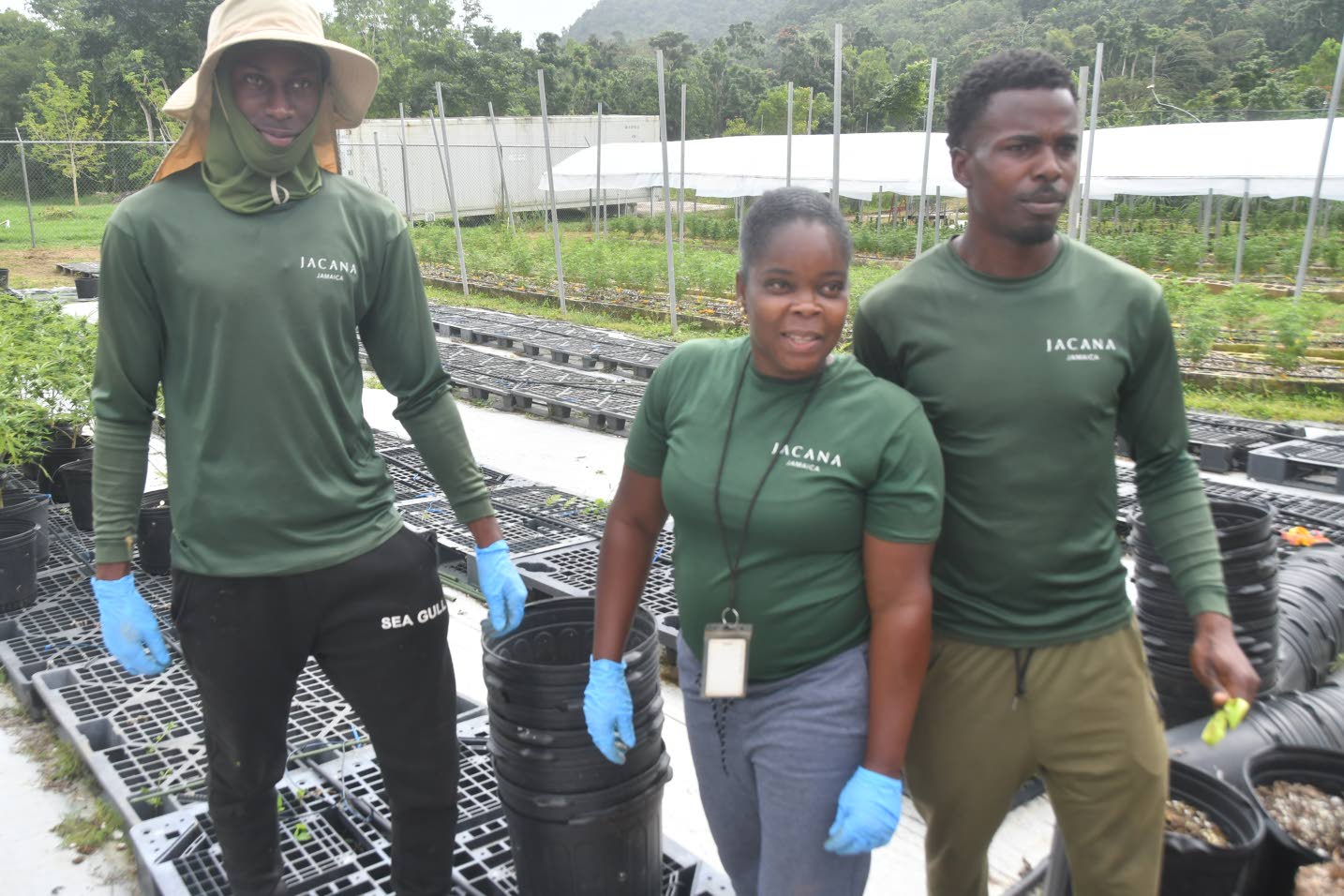
From left are Alwayne Frazer, Sonia Ellis and Ackeem Pink, sorting out old ganja plants..
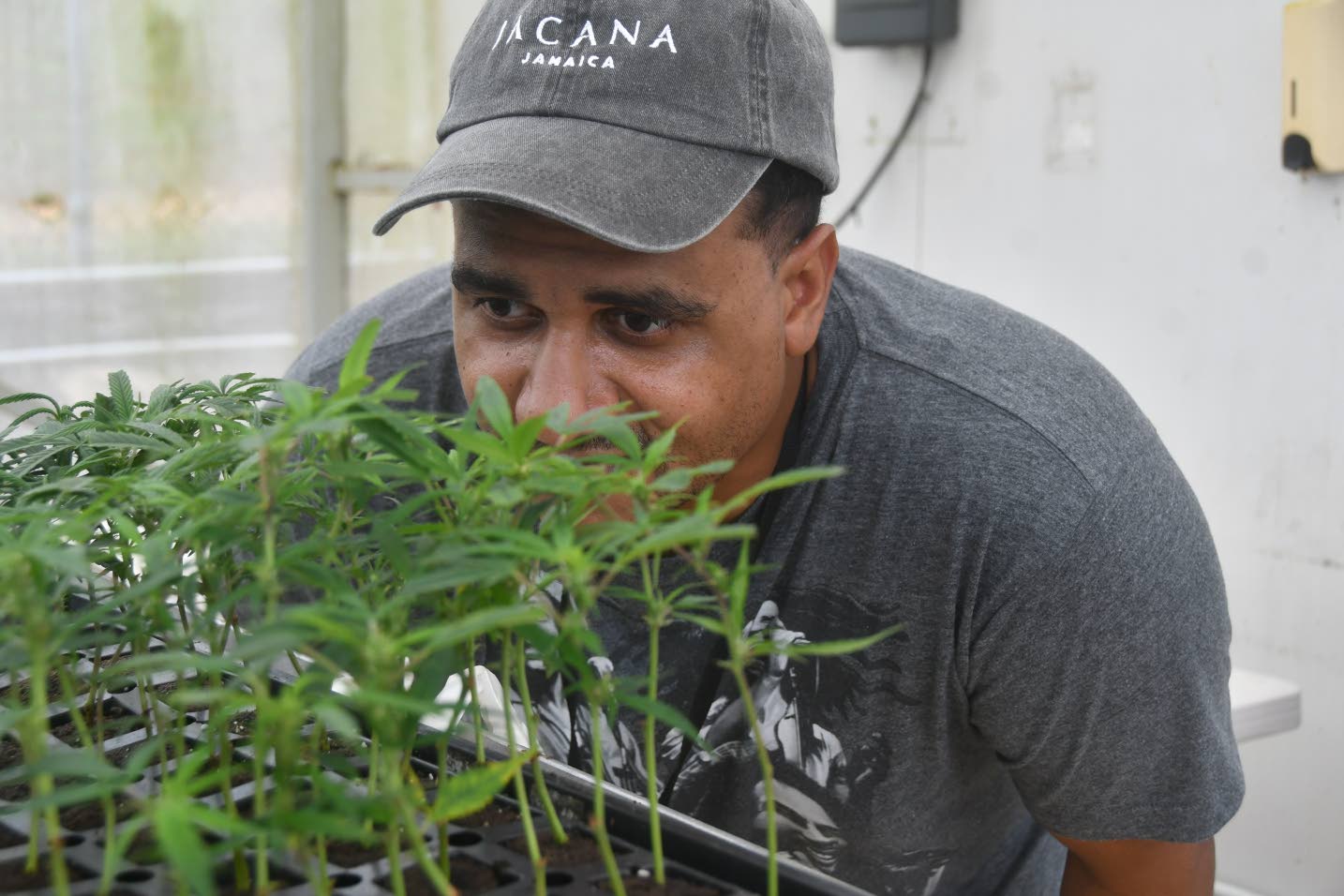
Stephen-John Brown, quality and compliance manager at Jacana Wellness, sniffs ganja plants that are ready to be transferred to cultivation at the company’s Orange Hall facility in St Ann..
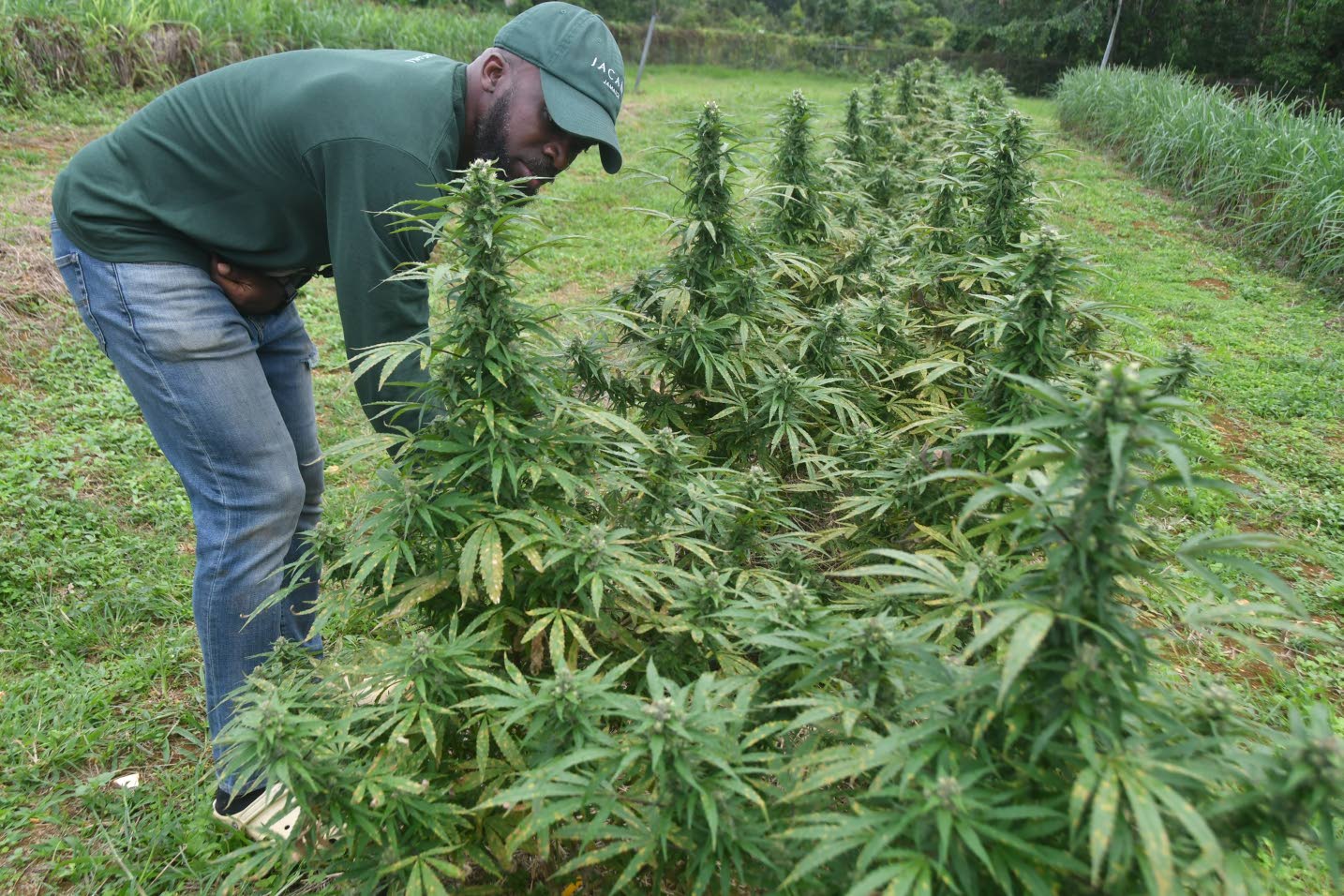
Nick Dean, farm operations manager and head of product development at Jacana Wellness, inspects ganja crops in the field at Orange Hall, St Ann.
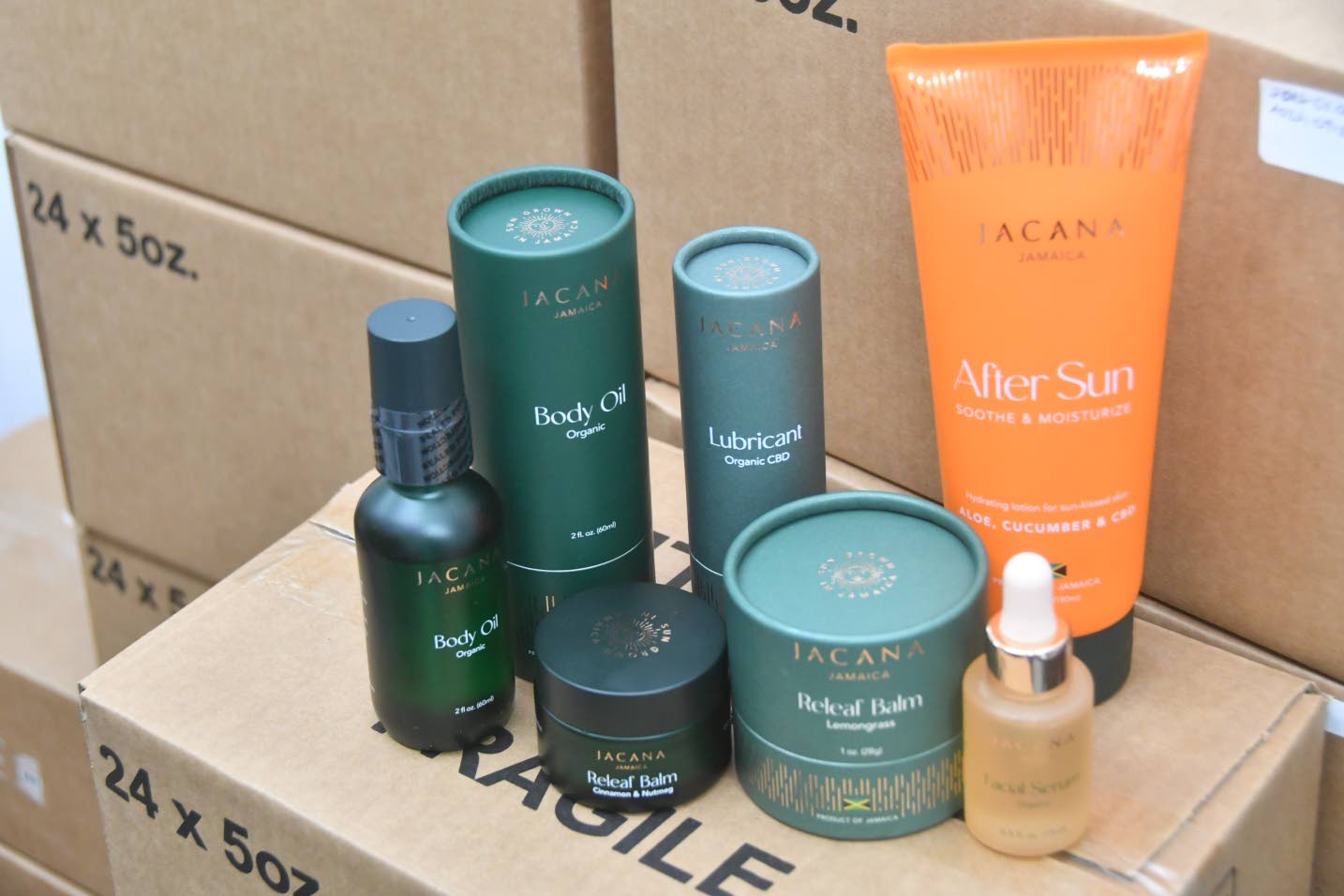
Some of Jacana Wellness’s cannabis-derived products prepared for export, including CBD tinctures and wellness formulations produced at the company’s Orange Hall facility in St Ann.
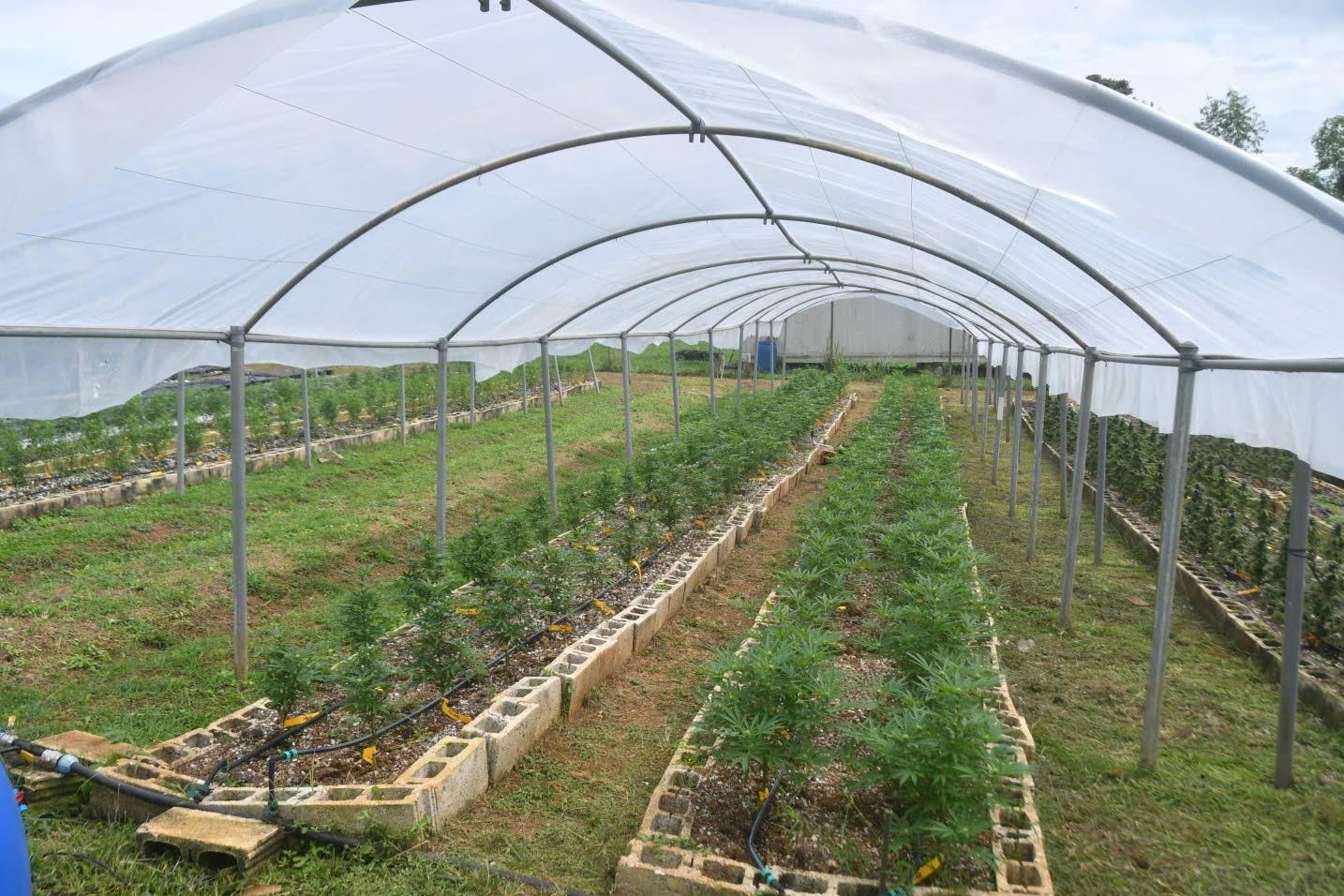
Rows of ganja plants grow inside a tunnel house at Jacana Wellness’s cultivation site in Orange Hall, St Ann.


