



Soda tax
New sweetened drink levy headlines massive $1.4-trillion budget
THE Government has unveiled its first tax package in almost a decade — including a levy on sugar-sweetened beverages — as it tables a $1.441 trillion budget shaped by hurricane recovery, rising debt costs, and a widening fiscal deficit.
But the beverage levy is only one part of a broader revenue drive designed to stabilise public finances in the aftermath of Hurricane Melissa.
In a move called for by the Independent Fiscal Commission, the revenue measures were tabled at the same time as the 2026/27 Estimates of Expenditure — the first time both have been presented together. It is also the first occasion on which revenue measures have been outlined for two fiscal years at once, signalling a structured, multi-year adjustment rather than a one-off response.
Over the next two fiscal years, the Government is seeking to raise roughly $45 billion in additional revenues.
Finance Minister Fayval Williams said the Government will introduce a Special Consumption Tax of $0.02 per millilitre on non-alcoholic sweetened beverages during the April to June quarter of this year, a move expected to yield roughly $10 billion in 2026/27. The levy will add $6 to a 300ml drink, $12 to a 600ml bottle, and $40 to a two-litre beverage, bringing sweetened drinks into the Special Consumption Tax regime for the first time.
Additional revenues will be derived from the application of General Consumption Tax (GCT) to certain digital services supplied from abroad, projected to yield about $300 million in 2026/27 and rising to roughly $4.2 billion the following year when fully implemented. The measure will take effect in the January to March quarter of FY2026/27, resulting in a lower first-year yield.
Increases in duties on alcohol and cigarettes are expected to generate approximately $1.6 billion and $1.1 billion, respectively next year, while the higher Environmental Protection Levy is projected to bring in about $3.6 billion. The return of the tourism sector to the standard 15 per cent GCT rate in 2027/28 is expected to add roughly $11.4 billion annually once in effect.
Revenue from the sweetened beverage tax and the adjustments to the Environmental Protection Levy will flow into the Consolidated Fund rather than being ring-fenced for specific programmes.
The broader fiscal picture, however, underscores the scale of the challenge.
The budget lifts total Government spending to $1.441 trillion for the fiscal year beginning April 1, up from a revised $1.391 trillion for the current year ending March 31 — an increase of $50 billion. The expansion comes despite projections that the economy will contract by 0.5 per cent next year, following an estimated 4.5 per cent decline in 2025/26 after Hurricane Melissa disrupted agriculture, tourism and related industries.
Revenues and grants for 2026/27 are projected at just over $1 trillion. With expenditure rising to $1.441 trillion while revenue growth remains modest, the fiscal deficit is projected to widen to nearly five per cent of gross domestic product (GDP), up from the revised estimate for the current fiscal year.
At the same time, the primary surplus — effectively the pool of resources available to service and reduce public debt — is projected to narrow from about 1.3 per cent of GDP this year to roughly 0.5 per cent next year, a decline of nearly 0.8 percentage points. That represents tens of billions of dollars less fiscal space available to reinforce debt reduction, as reconstruction spending absorbs resources that would otherwise strengthen the debt trajectory.
The arithmetic leaves little ambiguity. With spending at $1.441 trillion and revenues just over $1 trillion, the deficit alone translates into a gap in the mid-$300 billion range. Once principal repayments on maturing debt are included, the gross financing requirement climbs substantially higher, meaning a significant portion of next year’s operations will be financed through new domestic and external borrowing, with further details on the financing programme expected during the upcoming budget debate.
Debt servicing will consume more than a quarter of the entire budget. Interest payments are projected at $210.96 billion, and when $167.59 billion in principal repayments are included, total debt service rises to approximately $378.5 billion — about 26 per cent of total expenditure. Compensation of employees will total roughly $555 billion — comprising $519 billion in wages and salaries and $35.8 billion in employer contributions — representing close to 39 per cent of the budget.
Taken together, wages and debt servicing absorb nearly 65 per cent of Government spending.
Opposition spokesman on finance Julian Robinson told the House that the return to new revenue measures reflects mounting structural pressure within the public finances, arguing that in recent years the Government has struggled to match revenues with expenditure without relying on one-off transactions.
He pointed to the 2023 sale of 12 years of future revenues from Norman Manley International Airport, which generated approximately $75 billion, and the securitisation of 10 years of future revenues from Sangster International Airport, which yielded roughly $61 billion. Those transactions, Robinson said, provided temporary financing relief but did not permanently strengthen the revenue base.
Robinson also questioned whether the pricing structure of the soda tax would materially alter consumption patterns, suggesting that the projected revenue indicates limited behavioural impact. He further noted that proceeds from the new measures would be absorbed into the Consolidated Fund rather than earmarked for specific sectors.
The fiscal tightening comes against the backdrop of Hurricane Melissa, which struck western Jamaica in October 2025 and caused extensive damage to agriculture, housing, public and tourism infrastructure. Capital spending will remain elevated as the Government shifts from emergency relief to sustained reconstruction, with significant allocations directed towards rebuilding roads, schools, hospitals, and other public assets.
Jamaica has already accessed catastrophe insurance payouts, contingent credit facilities, and multilateral financing triggered by the hurricane. While those inflows provided immediate liquidity for relief and early rebuilding, they do not eliminate the structural gap between revenue and expenditure.
Although fiscal rules were temporarily suspended to provide flexibility during the recovery period, the Administration has reaffirmed its commitment to reducing public debt to 60 per cent of GDP by the end of the decade, a target that will depend on steady growth and disciplined fiscal management once reconstruction stabilises.
The budget will now be reviewed by the Independent Fiscal Commission before scrutiny by the Standing Finance Committee of Parliament. But beyond the procedural steps, the numbers themselves signal a turning point: Disaster recovery, rising debt service, and a trillion-dollar expenditure envelope have forced a return to active revenue mobilisation for the first time in almost a decade.
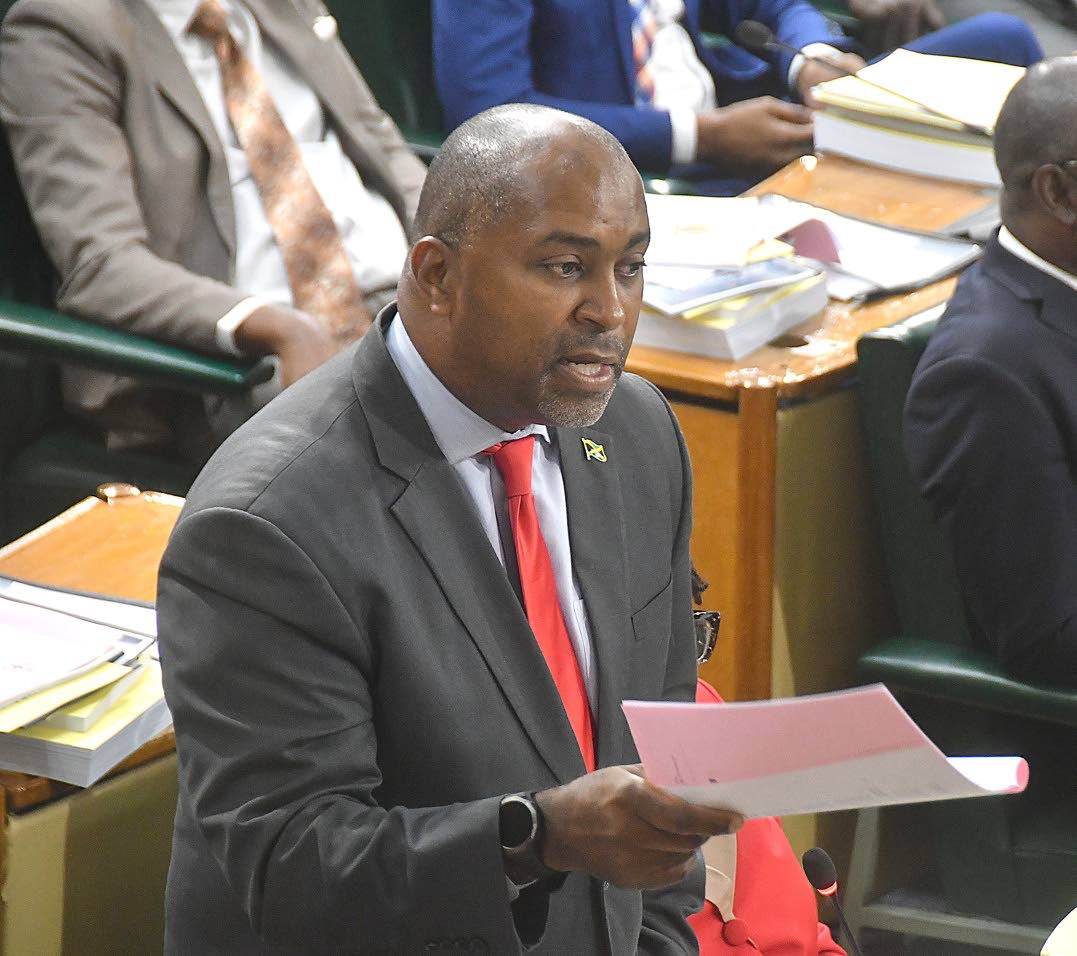
Opposition spokesman on finance Julian Robinson speaking in the House on Thursday. He said that the return to new revenue measures reflects mounting structural pressure within the public finances, arguing that in recent years the Government has struggled to match revenues with expenditure without relying on one-off transactions. (Photo: Garfield Robinson)
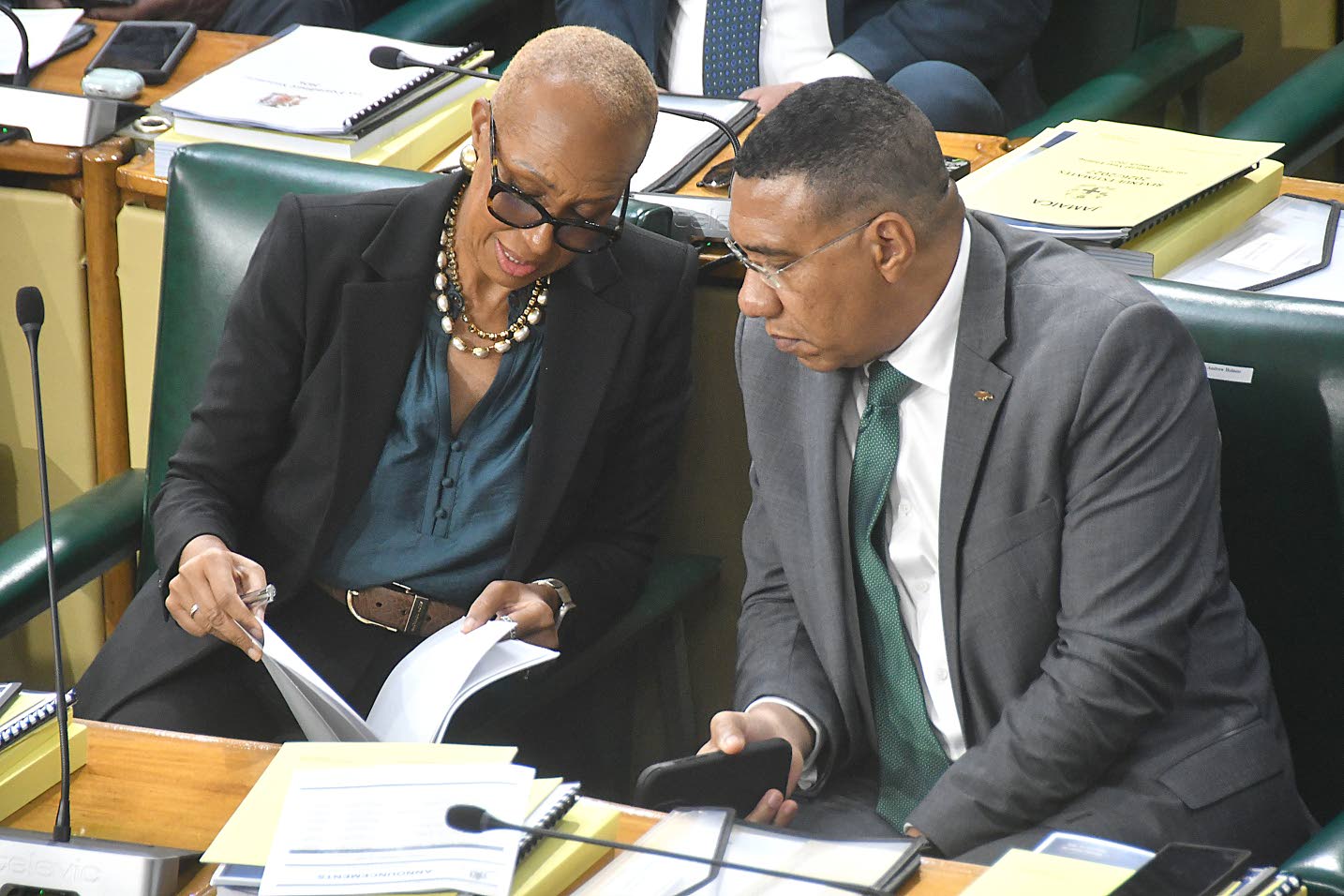
Finance Minister Fayval Williams has a word with Prime Minister Dr Holness during the first sitting of the House of Representatives for the new parliamentary year on Thursday. (Photo: Garfield Robinson)


