



At breaking point
Mother laments gaps in special education system as she struggles with autistic son
THIRTY-FOUR-YEAR-OLD Chantal Wynter is at the end of her tether.
Well over a year after she first highlighted the difficulties she is having getting a job to help care for her autistic son, she is now lamenting what she describes as significant gaps in the special education system — particularly for students in rural areas — as well as a lack of support from government agencies for struggling parents of autistic children.
Wynter told the Jamaica Observer that despite numerous attempts to enrol her now 15-year-old son, Zevoni Redway, in a special education school in rural Jamaica, including Edge Hill School of Special Education in St Ann’s Bay where they now live, she has repeatedly been met with a brick wall after being told she would be placed on a waiting list that has now stretched into years.
“My son doesn’t go to school; he is 15, but [his absence from school is] not for lack of trying but for lack of availability,” Wynter explained, adding that he has been out of school since he was six years old.
“You go to a school and you’re told you’re gonna be on a list, and that list is for years. I will try to get a tutor through the CPFSA [Child Protection and Family Services Agency], and they did not care because I got the tutor, and all the tutor needed was to be paid and start to tutor my son, and that was like two or three years ago and nothing has come out of that,” Wynter told the Sunday Observer.
The mother said she sought financial assistance from the Jamaica Council for Persons with Disabilities (JCPD) in the form of a grant to assist her son, but she again encountered delays.
“The JCPD will give you a grant after a certain amount of time. I signed up to get this grant for my child. When I signed up for it I was told to bring in the physical documents, and after finally getting the physical documents I was missing one that I was not aware of so they told me to do it online. I’m like, I could have done this online the whole time and I was not told this,” Wynter said.
“I did it online, just for them to have signal issues because of Hurricane Melissa. So that, once again, delayed things for me and I’m sitting here thinking I have these bills. I would like to get this grant to open a business and start something but now I’m being delayed and, again, the bills keep rising and rising,” she added.
Wynter said she also sought assistance from the JCPD in the form of care packages following Hurricane Melissa, which hit sections of Jamaica last October, but was advised that priority was being given to those who were severely affected.
“I reached out to them and asked what help could be given in terms of food and clothing and I was told that they don’t do that, that’s not something I should look forward to because they are only paying attention to those who are severely affected. But I’m saying, ‘This is a disabled child, they need certain help,’ and considering that I am not in the best of health — I have an autoimmune disorder so I can’t really work,” she said.
As the sole caregiver for her son Wynter noted that it is particularly challenging for parents of autistic children to secure employment without facing discrimination. She said parents in similar situations are often viewed as a liability by prospective employers.
“There is discrimination when a lot of us try to get jobs — if we’re able to get jobs. I have faced that personally because I would get the job and they would be like, ‘Do you have a dependent?’ I would be like, ‘Yes, I have an autistic child’ and they see me as a liability. So, I’m unable to get jobs because of that,” she told the Sunday Observer.
Wynter explained that her son was non-verbal in early childhood but through techniques she taught him, he has developed limited speech and can now communicate at the level of a five- to seven-year-old.
Although he has no major physical impairments and can walk independently, she said he requires support with fine motor skills, including writing and tying his shoelaces.
Wynter said living with an autoimmune disease further compounds the situation as it affects her mobility and voice, making it difficult for her to work consistently to support her son.
She added that her circumstances have worsened following Hurricane Melissa and she is now seeking support to start a small business to earn a living.
“I live in a farming community, so having chickens is one of the best things for me. I live across from a school so selling snacks and juice is the best thing for me,” she explained.
The mother said parents of autistic children often experience high levels of stress and even post-traumatic stress disorder, yet there is little to no support for their mental and emotional well-being.
“When you don’t have that support system — whether it be from family, friends or the Government — eventually your body will break down, and for some, even their mind. And this is something that parents of autistic children seem to be scared to talk about,” Wynter added.
When contacted, chief education officer in the Ministry of Education’s Special Education Unit, Dione Jones-Gayle said the ministry is now exploring ways to resume tutoring for Zevoni, including funding through a shadow programme.
“What we could do is pay the tutor for her. We could always put that person on our shadow programme and pay that person,” Jones-Gayle said.
She noted that rural students face barriers, including limited access to specialised schools and transportation challenges.
“We’re now trying to get some more buses that can actually transport students from up in the hills down to St Ann’s Bay, because that is a challenge. So we are now picking up, and even with Miss Wynter here, her concern is transportation. So there are limitations in the rural areas, transportation being one, of course, to access the education,” the chief education officer said.
She said the ministry is working to expand the school bus programme to help children in remote areas reach schools such as Edge Hill School of Special Education, which has satellite locations in St Mary, Ocho Rios, and Brown’s Town.
“We want to move away from the days when a child is at home and not being engaged. For a child on the spectrum, for example, even the social skills are so important. The behaviour modification specialist will look at these things as well. We’re going to really have to sit down and plan this programme for Zevoni,” she said.
In an update on Friday, February 13, Jones-Gayle told the Sunday Observer that when she checked with Edge Hill School of Special Education she was told that Zevoni’s application was successful. However, the school had experienced difficulty contacting Wynter.
Wynter confirmed that she has not received a call from the ministry.
The chief education officer said a shadow will be assigned to Zevoni once he begins school, given his long absence from a structured education system.
Executive director of JCPD, Dr Christine Hendricks, told the Sunday Observer that while she is not aware of Wynter’s case, the JCPD is mandated to support all persons with disabilities, including those with autism, once they are registered with the agency.
She explained that the JCPD offers assistance such as educational support, therapy funding, assistive devices, and grants to help caregivers start small businesses.
However, she said these benefits depend on limited annual funding, which is often exhausted before the end of the financial year.
“Once registered with the JCPD, then persons can apply for varied benefits. Now, there might not be the understanding, but the situation is we can only provide grants based on the financial resources that we have. So on an annual basis you would get a particular sum but, of course, based on the number of persons with disabilities that exist in Jamaica, the applications are more than the resources,” she said.
Additionally, Dr Hendricks said the JCPD has been distributing care packages across parishes, including St Ann, and is currently implementing this support in partnership with United Nations Children’s Fund.
“Since post-Melissa, we have been providing support with care packages across the parish. We now have a social worker in St Ann and so, if at all the parent had made contact with our social worker in St Ann at the Ministry of Labour and Social Security parish office, I am certain she would have gotten support,” Dr Hendricks said.
The executive director, however, noted that once the necessary details are provided, she would investigate Wynter’s case. She also reminded parents that they can visit a JCPD office or file a complaint using the JCPD mobile app.
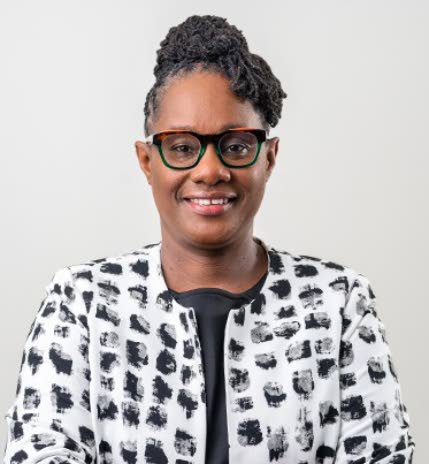
HENDRICKS… the Jamaica Council for Persons with Disabilities is mandated to support all persons with disabilities, including those with autism, once they are registered with the agency

Last year, the Ministry of Education said assessments revealed concerning trends in the landscape of special needs education in Jamaica, with approximately one in 54 children being diagnosed with autism. The ministry also said data indicate that more than 40 per cent of children with special needs are currently not enrolled in school — highlighting a critical gap in access to education.


