



The content creator making Jamaican history go viral
AS Jamaica celebrates Reggae Month this February, the island’s music and culture once again take centre stage. Even thousands of miles away in Canada, one Jamaican content creator has been quietly doing the work — introducing audiences around the world to the rhythms, traditions and stories that make Jamaica unique.
For 30-year-old Jamaican-Canadian Rachelle Thompson — known as Sincerely Rachelle on social media platforms — sharing Jamaican culture online started almost by accident, and by faith.
Born and raised in Portmore, St Catherine, Thompson never set out to become an all-things Jamaican storyteller. She initially planned to post simple day-in-the-life content when she began creating videos in April 2024. But everything changed after a personal moment of deep reflection.
“I prayed on Good Friday, and the next morning I woke up with the idea to shoot a video about Jamaican history,” she recounted.
The rest is history.
Her first major post was an explainer on a Jamaican Easter staple: Bun and cheese. In the video, she shared how the tradition evolved from British colonial hot cross buns introduced in the 17th century before Jamaicans transformed it into something uniquely their own.
“But yuh done know, as Jamaicans we had to spice it up,” she joked in the video, explaining how the loaf became sweeter, denser and richer with fruits, molasses and spices, eventually paired with cheddar cheese.
The video resonated instantly. Within days, her content began exploding across Instagram and TikTok, with one video surpassing 241,000 views and drawing over 17,000 likes.
“That’s when I realised this is definitely my audience. People actually want to learn about Jamaica,” she said. “I took the engagement and growth as my sign from God and just followed the path.”
Much of her audience are Jamaicans living abroad — people hungry for reminders of home. Her largest audiences are in the United States and the United Kingdom, followed by Jamaica and Canada, but her reach stretches even further. Followers message her from Australia, Dubai, New Zealand, and even Russia.
Thompson said that one surprising moment came when a Russian dance instructor reached out after watching her video on the evolution of Jamaican music.
“She told me she teaches reggae and dancehall but her students didn’t know the history,” Thompson said. “She asked if she could translate my video into Russian so they could understand. And after that, so many people from Russia started messaging me.”
Moments like these remind her that Jamaican culture travels far beyond the island’s shores. And that matters especially when the Jamaican diaspora now rivals the island’s population. Estimates suggest between two and three million people of Jamaican descent live overseas, nearly equal to Jamaica’s population of just under three million residents. Major diaspora communities thrive in cities like New York, London and Toronto, as well as where Thompson now lives among roughly 300,000 Jamaicans in Canada.
For Thompson, her platform isn’t just for entertainment, it is her way of preserving a culture she feels is important to pass on.
“I feel like as Jamaicans we do things because our grandparents told us to, but we don’t always know why,” she said. “For culture to live on, you have to tell it.”
Her videos explore everything — from classic riddims like Sleng Teng and Answer, to traditions like pardner draws, Jamaican mothers, wedding customs, and everyday Jamaican humour. She also highlights how reggae music shaped global sound.
“Reggae is the foundation of Jamaican culture,” she said. “People love our food and Usain Bolt, but reggae is what people connect Jamaica with worldwide.”
She worries younger generations are drifting away from reggae as dancehall dominates modern playlists, so she deliberately highlights reggae legends and unsung heroes alike.
This Reggae Month, she has dived even deeper into Bob Marley’s legacy, and plans to continue to share content surrounding sound system culture, dub plates and clash history, while also spotlighting figures who helped shape reggae but rarely receive recognition.
“The most rewarding part is the community,” she said, noting followers check in if she misses posting for a few days. “But the challenging part is knowing I’m representing Jamaica.”
“People will come for you,” she laughed. “So now I make sure everything is researched. I know when I come online, I have to come with facts.”
At the time of the interview, Thompson was battling a snowstorm, which she joked she wished she could switch with the sunshine peeking through at the Jamaica Observer. She said living in Canada has deepened her appreciation for her roots.
“Being here made me more intentional about being Jamaican,” she told the Sunday Observer. “Right now there’s a snowstorm outside, and I’m missing Jamaica so much.”
In communities where Jamaican culture isn’t dominant, she often finds herself explaining everything from food spices to traditions.
Her parents, meanwhile, remain her biggest supporters. Her father proudly shares her videos with coworkers, while her mother reposts every clip. Outside of content creation, Thompson works as a biochemist, filming videos before work and editing late at night. She hopes one day content creation can become her full-time career.
Until then, she continues to build a digital space where Jamaicans at home and abroad, and curious newcomers, can connect with the culture.
“I want people to come to my page and learn something about Jamaica,” she said. “I want it to be a reference point.”
And if Reggae Month is about celebrating Jamaica’s global cultural impact, creators like Thompson prove that the island’s impact is still growing, one video at a time.
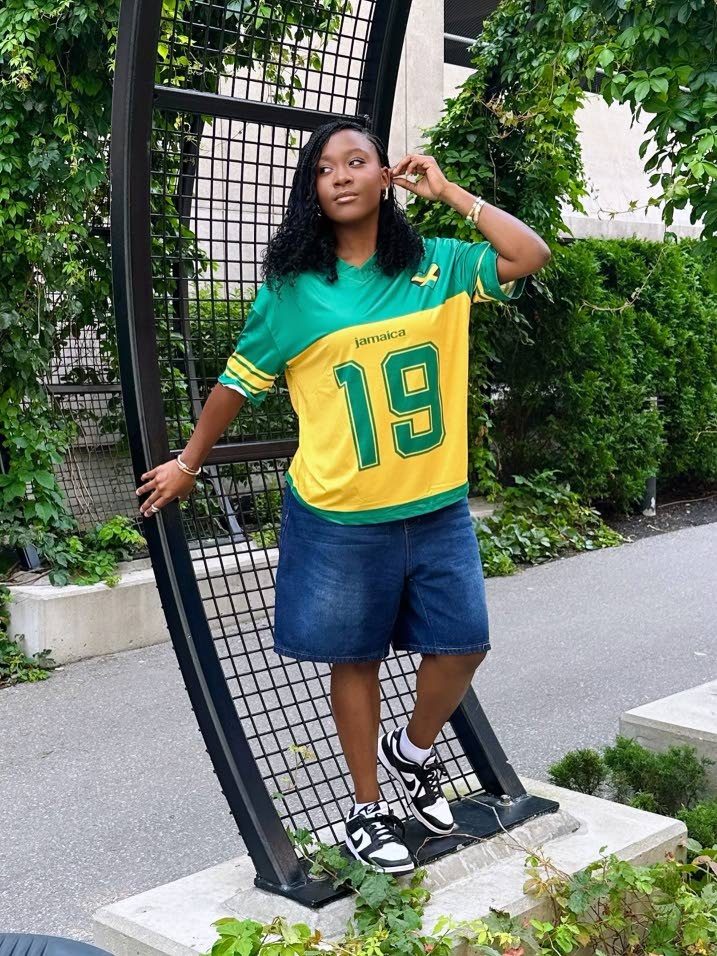
Rachelle Thompson reps Jamaica everywhere she goes.


