



More than colours
Jamaica’s Bob Marley-inspired football jersey tests boundaries of national pride
AS Adidas’s Bob Marley-inspired Jamaica football jersey continues to divide fans days after its unveiling, some voices within the local football community are urging perspective, arguing that while the design may differ from tradition, it does not diminish the pride and meaning of wearing the national shirt.
“It’s a collaboration jersey, so it’s important for people to remember that. So it’s not only a national shirt, it’s also a salute to Bob Marley and our musical heritage,” said Chris Williams, former chairman of Professional Football Jamaica Limited (PFJL).
Williams, who has been closely involved with the development of the professional game locally, told the Jamaica Observer on Sunday that the partnership with global manufacturer Adidas represents recognition of Jamaica’s unique cultural and sporting influence.
His comments come amid intense discussion among fans and football stakeholders, with some welcoming the kit’s cultural symbolism while others remain uneasy about its departure from Jamaica’s traditional black, gold and green.
The jersey, which forms part of a collaboration between Adidas, JFF and the Bob Marley Foundation, was unveiled last week Friday as Jamaica prepares for the next international football cycle, including World Cup qualifying.
The design has been praised internationally for its bold tribute to reggae legend Robert Nesta Marley, who is widely regarded as Jamaica’s most influential cultural icon.
The backlash has largely centred on the inclusion of red tones, which do not appear in Jamaica’s flag. For many supporters, the traditional black, gold and green represent sacrifice, wealth and hope, and are seen as inseparable from the country’s football identity.
Social media platforms have since been flooded with discourse, with critics arguing that the national team’s jersey should remain rooted in those historic colours, while others welcomed the creative direction as a celebration of Jamaica’s global cultural reach.
According to Williams, the collaboration has elevated Jamaica’s global image and should be viewed as an honour rather than a departure from national identity.
“I think it again shows that Jamaica is an iconic brand. I’m extremely proud to be Jamaican, [and] when you see Adidas go to these lengths, and other countries would just get a standard shirt…I see it as a limited edition, special edition — which we are probably one of five teams in the world that has gotten that — so you know, big up Jamaica, big up Bob, big up JFF [Jamaica Football Federation], and big up everybody involved,” Williams said.
Meanwhile, football coach and sports analyst Andrew Price acknowledged the emotional attachment many Jamaicans have to the national colours, but said the issue should be viewed within a wider global context.
“I’m going to be very honest, I am a nationalistic person and I believe in utilising the colours that are in the flag for our kit. Now, this is not a precedence as there are several countries throughout the world who have used kits that are different from the colours of their flag, and I’m sure in the consultation with the kit provider, which is Adidas, and the Bob Marley Foundation, they came up with these particular kits and they were approved by the Jamaica Football Federation. And personally, like I said, I would prefer the colours to be the colours of the flag but if that is what we’re going to use, I don’t have a problem with it,” Price said.
He also downplayed suggestions that the controversy would have any impact on the players themselves, stressing that professional footballers remain focused on performance rather than aesthetics.
“I think the players are just going to go out there and play. They know they’re representing their country and they know the origins of the colours of their country is black, gold and green, and they are quite aware…so it’s about going out there and executing. But, deep in our hearts, we know the colours of our flag and we know we are patriotic,” he added.
Price also said the Marley connection provided context for the design.
“Yes, I can understand a lot of people’s concern about the red in there but I think it resonates with the symbolism, with the whole culture and the association with Bob Marley,” he said.
Williams, meanwhile, maintained that understanding the shirt as a collaborative tribute rather than a traditional replacement is key to appreciating its significance.
“It’s not intended to be only the national shirt; it’s saluting two treasures — our JFF and our football programme and music and Bob. So when you look at it through those lens I think it’s good, and I can’t wait to get mine,” he said.
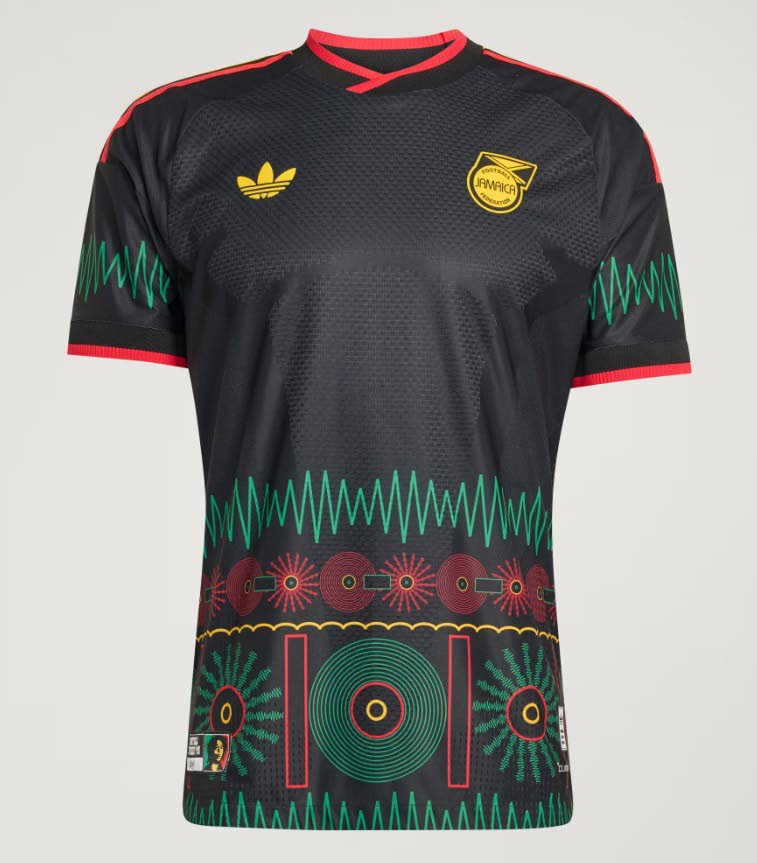
The front of Jamaica’s 2026 Bob Marley-inspired away jersey.Photo: adidas.com

WILLIAMS…it’s a collaboration jersey Photo: Garfield Robinson

PRICE…I can understand a lot of people’s concern about the red in there, but I think it resonates with the symbolism, with the whole culture and the association with Bob Marley Photo: Joseph Wellington
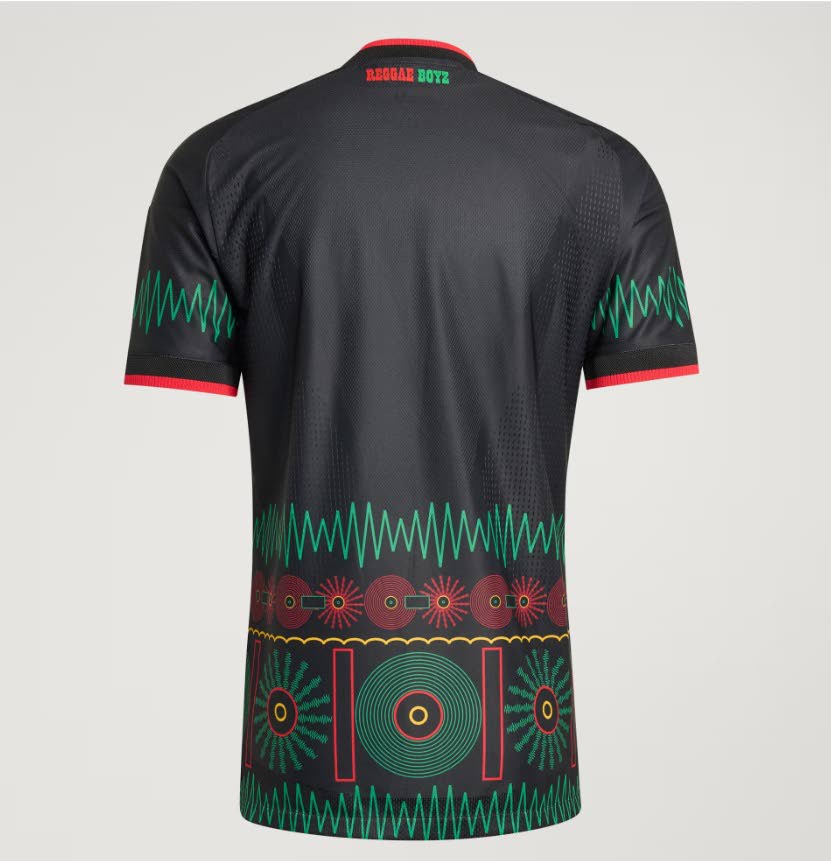
The back of Jamaica’s 2026 Bob Marley-inspired away jersey.Photo: adidas.com
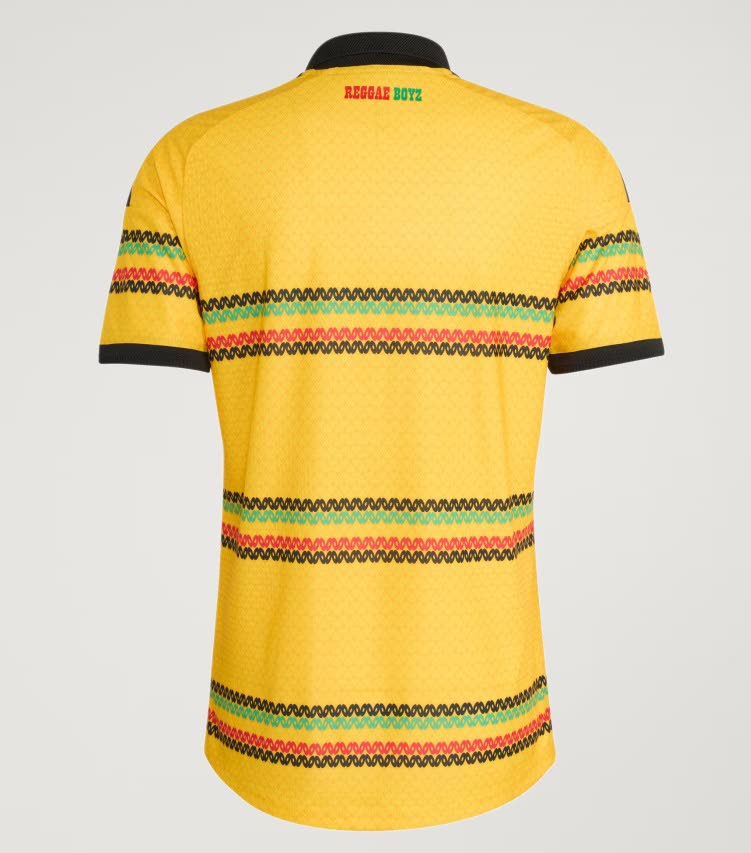
The back of Jamaica’s 2026 Bob Marley-inspired home jersey. Photo: adidas.com


