



Barbados’ debt to the world
Barbados is the most easterly of the chain of Caribbean islands, making it the closest island in the Caribbean archipelago to the continent of Africa. The flat topography of the island made it a very favourable location for the establishment of agricultural plantations that could satisfy European demand for tropical agricultural products.
British colonialists, after doing their ‘discovery thing’ in 1625, proceeded in the ensuing centuries to make Barbados into a model plantation society that would serve as a template for other plantation societies in the Caribbean and in the southern United States, especially in South Carolina.
The demand for sugar in Europe led to the consolidation of many small farms into large sugar plantations. The cultivation and harvesting of sugar cane demanded a large work force. Plantation owners experimented with European indenture servants, but gradually opted for a much more durable, available, and exploitable source of labour. Sugar and slavery became intimately wedded to each other, and the long, dark night of the soul of Africa and its people was inaugurated.
The plantation society that was developed in Barbados was not the first plantation society crafted in the world. Barbados, however, became the focal point of British imperialism in the Caribbean. By the 1860s the black population exceeded 50 per cent of the island. To gain total control over this growing demographic, the British passed the Barbados Slave Code of 1661, which became the model code for British apartheid in Barbados, the rest of the British Caribbean, and the southern United States.
Under the Slave Code, black people were classified as property rather than people. As such, they had no rights that needed to be respected by the British colonists, were restricted in their movements as curfews were passed, and had to obtain written permission from their owners to move around the island. They could not freely assemble, and any infringements of the Slave Code were met with swift and harsh reprisals.
The Slave Code also served to create a rigid racial hierarchy, with white colonists at the top and black enslaved Africans on the sole of the boot of an oppressive Barbadian society. People of mixed heritage and black people who managed to purchase their freedom were placed somewhere in the middle of this racial hierarchy. The code impacted British colonial policies and laws and was a factor in the creation of apartheid in South Africa.
The influence of the Slave Code was felt far and wide. It was either adopted in full or adapted to meet local needs in other Caribbean islands and other British colonial possessions in the Americas. The code also helped to influence the body of slave laws that emerged in the Caribbean region. For example, enslaved Africans were strictly forbidden under the Slave Code from practising their traditional religions, which were labelled as pagan and heathen superstitions.
It is, therefore, very fitting that the nation which did the most to further the objectives of European imperialism, as reflected in the development of plantation societies, should also be the nation with the greatest ambitions to see this system of white supremacy laid to rest. This is Barbados’ debt to the Caribbean, the Americas, and the rest of the world.
From Independence in 1966, Barbadian leaders have acted with an awareness of this indebtedness. Errol Barrow, the first prime minister of Barbados; Forbes Burnham of Guyana; and Hugh Shearer of Jamaica were the originators of the Caribbean Free Trade Association which later evolved into the Caribbean Community in 1973. Prime Minister Barrow also famously quipped that Barbados would always strive to be the “friend of all but satellite of none”.
John Michael Geoffrey Manningham “Tom” Adams, who served as the second prime minister of Barbados from 1976 to 1985, built on the sterling work done by his predecessor by further enhancing the economic development of Barbados and also strengthening the regional integration movement. Prime Minister Adams, who was criticised for his close alignment with US foreign policy in the Caribbean, managed to avoid making the mistake of rupturing ties with other Caribbean Community heads of State.
Erskine Sandiford (1987-1994), Owen Arthur (1994-2008), David Thompson (2008-2010), Frendel Stuart (2010-2018), and Mia Mottley (2018-present) have all contributed to the development of Barbados, which, notwithstanding some serious economic and social problems, can still boast of a reasonably good standard of living. It is ranked 70th on the Human Development Index.
The current prime minister of Barbados is globally known for her advocacy in climate change and reform in the economic institutions of the global system. Her Bridgetown Initiative seeks to reform the architecture of global finance and address climate change, inequality, and debt burden in developing countries. In addition to being named one of the most influential people in the world in 2022 by
Time magazine, Mottley has also been successful at influencing policy changes at the International Monetary Fund and the World Bank.
Prime Minister Mottley has argued a compelling case for the suspension of debt repayment during crises like natural disasters or pandemics. Her call for increased access to low-interest loans for climate adaptation projects in vulnerable countries seems to have touched a responsive chord in global financial institutions. The provision of grants rather than loans for climate-related losses and damage is also a very popular clause in the Bridgetown Initiative.
The recently concluded general election should also serve as a master class in electioneering for other Caribbean and African heads of states. When charges about fraud surfaced in connection with the election, Mottley announced that she would be inviting international observers to ensure that the election was free and fair. While it is true that there were some instances in which people’s names were not on the list at the polling stations they visited, there was an online recourse that could have pointed individuals to their correct polling station.
As with most elections there was some name-calling on both sides, and there was also the traditional trading of insults, or maybe moments of truth-telling, as candidates described each other. It is to the credit of Barbados that no Opposition leaders disappeared or were killed during the election season. The only harm done to opponents of the Government was psychological, as Mottley’s party won all 30 of the parliamentary seats for a third time in succession.
The black world stands in dire need of success stories that can be emulated, and Barbados, as it seeks to discharge its indebtedness to the world, is providing good examples that can be emulated.
In July 2025, Barbados was at the centre of a four-nation initiative to advance the process of free movement of Caribbean nationals in the region. Smaller groupings within the Caribbean Community may be the wave of the future as Caribbean governments seek to implement the freedom of movement protocols that were agreed upon by regional leaders. Should the new Barbados initiative prove to be successful, other neighbouring groups of islands can follow suit.
Barbados may be a small island in comparison to Jamaica, Trinidad, Guyana, Cuba, Haiti, and the Dominican Republic. Size, however, has not been an impediment in the path of black Barbadian leaders who have always been committed to the task of creating a more integrated Caribbean region.
The problems confronting both the Caribbean and the African continent suggest that Barbados, and indeed every African and Caribbean State, will have to up their game if we are all to survive and thrive in a world order that is progressively being guided by life-boat ethics and the law of the jungle.
Lenrod Nzulu Baraka is the founder of Afro-Caribbean Spiritual Teaching Center and the author of The Future of Africa and the Caribbean: Challenges and Possibilities. Send comments to the Jamaica Observer or rodneynimrod2@gmail.com.
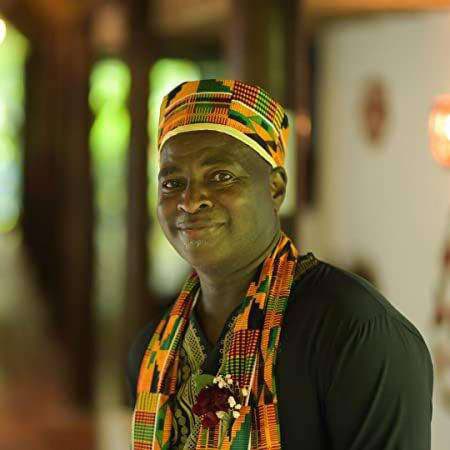
Lenrod N Barakaonline
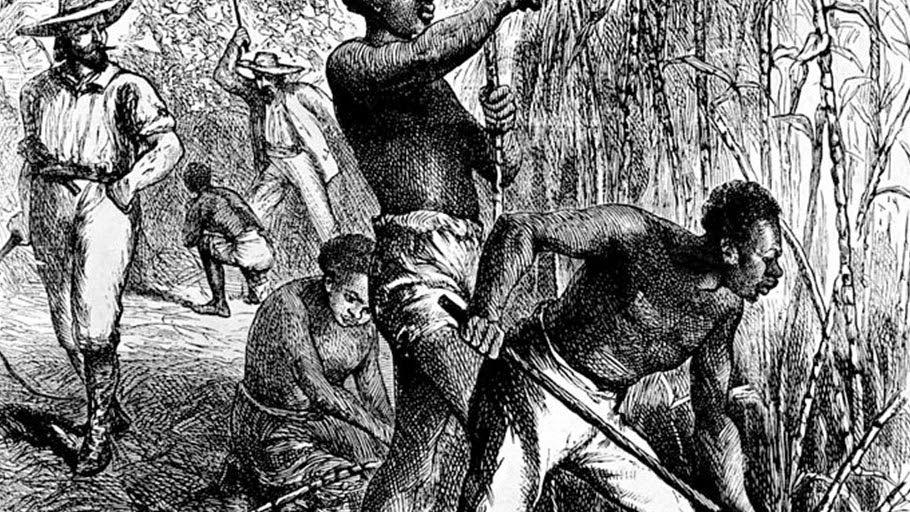
Barbados served as a model for the development of plantation societies in a number of British colonies.


