



Thoughts on the new tax package
Last week, Jamaica’s annual revenue measures were tabled along with the estimates of revenue and expenditure on the first day of the new parliamentary session, as recommended by the Independent Fiscal Commission, to allow scrutiny of the budget.
However, after 10 years of “no new taxes”, Hurricane Melissa forced a tax package of $30 billion in the coming year 2026/2027 and a further $15.6 billion in 2027/2028.
Notably, only indirect taxes were raised, with the Government keeping its promise to raise the individual income tax threshold on April 1, 2026.
Digital services taxation
Charging General Consumption Tax (GCT) on digital services supplied from abroad but consumed in Jamaica may be one of the most challenging measures to be instituted, so the Government is wise to delay its implementation to the fourth quarter of the fiscal year, namely 2027.
While still unclear, accounting firm EY (previously known as Ernst & Young) believes this may ultimately include online streaming services, e-book and audiobook services, software subscriptions, app store purchases as opposed to what many expected: the more physical services provided by Airbnb and Uber.
The Ministry of Finance model for the “destination principle” may be the VAT (value-added taxes) Digital Toolkit for Latin America and the Caribbean prepared by the Organisation for Economic Co-operation and Development (OECD). In EY’s view, foreign digital service platform operators may be required to register for Jamaican GCT and collect and remit it in respect of their sales to Jamaica-based customers.
Tax executive director John Butler says, “The key to success of digital GCT will be simple administration by the overseas entities to prioritise voluntary compliance.”
Tourism Taxation
From a country competitiveness standpoint, the deferred increase in GCT on tourism-related services from 10 per cent to the standard 15 per cent effective April 2027 was clearly designed to allow tourism operators time to recover from Hurricane Melissa. However, unlike every other zero-rated export industry of goods or services from Jamaica which do not pay local VAT, tourism, because it is consumed here, is not considered an exported service.
As PwC noted in its analysis: “The reduced GCT rate has, therefore, attempted to partially recognise the export nature of tourism. Ultimately, the key question to be asked is whether increasing the GCT rate from 10 per cent to 15 per cent will impair the competitiveness of Jamaica’s tourism product relative to competitor nations.” While PwC did not mention this, our key competition is not the Dominican Republic — which is currently having a tourism boom, partially on the backs of diverted tourists from Jamaica — or even Mexico, but the cruise lines, which are now more competitive than ever, having fully recovered from the COVID-19 shock.
As PwC observes, for a tourist coming to Jamaica, GCT/VAT is just one tax. Others include GART (guest accommodation room tax), travel tax and airport fees, as well as all the other taxes and fees that feed into a hotel’s cost structure and ultimately the pricing to the guest. PwC suggests a systematic benchmarking of the overall tax burden imposed on the tourism sectors in each selected jurisdiction, to which I would add that a look at the cruise industry, for which the product offerings appear more competitive than ever.
The argument that the industry is “mature” seems to assume that business will return to normal post-reconstruction, which hopefully will be true, but ignores the high degree of uncertainty following the halving of airlifts, the brand damage suffered from Hurricane Melissa, the consequent diversion to very competitive players like the Dominican Republic, and the ever-increasing power of the cruise lines. Given all this: How many will return?
The still-ignored massive growth of the cruise lines was a point then International Monetary Fund (IMF) head Christine Lagarde appeared to concede but then swiftly moved past when I asked her at an IMF conference here several years before the onset of the COVID-19 pandemic. We may also soon need to think about players such as Cuba once again.
I suggest Jamaica commissions a competitive analysis now rather than when we are out of time. At minimum, if the Government plans to increase the tourism GCT rate to the standard rate, it should remove GART. This review should also include another PwC suggestion, long supported by many in the private sector, that consideration should be given to some form of credit or rebate system (subject to compliance with our international obligations) which encourages backward linkages to Jamaica’s agricultural and manufacturing sectors.
‘Sin’ taxes
The special consumption tax (SCT) rates were unsurprisingly adjusted for alcoholic beverages (from $1,230 to $1,400 per litre of pure alcohol) and cigarettes (up $3 per stick) for the usual health and revenue-raising reasons. Interestingly, sugar has now clearly been added to these usual suspects with the introduction of a new SCT of $0.02 per millilitre on all non-alcoholic sweetened beverages. The approach is broad, and the revenue impact large at $10.1 billion, as it includes drinks with added sugar or caloric sweeteners, artificial or non-nutritive sweeteners, both carbonated and non-carbonated, and imported or locally produced drinks.
EY notes many countries apply a sugar-density model — taxing beverages based on grams of sugar (or artificial sweetener) per 100 ml, while Jamaica applies a flat volumetric rate per millilitre regardless of sugar content. While administratively simple, this approach does not incentivise product reformulation: that is, reducing sugar content.
The elimination of the GCT exemption on motor vehicles for public officials appears reasonable, while the increase in the environmental levy will bring in more taxes (the environmental impact is a discussion for another day), and the National Housing Trust drawdown has unsurprisingly been extended again (also a discussion for another day).
Finally, the intention to revalue the “outdated” property rolls to be in force for 2027/2028 may be the fiscal cushion needed to rebalance the tax package to allow other key strategic potential growth drivers — such as former Finance Minister Nigel Clarke’s ‘Bring Business Back Home’, asset tax, and urban renewal — to be considered. We will explore these, along with enhancing compliance and the role of structured tax settlements in future articles.
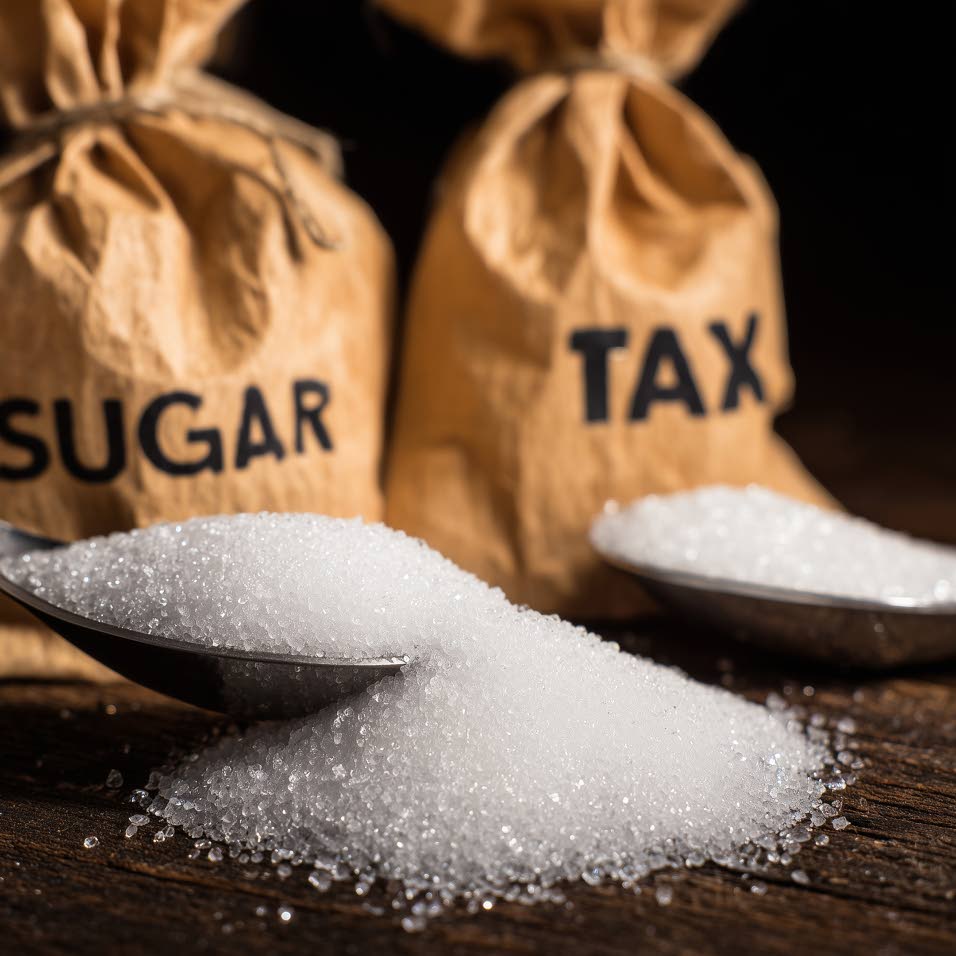
A new special consumption tax of $0.02 per millilitre is to be imposed on all non-alcoholic sweetened beverages.


