



Gov’t to invest in new buses for rural school bus programme
ASKED to explain the logic behind the Government’s plan to spend over $2 billion next financial year to acquire 100 new buses to be deployed under the rural school bus programme when the service is currently experiencing low take-up, Minister of Energy, Transport and Telecommunications Daryl Vaz said, though there are various challenges with some of the current 110 buses, new buses are expected to be a better buy.
Speaking at a press conference at the Ministry of Energy, Transport and Telecommunications in St Andrew on Tuesday to update the nation on the progress of the programme, Vaz said the Government previously acquired 110 buses under the programme, with around 80 of them operating regularly on a daily basis despite low usage by students.
“We have a responsibility to make the buses available for the children, and the truth of the matter is that as we set more and more routes, based on more and more buses, we will get more take-up. We are committed to serve all schools in rural Jamaica,” the minister responded.
Meanwhile, Major Paul Brown, vice-president of supplier Elhydro, commented on the electronic interface and the cashless system, which his company had a key hand in implementing. While he acknowledged that the number of people registering for the electronic bus cards is low, the mission to increase take-up continues.
“We would have outfitted all buses with electronic systems that allow us to do surveillance on the bus and to channel the information into a centralised operation centre where issues can be brought immediately to bear and the necessary actions taken. It is a very important piece of the operations as it relates to the movement of kids.
“As it relates to the cashless system, it was rolled out on February 1. It started out fairly slowly but what we did notice was that prior to February 1, there was a significant increase in the registration as parents and students realised that February 1 was fast approaching. Albeit, the numbers are still very low, but it continues. One of the bottlenecks we noticed on the back end was with respect to the cards that were distributed to the schools. What we have done is to remove all protocols and processes on the matter to really allow principals to issue the cards and press ‘Deliver’ on their portal, which every school has in their possession,” Brown said.
He shared that over 1,000 schools were uploaded on an electronic tracking platform.
“We are seeing, based on the pre-approved structure that we have put in, a massive increase in the cards that are now available for the students to get. It is really just a matter of the principals finding the names of the students, issuing the cards, and pressing ‘Issued’. All the cards are pre-approved and pre-activated.
“When a child receives a card that child can go to any of the over 300 Bill Express locations islandwide, or using the TAPJamaica app or via EdOps [as] there are three mechanisms in place for the topping up of the student cards. The ministry and JUTC are doing everything in their power to aid the process and to expedite getting the cards in the hands of the children so they can benefit from the $50 travel on the bus,” he said.
— Jason Cross
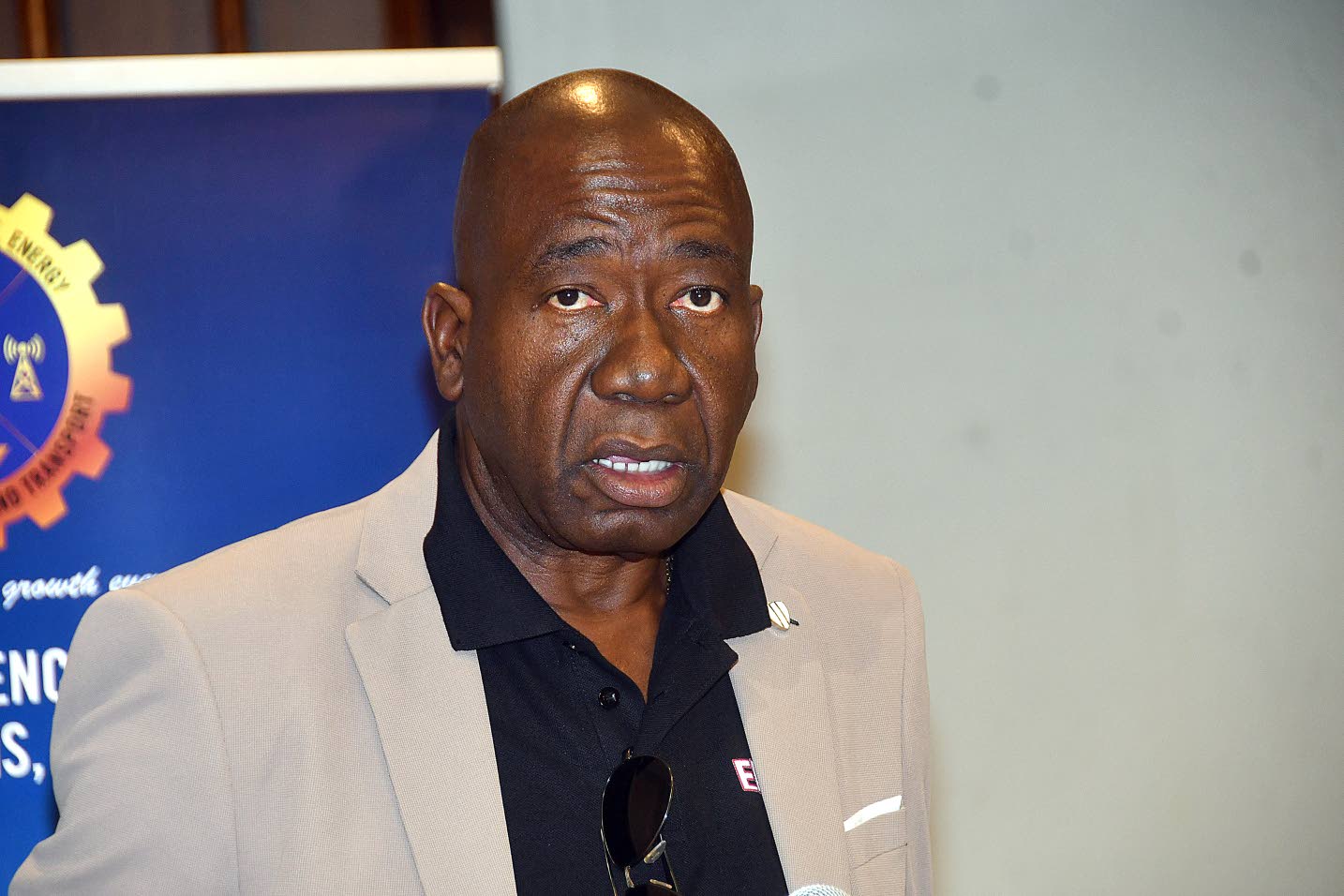
Major Paul Brown, vice-president of Elhydro (Photo: Garfield Robinson)


