



Cuba crisis warning
Former Caricom gov’t heads urge US to rescind crippling sanctions
Eight former Caricom heads of government have called on the United States to reverse what they describe as Washington’s “inhumane weapon of mass destruction” against Cuba, saying that the Donald Trump Administration’s executive order that threatens tariffs on any nation providing oil to the Spanish-speaking Caribbean country is “deepening” a “humanitarian crisis” on the island.
“The universal principle of dialogue to resolve conflicts and disputes cannot be abandoned on the altar of the mighty powerful waging political vendettas against smaller nations by economic warfare,” the former leaders said in a joint statement issued on Thursday.
“The executive order, January 29, 2026 by the United States of America against any nation providing oil to Cuba without the imposition of punitive discriminating tariffs constitutes economic warfare and inflicts unconscionable suffering upon the Cuban people,” added the leaders — Donald Ramotar, former president of Guyana; former prime ministers Freundel Stuart of Barbados; Edison James, Dominica; Tillman Thomas, Grenada; Bruce Golding and PJ Patterson, Jamaica; Dr Kenny Anthony, St Lucia; and Dr Keith Rowley, Trinidad & Tobago.
Cuba, already contending with years of crippling fuel shortages, reached a breaking point after Trump moved to starve the communist nation of oil.
The flow of crude from top ally Venezuela dried up after the US overthrow of its leader, Nicolas Maduro, and Trump has threatened tariffs on any other country stepping in to fill the breach.
To conserve energy, the Cuban Government has announced a series of fuel-rationing measures and slashed public transport.
In their statement on Thursday, the former Caricom heads said they were impelled to make public their appeal to avert further human destruction.
“The consequences of this horrific fuel blockade are catastrophic and constitute cruel punishment of the 11 million civilians by the strangulation of Cuba’s vital requirements for energy, food, medication, education and basic livelihood,” they said.
The former leaders noted that on December 8, 1972, the prime ministers of Barbados, Guyana, Jamaica and Trinidad & Tobago “made the bold decision to establish diplomatic relations with Cuba in assertion of our sovereign right to end the hemispheric economic isolation of a neighbouring Caribbean State”.
They said that for more then 50 years, “Cuba has stood in solidarity with the Caribbean through medical brigades, educational scholarships, sports and disaster relief, freely given assistance in times of our greatest need and devoid of any request by them for reciprocal support of any kind.”
Added the former leaders: “We, during our tenure over the last 33 years, have been inspired and imbued by the courage and foresight of our predecessors at the helm to consistently sponsor and support the resolutions at [the] United Nations General Assembly for the termination of the illegal financial and economic embargo by the US against Cuba. That abhorrent embargo was condemned by an overwhelming majority of member states, including four permanent members of the Security Council.”
Stating that “the global community cannot remain mute and indolent while a fatal pernicious fuel torniquet stifles the Cuban economy and suffocates human lives there” the former leaders said they are advocating “the imperative of repealing immediately any decree that will result in an unprecedented humanitarian crisis in Cuba and [which] undermine the tenets of international law”.
They reminded that the foundation of the Caribbean Community rests on the right of each sovereign State to promote regional solidarity and advance comprehensive cooperation between all Caribbean states.
“The Caricom tradition of solidarity and the exercise of the right to enter and pursue beneficial programmes within our regional geographic space have proven invaluable and worthy of perpetuation,” the former leaders said.
“We believe that the Caribbean citizenry will support any decision by our leaders to render tangible material support to our brothers and sisters in Cuba at this time of need,” they added.
“We dare not depart from this path and must now fulfil our sacred duty to appeal for the exercise of our shared humanity in responding to the terror of economic warfare against the Cuban people. We will never accept the doctrine that might makes right. Economic warfare waged on differences of ideology and political systems is no less odious in our single universe than military invasion anywhere for territorial aggrandisement,” they argued.
They endorsed the findings of UN human rights experts that the executive order is a violation of international law and called upon the international community “to provide Cuba with desperately needed humanitarian assistance”.
On Thursday, Agence France Presse (AFP) reported that an international convoy with humanitarian aid for Cuba will arrive in Havana on March 21.
The organisers, ‘Nuestra America Convoy to Cuba’, say they will deliver the aid by air, land, and sea to the island which has risked being plunged into darkness.
“The convoy will deliver urgently needed food, medicine, medical supplies, and essential goods to communities facing acute shortages as a result of the intensified US siege that has disrupted fuel imports, grounded flights, and strained hospitals and critical infrastructure,” the group said in statement.
It describes itself as an international coalition of trade unionists, parliamentarians, humanitarian organisations, and public figures including Swedish activist Greta Thunberg, who was expelled from Israel last year after trying to board a flotilla with aid destined for Gaza.
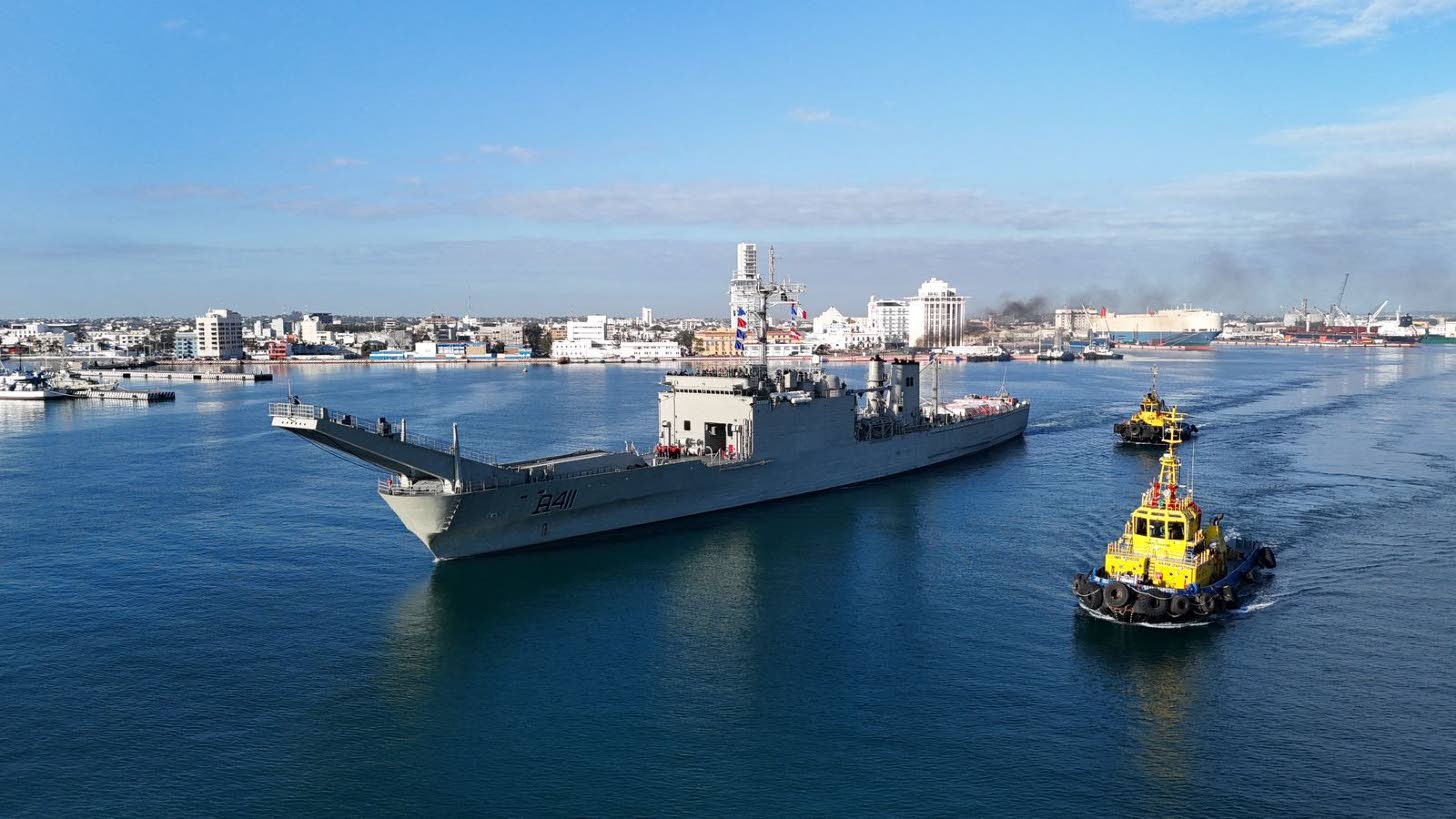
VERACRUZ, Mexico — This handout photo released by Mexico’s Foreign Ministry press office shows one of two ships carrying humanitarian aid to Cuba, departing from the Port of Veracruz, in the state of Veracruz, Mexico, on February 8, 2026. Mexico had said it would ship humanitarian aid to Cuba while continuing to negotiate with Washington on the possibility of circumventing a US oil siege. (Photo: AFP)


