



Asset tax clash
Duncan insists ‘hard choices need to be made’ as senators joust over controversial levy
A sharp clash of financial philosophy unfolded in the Upper House on Friday with Senator Ramon Small-Ferguson leading a forceful push by the Opposition as they once again requested a dismantling of the controversial asset tax, only to be met with resistance from Government Senator Keith Duncan, who warned that, despite the law’s acknowledged flaws, “hard choices need to be made” as the country confronts mounting fiscal pressure and post-disaster recovery.
Small-Ferguson, who is chief executive officer at Barita Investments Limited, argued that the tax has outlived its crisis-era purpose, while Duncan, chief executive officer of the JMMB Group, cautioned that Jamaica’s fragile fiscal position makes the immediate removal of the levy difficult, despite agreeing that it is distortionary.
The clash came as the Senate approved Bills to amend both the asset tax (Specified Bodies) Act and the the Income Tax Act, changes the Government said were aimed primarily at adjusting filing timelines and providing tax relief linked to Hurricane Melissa recovery.
Leader of Government Business in the Senate Kamina Johnson Smith said the amendments were intended to ease compliance and support recovery, explaining that the asset tax change specifically moves the filing and payment deadline to April 15, commencing with the year of assessment, 2025, to align with the revised corporate income tax timeline. She also noted that the income tax amendment ensures emergency financial assistance given to workers after Hurricane Melissa is not taxed.
However, despite support for these administrative changes, the debate quickly shifted to whether the asset tax itself should be removed altogether.
Small-Ferguson argued that the Government had missed an opportunity to address what he described as the central issue — the tax’s continued existence.
“The real issue with respect to the asset tax is not when the tax should be paid. The real issue is whether the tax, which is currently a burden to financial institutions, its customers, and its shareholders, should continue to exist at all… The asset tax does not tax profit, it doesn’t tax success, it taxes the mere existence of capital. You’re being punished for putting capital to work in the economy,” Small-Ferguson said.
He also framed the issue as one of credibility, arguing that the tax was introduced as a temporary crisis measure during Jamaica’s economic reform period and should now be removed.
“Extraordinary measures introduced during a time of crisis, such as the asset tax, must not become permanent features of the system long after the crisis has passed and without further reference or mention.
“When sacrifices are made in the national interest, and when reform succeeds, there must be a corresponding commitment to unwind the temporary burdens that are put forward as part of those recovery efforts. That’s the basis of credibility, that’s the basis of trust, and that’s the basis of sound fiscal policy. What is required now is not a further administrative adjustment to the policy, but a clear commitment from the Government [and] one that they actually keep this time around,” he argued.
But Senator Duncan struck a more cautious tone, acknowledging the tax’s economic drawbacks while emphasising Jamaica’s precarious fiscal reality.
“The projected fiscal deficit for the current financial year is $134.9 billion. The projected fiscal deficit for the next financial year, 2027-28, is $190 billion. Those are the fiscal forecasts, that’s the reality that we face as a country,” Duncan said.
He stressed that while the tax’s removal remains a policy goal, timing is critical.
“Therefore, hard choices need to be made. Really tough choices need to be made, and I think, and I wholeheartedly believe, that at this point in time, to be able to give a timeline as to phase out would be, I believe, preliminary,” he said.
“All of us know it’s distortionary, and it’s suboptimal as a country. But at this point in time we need to be able to understand, get an appreciation of where we are as a country in terms of our fiscal [space], how this all unfolds in terms of our economy, economic activity, tax revenues because it’s early days,” he said.
The debate took a more personal turn when Opposition Senator Kisha Anderson, who also serves as a director across JMMB entities, appeared to take pointed digs at her JMMB colleague.
She suggested his current position contrasted with views he had expressed as a business leader.
“I also wholeheartedly support the amendments and Senator Duncan went to great length to the point where I was wondering if he was deflecting to explain how and why it was necessary,” Anderson said.
She then referenced his previous statements as JMMB CEO criticising the tax, and without directly challenging him to respond, she added pointedly: “It depletes the capital for the financial institution, but it’s not fair to the shareholders. It also means that there’s a floor, an invisible floor to lending, as it must be added to the cost of doing business, and I believe that Senator Duncan also said that. So I would ask if it’s still the case for JMMB, but I understand the position that Senator Duncan may now be in, and so I won’t ask him to answer the question this morning,” she said.
Anderson also highlighted the scale of the tax’s impact on the financial sector, noting that billions have been paid over the years.
“I understand that over $80 billion has been extracted from the financial system since 2016, almost $10 billion in the last financial year alone. That is capital that otherwise [would] have remained within Jamaica’s productive economy. If that capital existed today as a stand-alone institution, it would be one of the largest financial groups in this country,” she said.
The asset tax was introduced in 2013 when the People’s National Party (PNP) was in Government during Jamaica’s fiscal crisis as part of sweeping reforms under the country’s economic stabilisation programme with the International Monetary Fund. Although it was presented as a temporary measure to help restore fiscal stability, it has remained in place for regulated financial institutions more than a decade later.
In closing the debate, Senator Johnson Smith said the Administration remains committed to eliminating the tax, but must balance competing demands, emphasising that managing the country’s finances requires difficult trade-offs.
“It has taken balancing of different circumstances and interests, but we have taken those tough decisions, and some of it has included continuing [to take out of] the NHT (National Housing Trust) when it was something that we objected to when you imposed it, and certainly when you have a tax hole that has to be filled, you have to look at what you’re going to fill it with,” she explained.
“So if the Opposition is saying that we should take back the increases in PATH, if they’re saying that we shouldn’t have given a social pension to those over 70 who don’t have a pension coming from anywhere, if they are saying that we should not have provided an income tax credit or increased the tax threshold, again, making sure that we give back the benefits of sound economic management, then we understand why the Jamaican people took a particular decision on September 3rd last year, because the credibility and the trust lies on this side,” she further argued.
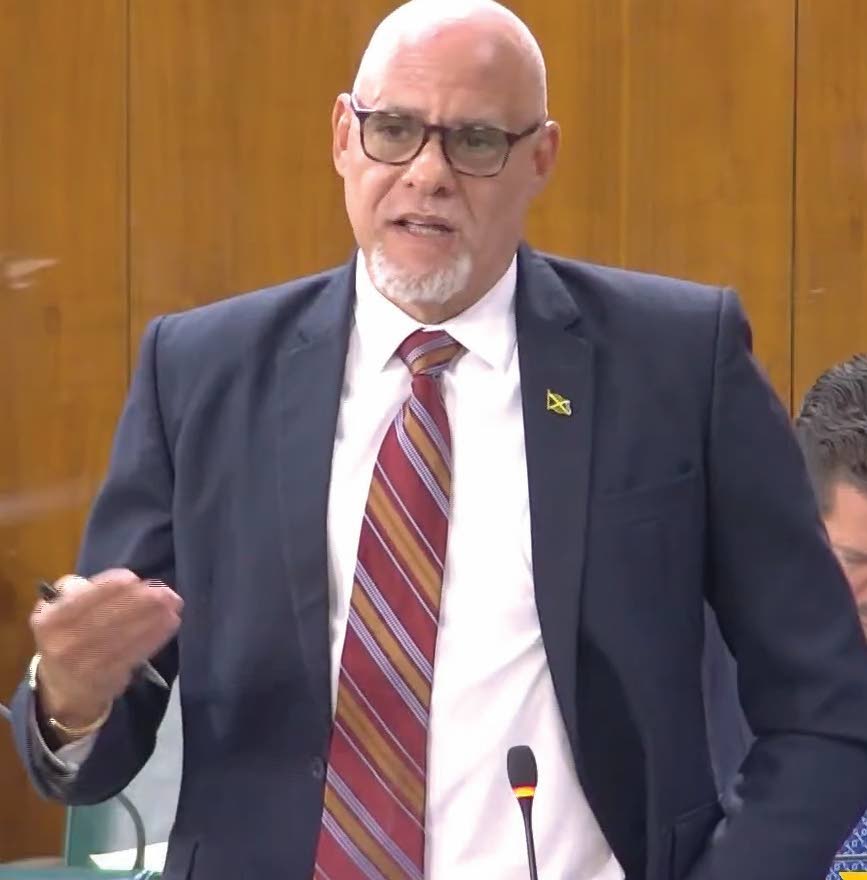
In this video grab Government Senator Keith Duncan is seen making the point in the Upper House on Friday that while removing the asset tax remains a policy goal, timing is critical
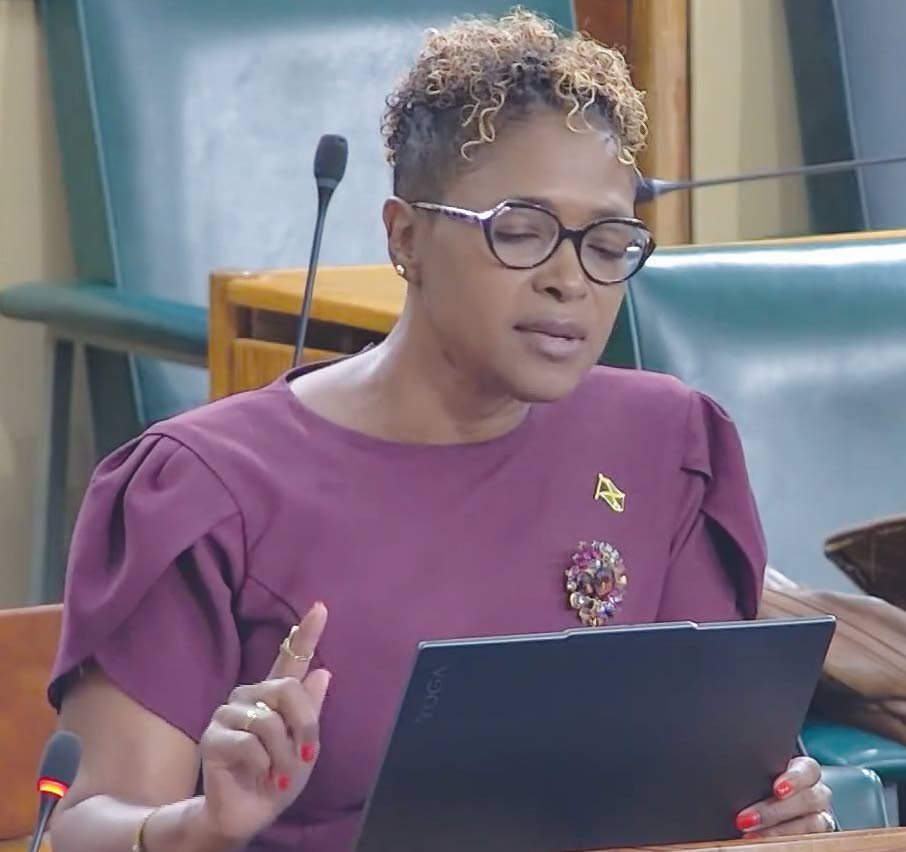
In this video grab Opposition Senator Kisha Anderson makes her contribution to the debate on the asset tax in the legislature on Friday. She suggested that Government Senator Keith Duncan’s current position on the levy contrasted with views he had expressed as a business leader.
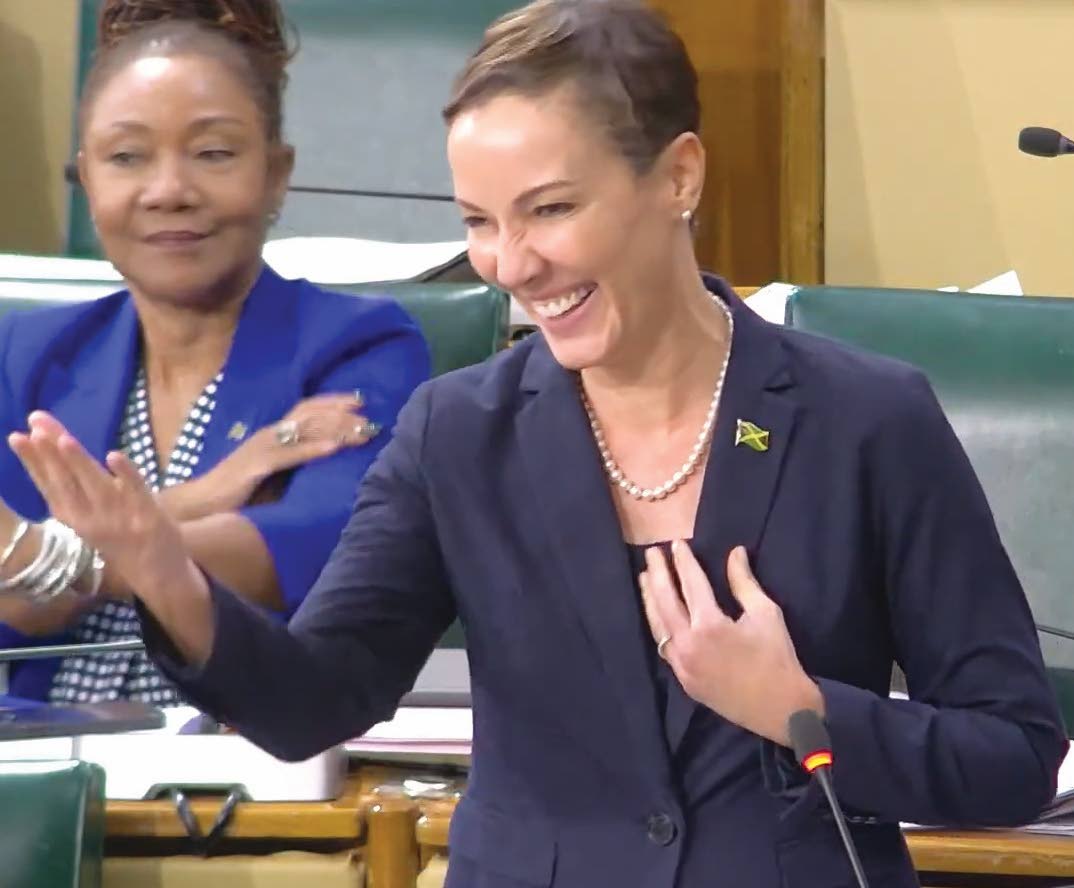
Leader of Government Business in the Senate, Senator Kamina Johnson Smith is captured during a light moment in this video grab on Friday. She argued that the Administration remains committed to eliminating the asset tax, but must balance competing demands.


