



Human survival at stake
Former Caricom leaders urge bloc to confront Cuba suffering
Eleven former Caribbean Community heads of government who last week urged the United States to end its oil embargo on Cuba have nudged the regional bloc to give attention to the deepening crisis in the country, saying that their concern now “is about human survival”.
The former leaders’ prompt comes ahead of the 50th conference of Caricom heads scheduled to open today in St Kitts and Nevis and close on Friday.
“There can be no justification for the imposition of a fuel embargo which could extinguish 11 million civilian lives. Our concern now is about human survival. Exposing the citizens in any country to starvation, disease, and extinction by the denial of energy resources poses a mortal danger that transcends any consideration of ideology,” the leaders said in a statement issued by former Jamaica Prime Minister P J Patterson.
He said there was “no irony or contradiction in the statement issued originally by eight former heads to which former prime ministers Baldwin Spencer (Antigua & Barbuda), Said Musa (Belize) and Dr Ralph Gonsalves (St Vincent & The Grenadines) have now subscribed”.
In addition to Patterson, the signatories on last week’s statement were: Donald Ramotar, former president of Guyana; former prime ministers Freundel Stuart of Barbados; Edison James, Dominica; Tillman Thomas, Grenada; Bruce Golding, Jamaica; Dr Kenny Anthony, St Lucia; and Dr Keith Rowley, Trinidad & Tobago.
Cuba, already contending with years of crippling fuel shortages, reached a breaking point after Trump moved to starve the communist nation of oil.
The flow of crude from top ally Venezuela dried up after the US overthrow of its leader, Nicolas Maduro, and Trump has threatened tariffs on any other country stepping in to fill the breach.
To conserve energy, the Cuban Government has announced a series of fuel-rationing measures and slashed public transport.
In their statement last Thursday the former Caricom heads said they were impelled to make public their appeal to avert further human destruction.
“The consequences of this horrific fuel blockade are catastrophic and constitute cruel punishment of the 11 million civilians by the strangulation of Cuba’s vital requirements for energy, food, medication, education, and basic livelihood,” they said.
In their follow-up statement, the former leaders said they noted with satisfaction the intention of Trinidad & Tobago Prime Minister Kamla Persad-Bissessar to attend the 50th Caricom meeting of heads of Government and anticipate that she will “as is her right and custom, fully engage in constructive discussions which advance our collective interests for our shared humanity”.
They pointed out that during her previous tenure as prime minister of Trinidad & Tobago, Persad-Bissessar “actively participated in beneficial relationships with Cuba and supported annual resolutions at the United Nations General Assembly demanding an end to the US embargo”.
“Her commendable consistency, evident in October 2025, when 165 nations reiterated this call, was a predicate for our appeal to avoid the looming humanitarian crisis in Cuba,” the leaders added.
“We have never wavered in our practice of democratic pluralism, nor failed to demand respect and universal obedience to international law,” the former leaders said.
“The critical hazards and turbulence which confront us demand that our considerable vocal firepower as past, present, and future leaders be directed against the hegemonic economic aggression which threatens havoc and death in our Caribbean space and not at each other,” the added.
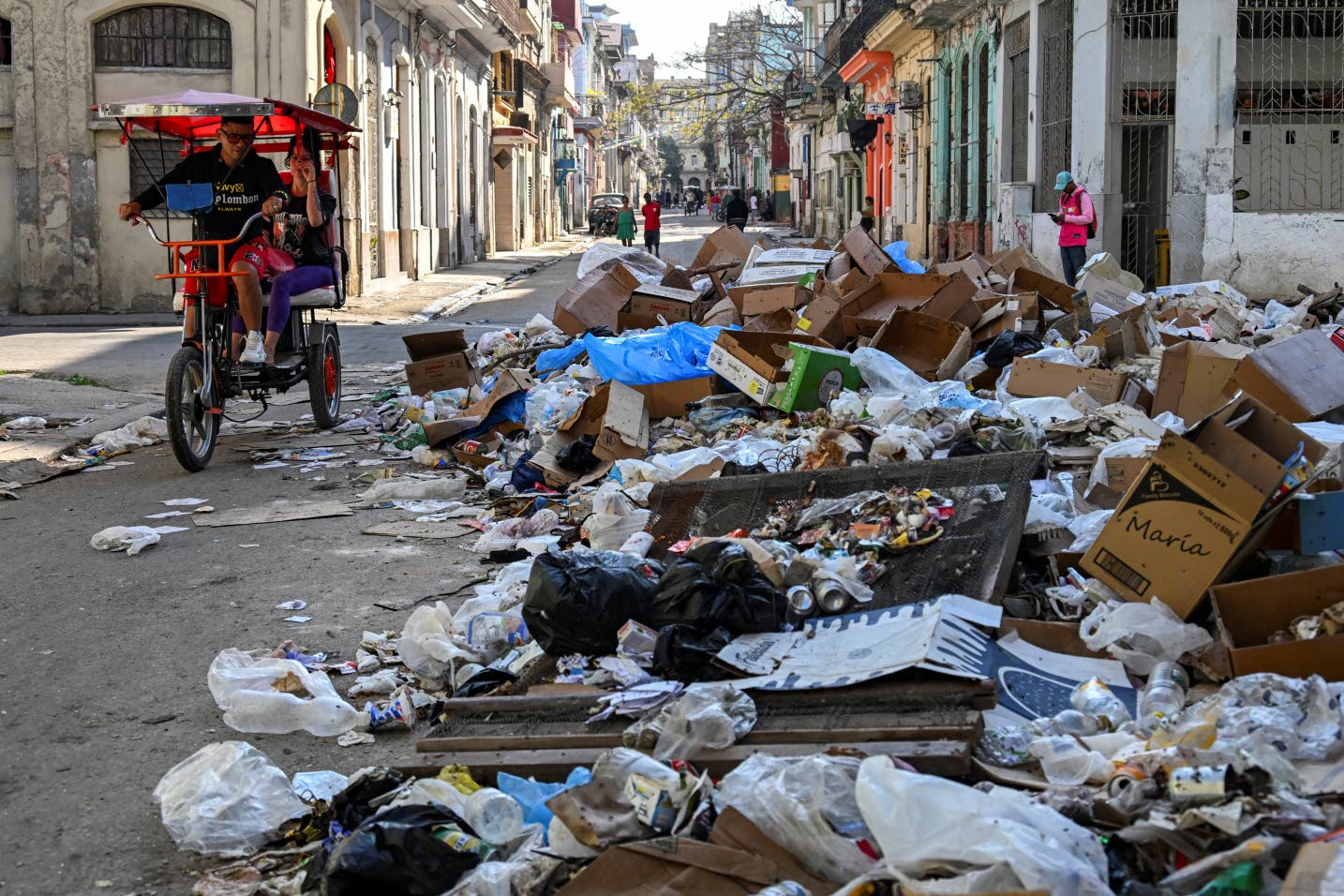
HAVANA, Cuba — A bicitaxi rides past garbage piled up on a street in Havana on February 17, 2026. The oil blockade by the United States has affected a range of Government services, including wate collection.


