Byles blasts banks over Jam-Dex delays
Bank of Jamaica Governor Richard Byles has issued one of his strongest public criticisms yet of commercial banks, accusing them of dragging their feet on adopting the country’s central bank digital currency, Jam-Dex, and slowing Jamaica’s transition to a modern, less-cash-dependent economy.
Speaking at the central bank’s quarterly monetary policy press conference on Tuesday, Byles expressed visible frustration at the pace of progress, saying the central bank has been ready to roll out Jam-Dex economy-wide for years but remains dependent on commercial banks to enable full adoption.
“We have been ready, able to do Jam-Dex throughout the economy for three years… and we’ve been waiting on these deposit-taking institutions,” Byles said.
The governor said the slow pace of digitisation is undermining economic efficiency.
“You cannot have an efficient business environment… when you have such a high reliance on cash,” he said, adding that the transition to digital payments has been “waiting in line for years”.
‘Banks need to wake up’
In unusually blunt remarks, Byles said the central bank has gone as far as offering to cover half the cost of upgrading point-of-sale machines to accept Jam-Dex, yet adoption remains slow.
“The Bank of Jamaica has said, ‘I will pay for half of your costs’… What more do they want?” he asked, before adding: “These banks really need to wake up and smell the coffee.”
The governor argued that widespread digital payments are critical to building a more modern and efficient economy, reducing cash-handling costs and improving business operations.
But the banking sector says the issue is more complex than the central bank suggests.
In an interview with the Jamaica Observer, CEO of the Jamaica Bankers Association (JBA), Barbara Humes noted while the Association supports the Bank of Jamaica’s push to expand Jam-Dex adoption, financial institutions continue to face significant costs in bringing the digital currency fully to market.
“While the JBA welcomes the Bank of Jamaica’s initiatives to promote greater adoption of Jam-Dex, deposit-taking institutions continue to face significant implementation costs associated with bringing this entirely new product to market,” Humes said.
She noted that beyond point-of-sale upgrades, banks must make substantial investments to integrate Jam-Dex into core banking systems and supporting technology infrastructure.
“Banks must carefully assess these expenditures against competing technology investments that deliver more immediate and demonstrable value to Jamaican consumers, such as improving cash availability at ABMs, enhancing the speed and reliability of RTGS and ACH transaction processing, and strengthening online and mobile banking platforms that support everyday financial activity,” Humes told the Business Observer.
The association head argued that, compared with these widely used channels, the business case for prioritising Jam-Dex remains challenging.
“This is reflected in the experience of two JBA member institutions, each with a large client base, that have already rolled out Jam-Dex but have seen very limited customer uptake, consistent with international experience with similar central bank digital currency initiatives,” she reasoned, adding that banks’ finite technology resources have also been directed toward other major industry priorities, including the recently mandated migration to the ISO 20022 messaging standard.
Despite the challenges, Humes said banks remain engaged in the project.
“Member banks continue to work through the Jam-Dex project, and the JBA looks forward to continued collaborative dialogue with the Bank of Jamaica to identify practical, sustainable solutions that can expand access to payment systems as we work jointly toward achieving this shared objective.”
The renewed pressure comes as the central bank seeks to expand everyday usage. The latest merchant to join the programme is Kingston Bookshop, which has launched a promotion offering shoppers instant rewards when they spend at least $2,000 in Jam-Dex at its stores.
Jam-Dex, Jamaica’s central bank digital currency, was introduced to create a secure, low-cost, electronic alternative to cash, improve payment efficiency; and widen financial inclusion by allowing individuals and businesses to transact digitally without needing a traditional bank account.
Unlike cryptocurrencies, however, Jam-Dex is issued and backed by the Bank of Jamaica and is legal tender, meaning it can be used for everyday payments once merchants and financial institutions are equipped to accept it.
But while the infrastructure has been in place for several years, broad adoption has been slow.
Central bank data show Jam-Dex remains small — about 0.1 per cent of currency in circulation — but transaction value surged 550 per cent in 2025 compared with 2024, while transaction volumes grew by roughly 267 per cent over the same period.
Even so, the governor made clear that growth from a small base is not enough. The real breakthrough, he argued, will come only when Jam-Dex becomes easily usable in everyday commerce.
The central bank has been pushing banks to upgrade point-of-sale systems so merchants can accept Jam-Dex alongside debit and credit cards — a step Byles described as critical to breaking the cycle in which consumers hesitate to use the digital currency because there are still too few places to spend it.
“If people are paid in digital currency but cannot spend it easily, the circuit breaks right there,” Byles said.
But until banks upgrade their systems and expand merchant acceptance, the central bank’s digital ambitions will remain constrained by the very institutions it regulates.
Bank of Jamaica Governor Richard Byles (Photo: Joseph Wellington)
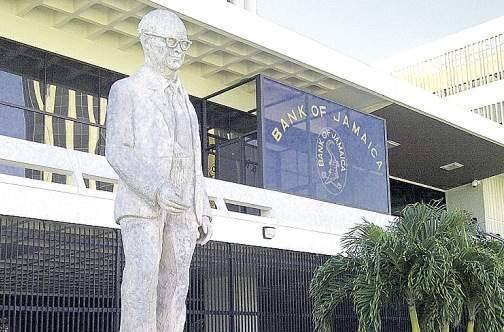
The Bank of Jamaica is pressing commercial banks to accelerate adoption of Jam-Dex, with Governor Richard Byles warning that slow implementation is delaying the country’s digital transition.