



Stop institutionalising our children, Chuck appeals
Justice Minister Delroy Chuck is making an appeal for Jamaica to stop institutionalising its children in order to give them a better chance at remaining on the right side of the law.
The urgent plea was made at Tuesday’s meeting of the joint select committee (JSC) of Parliament examining the 2018 Child Diversion Act with a view to strengthening the legislation. Chuck, an attorney-at-law, is chairman of the committee.
“One of the greatest problem of most societies is that when children get into trouble [with the law] they are put into institutions and once they’re put into institutions it’s downhill [from there],” Chuck said.
“If you look at the people who have become recidivists in the prisons, they are people who started out early in institutions. They have developed institutional habits and therefore what is happening in CPFSA (Child Protection and Family Services Agency) needs to stop. We need to stop institutionalising our children,” Chuck emphasised.
The CPFSA directly manages and supports eight State child care facilities on behalf of the Government of Jamaica while providing oversight and financial assistance to more than 40 private homes.
Pointing to the difference between child diversion and institutionalisation, Chuck said, “That is why with child diversion we take them one at a time and mentor them …but once they go to an institution, believe me, it’s downhill, it’s downhill after that.”
Supporting Chuck, the minister of state in the Ministry of National Security and Peace Juliet Cuthbert Flynn lamented that some children are classified as being uncontrollable.
“I do not believe that children who are deemed uncontrollable, whatever that is, that they should be placed in the same institutions where persons are there who have committed crimes,” she said. “I really believe that mentoring is the way to go.”
Cuthbert Flynn pointed out that many Jamaicans would have suffered trauma with many not knowing how to handle the anger that goes along with the trauma.
“We don’t even know why we’re so angry and I think a lot of these children, they are in that same predicament. Something might be going on with that child that he or she does not understand and the parent themselves don’t understand because they’re just not exposed as to the why,” said the state minister.
“And so we get this ongoing trauma after trauma happening in our societies, in our communities. Not until these children are exposed to counselling that they become aware as to why they were acting out in the first place,” she said.
While stating that she just wants to see these children removed from these institutions, Cuthbert Flynn was interrupted by Chuck who said that “they should never be there”, to which she concurred.
For her part, minister of state in the Ministry of Justice and Constitutional Affairs Marisa Dalrymple-Philibert forcefully made the point that “we should definitely stop institutionalising our children”.
An attorney-at-law, the Member of Parliament for Trelawny Southern said her position is shaped by her experience growing up in a home where her mother, who died at age 95, was a children’s officer.
“I still have practical experience of the children’s homes and we should definitely stop institutionalising,” Dalrymple-Philibert insisted.
She told the Minister of Education, Senator Dr Dana Morris Dixon, a member of the JSC, that she is recommending that any money that the Government is putting into children’s homes be instead diverted to the Child Diversion Unit in her ministry because, according to her, “every cent has been well spent [by the unit]”.
She shared that she still interacts with children’s homes in Trelawny and, according to her, “They are destroying rather than helping our children”.
The veteran legislator also shared the story of a Brazillian child who was held in an adult facility for one week and later spent several weeks inside a children’s home after it was discovered that the adults she was travelling with had fraudulent passports.
Dalrymple-Philibert said the child was not allowed to speak to any of her relatives on the outside and remained at the home, even after her father had arrived from Brazil to get her, putting her life into a tailspin.
“The institutions that we have with our children and that we’re spending money to pay staff… I am convinced would be better served in helping a child diversion programme and giving the children a chance to rehabilitate and become a part of society,” said Dalrymple-Philibert.
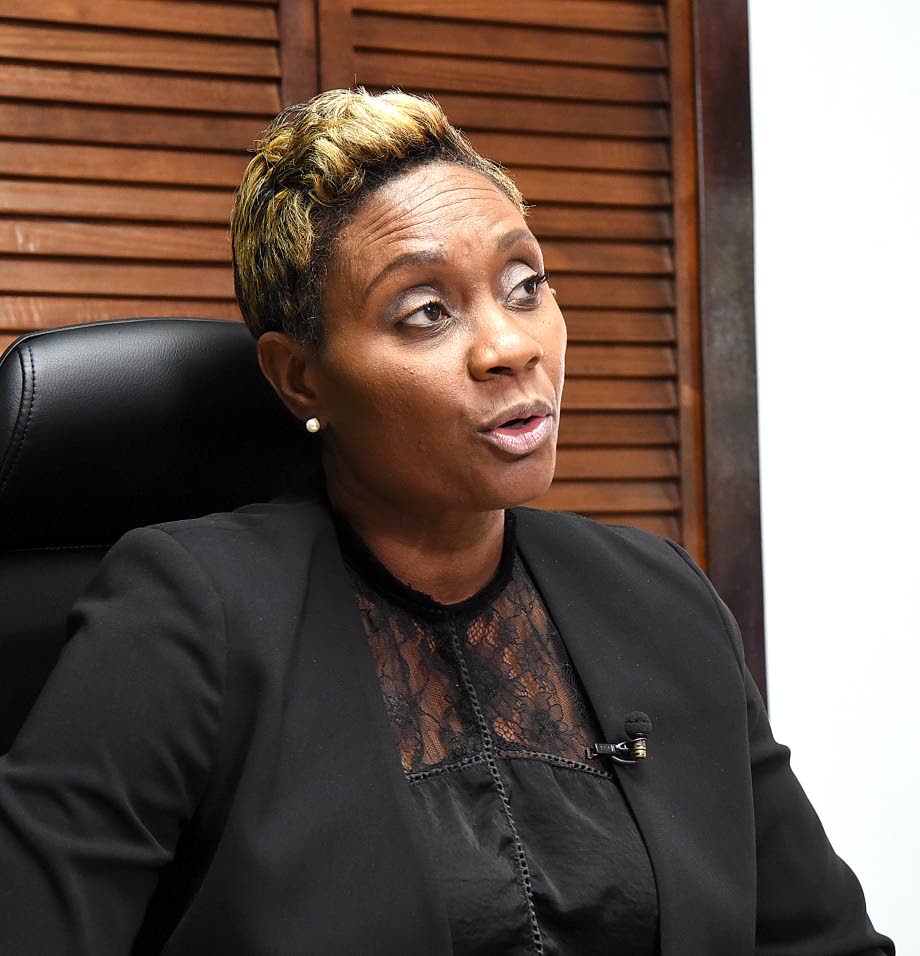
CUTHBERT-FLYNN…everybody wanted to race me, including grown-ups


