



Jamaicans on edge in Qatar
Missile attacks, sirens prove unsettling
Loud explosions, thick black smoke, and the sound of alarms warning that missiles have entered Qatari airspace have become part of a new, unsettling norm for Jamaicans living in Doha as Iran continues an unprecedented bombardment of Gulf States raising fears of a wider conflict and rattling a region long seen as an oasis of peace and security in the turbulent Middle East.
On Sunday, a Jamaican living in Doha, Qatar, who gave only her first name, Abigail, told the Jamaica Observer that the experience has brought sleepless nights and constant concern for her safety and that of fellow Jamaicans in that region.
Iran has launched drone and missile strikes on a number of Middle East countries in retaliation for an ongoing wave of United States and Israeli strikes on the Islamic republic that killed its supreme leader Ayatollah Ali Khamenei on Saturday.
Iran’s Revolutionary Guards said they targeted the US Fifth Fleet in Bahrain and other American bases in the Gulf on Saturday after launching a first wave of missile and drone attacks at Israel.
Governments in the targeted countries have had to activate air defence systems to intercept the missiles and advised residents to stay indoors and take cover.
Abigail said the crisis has taken a significant mental toll, but noted that she and other Jamaicans in the Middle East have been leaning on each another for reassurance, working collectively to stay calm and provide mutual support during the uncertainty.
“I have seen too many [missiles] at this point. It feels too natural. I can say this has been placed in my history books. I’ve seen everything in this life. It feels like fireworks downtown,” she said in reference to the annual fireworks on the Kingston waterfront staged by the Urban Development Corporation to usher in the new year.
“In the sky, it’s just smoke. As the missiles are coming, we’re getting alerts on our phones just to take cover. Then you see Qatar retaliating with their own missiles to try and intercept them before they land, so it’s like a scene out of a movie,” she told the Observer.
The Jamaican said that last Saturday she received four to five emergency alerts on her phone, accompanied by sirens sounding across the country. The pattern continued on Sunday, she added, with another alert issued as early as 7:00 am.
“We’re taking heed to the warnings to stay inside and seek shelter, and just having food and water in case anything goes down, thinking of our exit strategy in case we need to find shelter underground, stocking up our documents and important information in case we need to evacuate; but mostly it’s been mental,” she shared.
“Nobody wants to wake up to missiles flying in the air or sirens going off that there are incoming missiles, so it’s more of a mental toll, but we’re holding on,” Abigail said.
She added the Government of Qatar has advised that children be home-schooled, with only essential workers permitted on the streets amid the heightened security situation.
Abigail added that she and other Jamaicans have been in contact with Jamaica’s ambassador to India, Jason Hall, submitting their details to ensure they are accounted for in the event an evacuation becomes necessary.
“We’ve just been in like survival mode and thinking of ways to get through this and giving a laugh, because as Jamaicans, we’re going to make jokes about every situation, not joking about the situation, but just lightening the mood,” she told the Observer.
Another Jamaican living in Qatar with her husband and daughter, said despite the conflict, she has no fear.
“I don’t feel afraid. The scariest thing I have experienced was the first national alert. We had left [our daughter] alone at home, so that was scary for me,” said the woman, who opted not to be named, but shared, via WhatsApp, photos and videos she took with her cellphone of explosions in the sky.
Meantime, Abigail expressed gratitude to Jamaicans and other Caribbean nationals who reached out after she posted a video about the situation in Qatar, saying their kind words and prayers have been comforting and have helped to keep them calm during the uncertainty.
“It’s quite a few of us here, and just the prayers and the sincerity of keeping safe are comforting each other in this time. We thank you. On behalf of me and my colleagues, who are all Jamaicans, we just thank you for the support and even to you for reaching out and trying to get the word out there,” she said.
Last week, Jamaica’s Ministry of Foreign Affairs and Foreign Trade urged all Jamaicans in the conflict region to exercise vigilance and take shelter as conditions may require.
It also advised anyone with specific concerns or an emergency to contact the ministry at consular@mfaft.gov.jm or +1 876 391 8105.
Additionally, the ministry advised Jamaicans to avoid all travel to the conflict region at this time.
On Sunday, Gulf states vowed to defend themselves against Iranian attacks, including by “responding to the aggression” if need be, after the Gulf Cooperation Council (GCC) convened via video link to formulate a unified response.
The foreign ministers of the six GCC states — the United Arab Emirates, Bahrain, Saudi Arabia, Oman, Qatar and Kuwait, all of which have experienced Iranian strikes
— “reviewed the extensive damage resulting from the treacherous Iranian attacks” and discussed steps for restoring stability in the region.
Gulf countries “will take all necessary measures to defend their security and stability and to protect their territories, citizens, and residents, including the option of responding to the aggression”, a statement released after the meeting said.
It also called for the “immediate cessation of these attacks”, adding that the stability of the “Gulf region is not merely a regional concern but a fundamental pillar of global economic stability”.
— Additional reporting by AFP
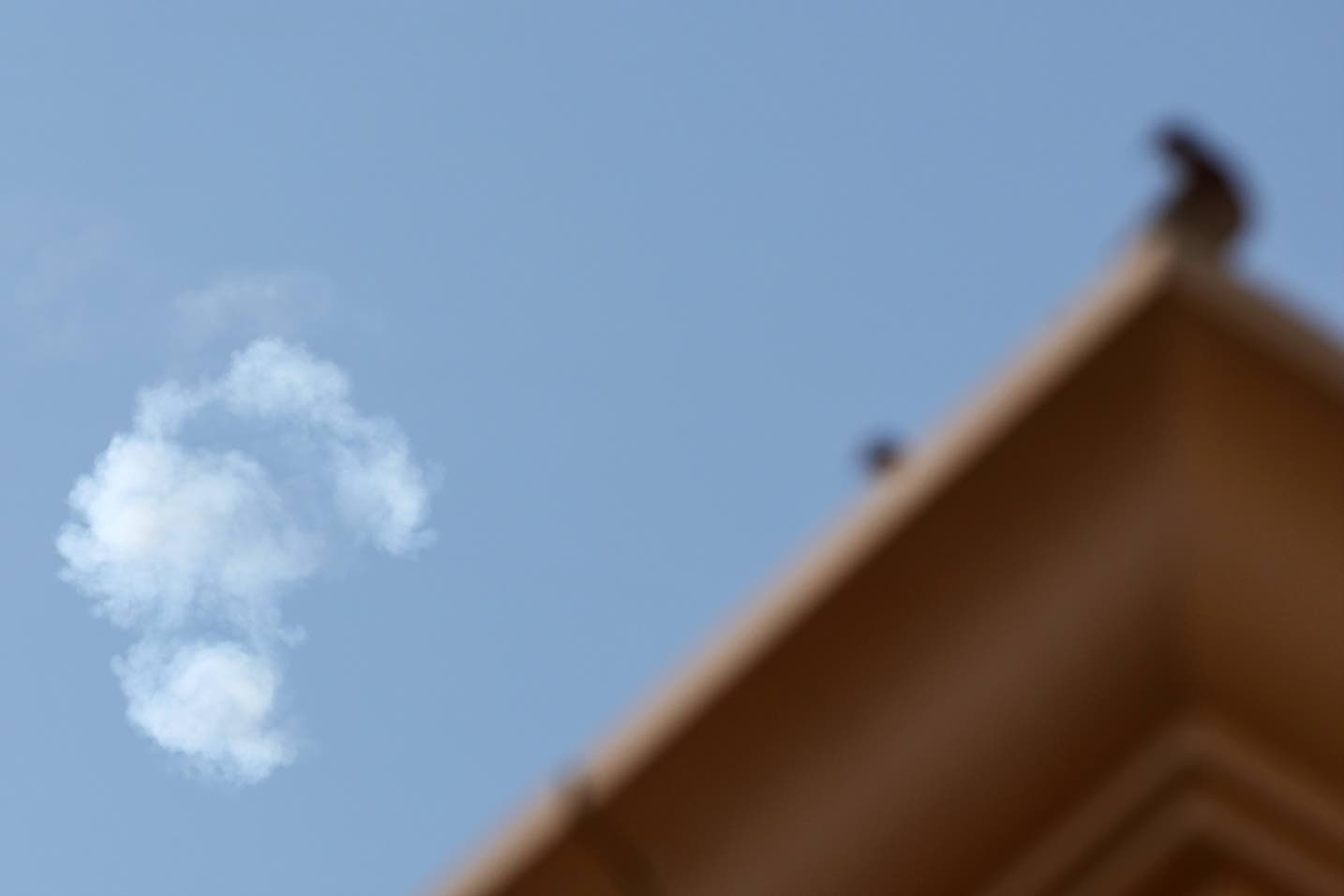
DOHA, Qatar — Smoke from a rocket reportedly intercepting an Iranian missile is seen over the sky in Doha on February 28, 2026. Iranian missiles hit capital cities around the wealthy Gulf on February 28, killing at least one, in retaliation for a US and Israeli attack that threatened to spark a wider conflict. Photo: AFP
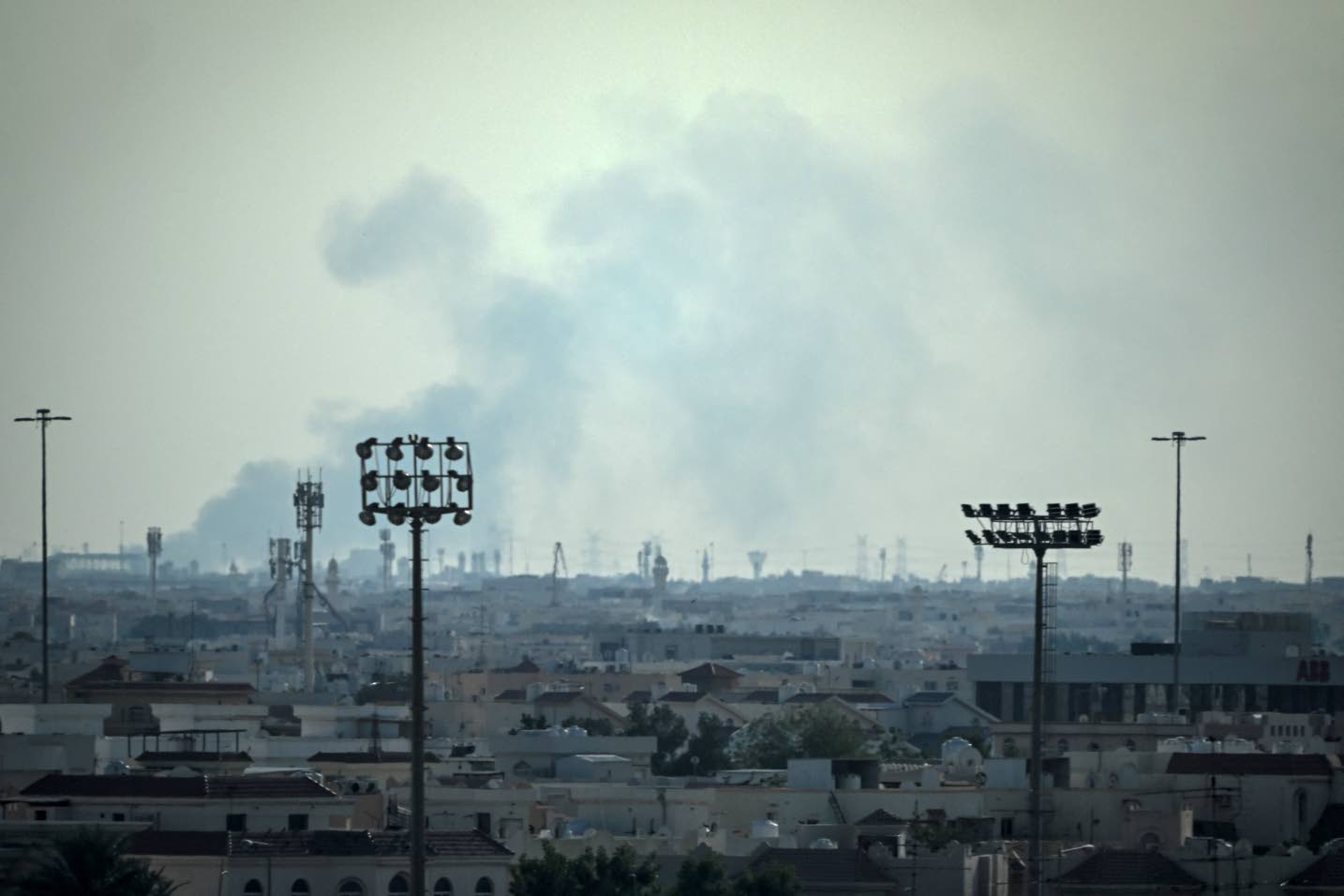
DOHA, Qatar — Smoke rises from an area in the direction of Al Udeid Air Base, which houses the Qatar Emiri Air Force and foreign forces including the US, in Doha on February 28, 2026, following a reported Iranian strike. The United States and Israel launched strikes against Iran on February 28, with Israel’s public broadcaster reporting that supreme leader Ayatollah Ali Khamenei had been targeted, as the Islamic republic retaliated with barrages of missiles at Gulf states and Israel. Photo: AFP


