



Beyond the rain
Government moving to drought-proof Jamaica’s water supply, says Samuda
WITH reduced rainfall now affecting 133 water supply systems across Jamaica and projections pointing to even drier conditions ahead, minister with responsibility for water Matthew Samuda says the Government is moving to strengthen the country’s long-term water resilience as the threat of drought intensifies.
According to Samuda, these efforts include expanding storage capacity and reducing losses across the National Water Commission (NWC) network to better protect national supply against increasingly erratic weather patterns.
Speaking during this week’s Jamaica Observer Monday Exchange, Samuda said the country is already feeling the effects of declining and unpredictable rainfall patterns, warning that traditional reliance on seasonal replenishment is no longer sufficient to guarantee reliable supply.
He noted that rainfall has become increasingly inconsistent, with some areas experiencing significant shortfalls even during periods that historically brought replenishment.
“When you have 30 per cent of 30-year average rainfall in December, which is generally a relatively rainy month… we start to have challenges at this time of the year, and that has contributed in many cases to decline. So even parishes, certainly in the south-west, which continued to get rainfall up until the end of December, they have now started to see declines. So we need to have sufficient natural storage, or man-made storage, for the sort of declines that you are experiencing now,” said Samuda.
He explained that these changing conditions are forcing Jamaica to place greater emphasis on building storage capacity and improving the efficiency of its distribution systems, to ensure the country can withstand prolonged dry periods.
Samuda said a key priority is reducing non-revenue water (NRW) — water lost through leaks, theft, or other inefficiencies — which remains alarmingly high in some parts of the island.
“First thing to contemplate, as published by the OUR (Office of Utilities Regulation), is the abominably high level of… water that is leaked through the network, or stolen, or just unaccounted for, [and] that’s above 70 per cent in many parishes,” he said.
Samuda said the Government is preparing to roll out a nationwide engineering programme over the next decade to address these losses, building on improvements already achieved in the Corporate Area and Portmore, St Catherine.
He told Observer editors and reporters that efforts to reduce NRW in Kingston and St Andrew have already significantly strengthened supply resilience.
“We currently use 12 million gallons less today in Kingston and St Andrew than we did 10 years ago. Why? It’s because… we have cut the leaks from 72 per cent NRW in Kingston to 40/39 per cent, give or take. That’s what it means, so you use less water daily,” he explained.
Samuda argued that reduction in the NRW has helped to lessen the severity of drought-related shortages, pointing out that while the Corporate Area experienced deficits of up to 30 million gallons per day during the 2015 drought, the shortfall during the severe February 2022 drought was reduced to roughly 15 million gallons per day as a result of lower water losses across the system.
The minister also pointed to ongoing plans to expand storage capacity, including the long-proposed construction of the new Hermitage Dam which, he said, is intended to significantly increase water reserves for the Corporate Area and strengthen water resilience in Kingston for the next 50 years.
Furthermore, Samuda pointed out that additional infrastructure projects, including the Rio Cobre Water Treatment Plant, are expected to increase supply capacity and improve reliability across Kingston, St Andrew, and sections of St Catherine when completed.
However, even as the country prepares for worsening dry conditions, Samuda stressed that Jamaica still has sufficient groundwater resources overall but said the challenge lies in ensuring water can be properly stored and delivered to communities which need it.
“We do have declining water sources but we do still have groundwater that is 500 per cent above our irrigation and potable water needs. That’s a reduction from somewhere close to 700 [per cent] over the last 50 years, but it is important to know that we still have sufficient groundwater for our needs,” he said.
Samuda’s comments came days after the Ministry of Water, Environment, and Climate Change, in a media release, warned that reduced rainfall is already affecting water systems across the island.
In the release issued last Friday, following a meeting of the Drought Management Committee, the ministry said technical reports showed 133 of the National Water Commission’s 612 supply systems were being impacted by reduced inflows.
The Meteorological Service has also projected below-normal rainfall for the early rainfall period between April and June, raising further concern about water availability in the months ahead.
The Government has since implemented a series of preparedness measures, including distributing nearly 13,000 household water tanks to increase storage at the community level, and expanding its fleet of water trucks to respond to supply disruptions.
Major projects, including the Western Water Resilience Project and the Rio Cobre Water Supply Project, are also being pursued to improve reliability and strengthen the country’s ability to withstand drought conditions.
In the release, the ministry said these long-term investments are intended to ensure Jamaica is better equipped to manage the realities of a changing climate, where rainfall can no longer be relied upon as it once was.
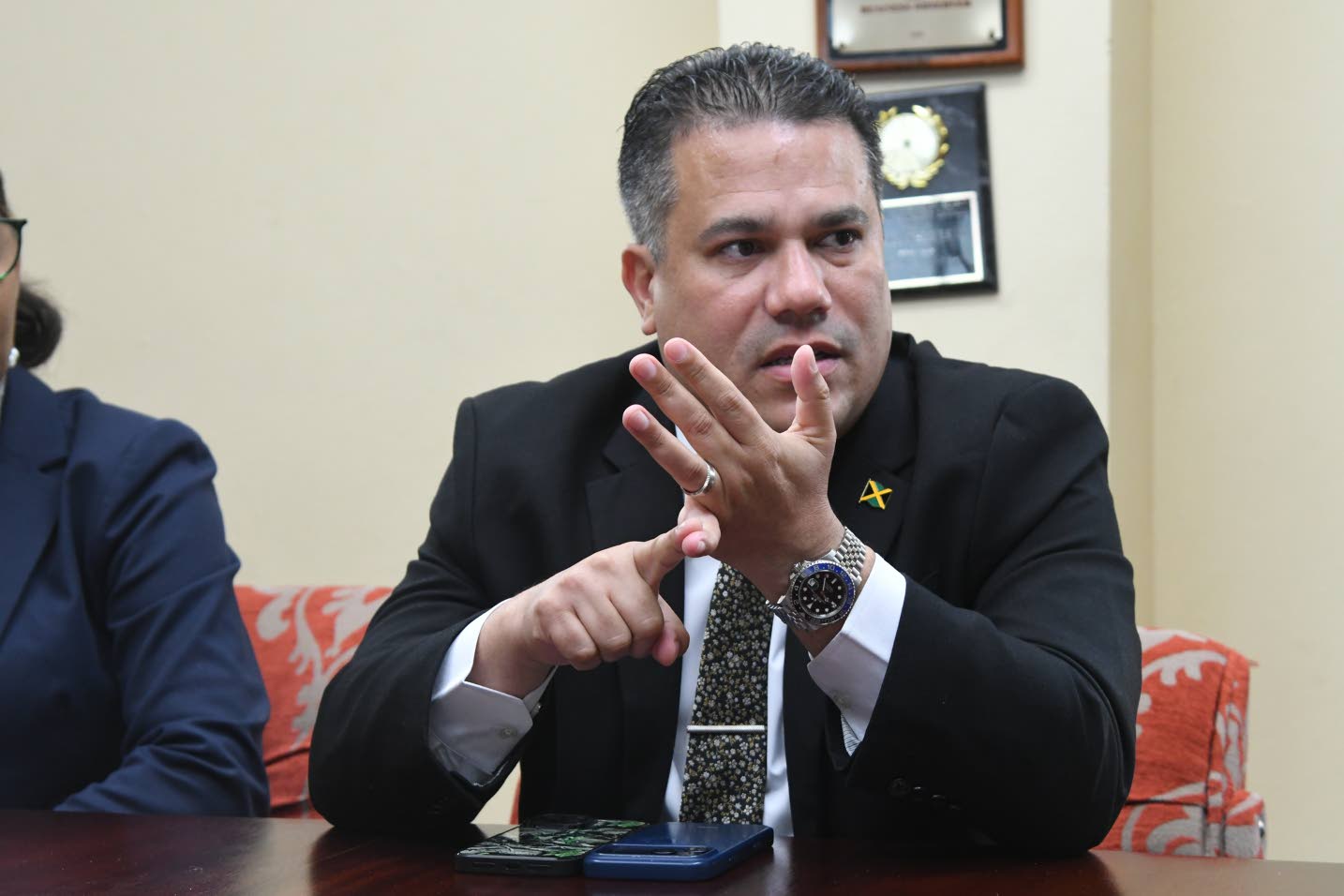
Water, Environment and Climate Change Minister Matthew Samuda speaking at this week’s Jamaica Observer Monday Exchange at the newspaper’s Beechwood Avenue headquarters. (Photo: Karl Mclarty)


