



CDB puts Caribbean development needs at US$65b
...rises to US$72b with shocks
The Caribbean will need more than US$65 billion in investment to meet its long-term development goals — a figure that could rise to as much as US$72 billion if global shocks intensify, according to the Caribbean Development Bank (CDB).
The estimate, disclosed by Acting Deputy Director of Economics Jason Cotton during the bank’s annual news conference in Barbados, reflects the scale of investment required for Caribbean countries to achieve the United Nations Sustainable Development Goals (SDGs).
“When the president gave his first address, we did an assessment of the cost of financing the Caribbean to achieve the SDGs and the estimate we got was alarming,” Cotton said.
“The figure highlighted was about just over US$65 billion, and if there is a shock that figure goes up to around US$71 billion to US$72 billion.”
Cotton explained that the estimate covers development spending across the economic, social and environmental pillars of the SDGs — including infrastructure, climate resilience, health systems, education and energy transformation.
“That would be across all of the SDGs,” he said, noting that the region’s development challenges are deeply interconnected.
Placed against the resources currently flowing into Caribbean development, the figure highlights how large the challenge has become.
The Caribbean Development Bank (CDB) itself disbursed about US$390 million in loans and technical assistance in 2023, the largest amount in its history.
Meanwhile the bank’s flagship concessional funding pool — the Special Development Fund — currently totals US$460 million for the 2025-2028 cycle, supporting projects aimed at poverty reduction, climate resilience, social services, and infrastructure.
Even combined with financing from other development institutions, those resources remain a fraction of what economists say the region ultimately needs.
What makes the estimate particularly sensitive, Cotton said, is the Caribbean’s exposure to external shocks.
Natural disasters, global commodity price swings and geopolitical disruptions can quickly raise the cost of development by increasing import bills, infrastructure rebuilding costs and financing needs.
The issue has taken on renewed urgency amid the escalating tensions between the United States and Iran, which have already rattled global energy markets.
For Caribbean economies that rely heavily on imported fuel, sudden increases in oil prices can rapidly filter through electricity costs, transportation and the broader cost of living. Each shock, Cotton suggested, forces governments to redirect scarce resources toward recovery and stabilisation rather than long-term development.
Faced with that reality, the CDB has been looking for ways to expand the pool of financing available to the region while avoiding further strain on national balance sheets.
President Daniel Best said the institution is pursuing a broader resource-mobilisation strategy aimed at increasing lending capacity while tapping international capital markets and developing new financing instruments.
Among the initiatives under preparation is a Euro Medium-Term Note programme, which would allow the bank to issue bonds in global markets and raise up to US$1 billion over the next three years.
The programme is expected to strengthen the bank’s ability to finance infrastructure, climate resilience and energy projects across its borrowing member countries.
Best said the move forms part of a wider effort to ensure the institution can scale up its support at a time when development needs are rising across the region.
“We must ensure that the bank has the financial strength and flexibility to respond to the needs of our member countries. That means expanding the resources available to us, strengthening partnerships and finding new ways to mobilise financing for the region.” Best said.
At the same time, the bank is working with other multilateral development institutions to design financial tools that would allow Caribbean governments to invest in resilience without adding to their already heavy debt burdens.
Among the proposals under discussion are debt-for-resilience swaps, which would allow countries to refinance existing debt while directing the resulting savings toward climate adaptation and infrastructure projects.
Best said these approaches recognise the unique vulnerabilities faced by small island states.
“The Caribbean’s exposure to external shocks means that we must be innovative in the way we finance development. Traditional lending alone will not be sufficient to meet the scale of the challenge that we face,” he said.
The president reasoned that the effort reflects a growing recognition that the region’s economic future will depend not only on how much financing can be mobilised, but also on how creatively that financing is structured.
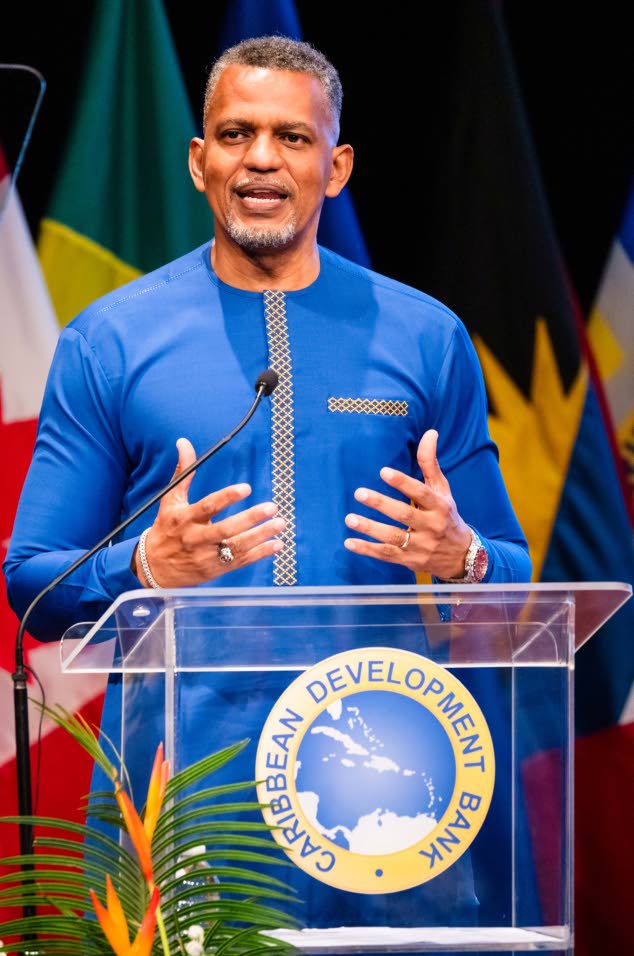
President of the Caribbean Development Bank, Daniel Best.


