



Environmental groups reject Gov’t defence of NEPA’s placement
SEVERAL of the island’s top environmental lobby groups remain unconvinced despite the Government’s defence of its decision to keep the National Environment and Planning Agency (NEPA) in the Ministry of Economic Growth and Job Creation.
The environmental groups and the Opposition People’s National Party (PNP) have argued that NEPA should reside in the environment ministry, but this has been rejected by the Administration, which has downplayed the significance of where the agency is housed.
On Monday, Minister of Water, Environment and Climate Change Matthew Samuda argued that the address of the agency is not important as “every area has to be managed within the legislative and regulatory arrangements”.
Addressing the latest Jamaica Observer Monday Exchange Samuda said, “I am fine with a debate with any civil society group, with the Opposition…about the legislative structure and the regulatory structure, but where an agency or a department is addressed is really neither here nor there, because no head of agency, no minister, no board can operate outside of the regulatory frame without getting themselves into serious problems.”
He was supported by NEPA’s Chief Executive Officer Leonard Francis, who told Observer editors and reporters the agency is not influenced by the leadership of its parent ministry.
“The reality is this, wherever we are, we are going to be performing professionally and in the interest and [with the] guidance of our legislations, and I hope that that message gets out, because it’s very important to us as an organisation,” said Francis.
But in a release on Thursday, “64 civil society organisations and concerned citizens” called for urgent reform of Jamaica’s environmental and planning governance framework.
“Recent public comments by the Minister of Water, Environment and Climate Change Matthew Samuda have once again highlighted a long-standing governance issue: the tension between NEPA’s role as Jamaica’s environmental regulator and the ministry under which it is placed, particularly when development control and environmental protection are combined in a single agency.
“This tension did not begin recently. Since the promulgation of the Natural Resources Conservation Authority (NRCA) Act in 2001, Jamaica’s environmental regulator (NEPA) has sat under multiple ministries — often alongside portfolios responsible for economic growth, infrastructure, or development.
“Despite multiple studies over the past two decades, including the 2007 modernisation review prepared by Dr Winston McCalla and Associates and the CAPRI Study in 2018, structural weaknesses and unresolved legislative reform persist. More than 20 years after NEPA’s creation there is still no comprehensive NEPA Act to modernise and regularise the agency’s mandate,” the groups claimed.
They argued that with the creation of a stand-alone Ministry of Water, Environment and Climate Change an opportunity has been created to address historic conflicts in mandate and governance of NEPA.
“That opportunity was not taken. Today, NEPA and its regulatory arm, the NRCA, remain under the Office of the Prime Minister (OPM), while the prime minister also retains responsibility for the Ministry of Economic Growth and Infrastructure Development (MEGID). This placement situates environmental regulation within the same executive portfolio responsible for promoting large-scale development, creating a structural tension that limits independent oversight,” the groups said in the release.
They pointed to Samuda’s statement to the Observer that agencies often sit within ministries whose broader portfolios differ from their regulatory functions and argued that, “The issue here, however, is not simply administrative location, it is the inherent tension and conflict of interest between environmental protection and development control.”
According to the groups, development approval and environmental protection serve different purposes.
“One facilitates economic growth and the creation of jobs while the other scrutinises, conditions, or, where necessary, restricts activities to prevent harm to ecosystems and communities caused by development. These functions are often in direct conflict. That is precisely why, in most Caricom jurisdictions — including Trinidad and Tobago, Guyana, and OECS member states — environmental regulation and land-use planning are handled by separate agencies under distinct legislative frameworks.
“This is not comparable to unrelated portfolio groupings. The concern arises when the mandates themselves are structurally conflicting — such as forestry and mining, or environmental protection and large-scale development. In such cases, governance arrangements must be carefully designed to prevent conflicts of interest and ensure that environmental oversight is not subordinated to development priorities.”
The environmental groups charged that NEPA continues to face inherited challenges, including outdated and conflicting legislation, limited enforcement capacity, staffing and technical gaps, and unclear institutional roles.
“These weaknesses affect environmental outcomes, public confidence, and the integrity of the development approval process. At a time of escalating climate impacts — stronger storms, flooding, sea-level rise, and ecosystem loss — Jamaica cannot afford a governance framework that blurs mandates or weakens oversight,” the groups added.
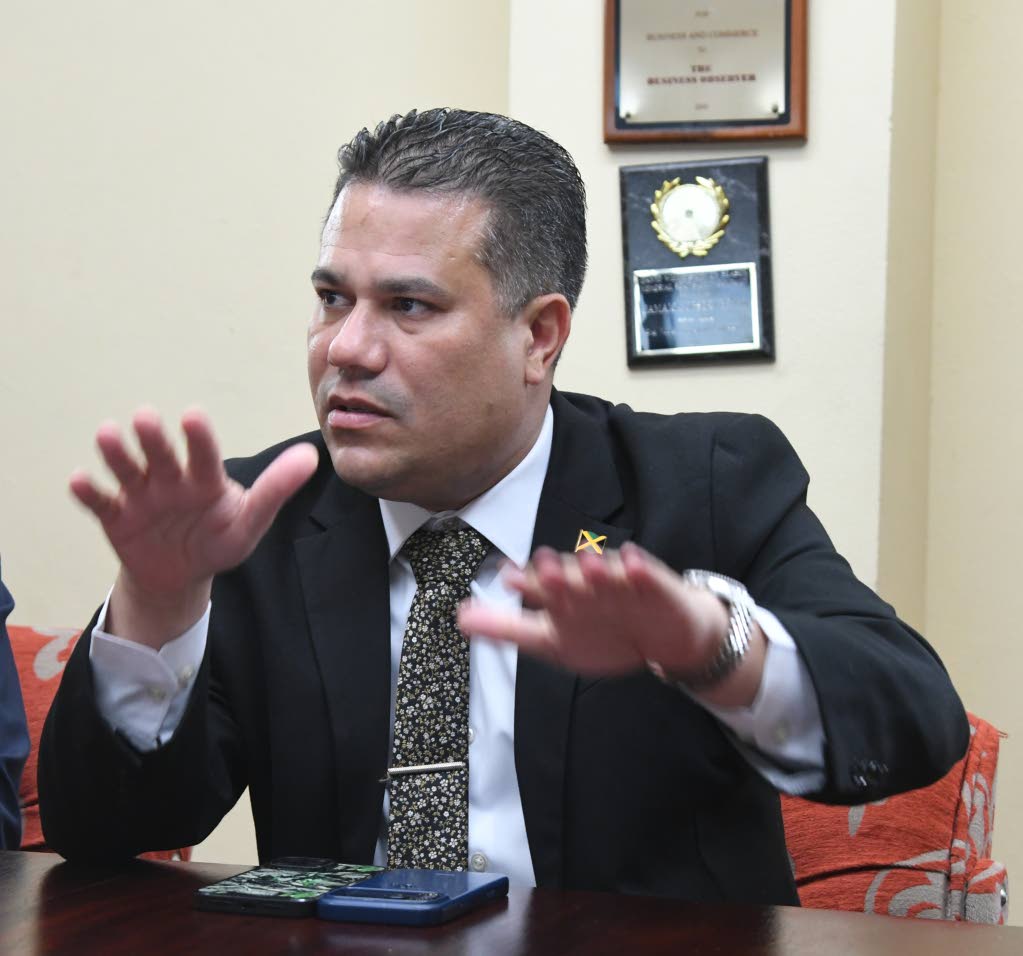
SAMUDA… where an agency or a department is addressed is really neither here nor there


