



Quality over quantity
Morgan says SPARK won’t ‘chase numbers’ |if it means roads will not be fixed properly
The Government has defended the slower-than-expected pace of the Shared Prosperity through Accelerated Improvement to our Road Network (SPARK) programme as being a case of “quality over quantity”.
Minister with responsibility for road and works Robert Morgan told Parliament’s Standing Finance Committee on Thursday that unforeseen engineering problems and waterline conflicts have forced extra work rather than quick paving.
Facing pointed questions Morgan argued that the programme’s early weeks and months have been less about “laying asphalt” and more about learning what is beneath the surface.
“A lot of the roads that we are doing, we never had any designs or maps for them. So the initial assessment of the roads that we started doing was based on our observation of what the road is,” Morgan told the committee.
He used Everest Drive in the East Kingston and Port Royal constituency to illustrate how projects can shift once excavation begins.
“When we started Everest Drive, we did not calculate that we would need a pipeline on Everest Drive. When we started our excavation, we realised that the pipe on Everest Drive had to be replaced because it was an old pipe that probably had asbestos in it,” Morgan said.
Opposition spokesman on road and works Richard Azan pushed back, implying the setbacks reflected weak preparation, but Morgan insisted the programme is structured to identify hidden risks through proper investigation and then correct them, instead of paving over problems.
“The fact of the matter is, you will never fully know what is taking place until the consultant goes in and starts doing the excavation, the design, and the analysis, and the soil testing, which is why that is an important component of the SPARK programme,” he said.
Morgan also addressed complaints Members of Parliament (MP) claimed they are getting from residents who see engineers arrive and then little visible activity for weeks. He said the “quiet periods” are tied to technical checks now being treated as standard.
“One of the challenges a lot of members have been raising to me is they saw the engineers come into the community and then they don’t see them for two months. They don’t see them for two months because they have to do the soil testing, they have to do the waterline testing, they have to do the hydrology and geology, because that is a new standard that we’re trying to implement. Yes, it’s not going to be an easy standard, but it is a standard that the country requires and it’s a standard that the country deserves,” Morgan said.
As MPs pressed for clarity on results, the committee was told the programme has started 163 roads and paved 80, but only about 60 are “totally completed and ready to hand over”, a gap Morgan linked to added engineering requirements and finished work, not simply asphalt laying.
It was in that context that Morgan drew a sharp line between speed and durability.
“We need to make a decision. I am not here to play a numbers game. I am here to play a road quality game… Are we going to do quality or are we going to do quantity? And we have decided to do quality,” he said.
Deputy Opposition spokesman on road and works Dwayne Vaz then turned to the Government’s long-term plan for SPARK, pointing out that the funding lines appear to stretch into 2030, even though the programme was scheduled to end before that date.
Vaz questioned whether the programme’s timeline is quietly being extended or whether the figures represent something else.
Morgan insisted the committee should not treat the out-year figures as a new end-date, arguing they are projections that can change as execution and spending accelerate. He also stressed that SPARK is governed by a contract with clear start and end points.
“So that probably is a projection. What we do know is that we have a binding contract that has a start date and an end date and the Government is obligated and committed to providing the result. What I’m saying to you is that, based on the budget trends, and if you can look at the MoBay perimeter [road] as one example, capital funds can be moved from place to place throughout the financial year,” he explained.
“So as the SPARK programme accelerates, the projections that are in the book may not hold true. It may mean that the Ministry of Finance, which they have expressed a willingness to do, will transfer funds, as they have done before, which is why we are now at 100 per cent of our capital spending in this ministry. They will give us the funds to complete the programme,” added Morgan.
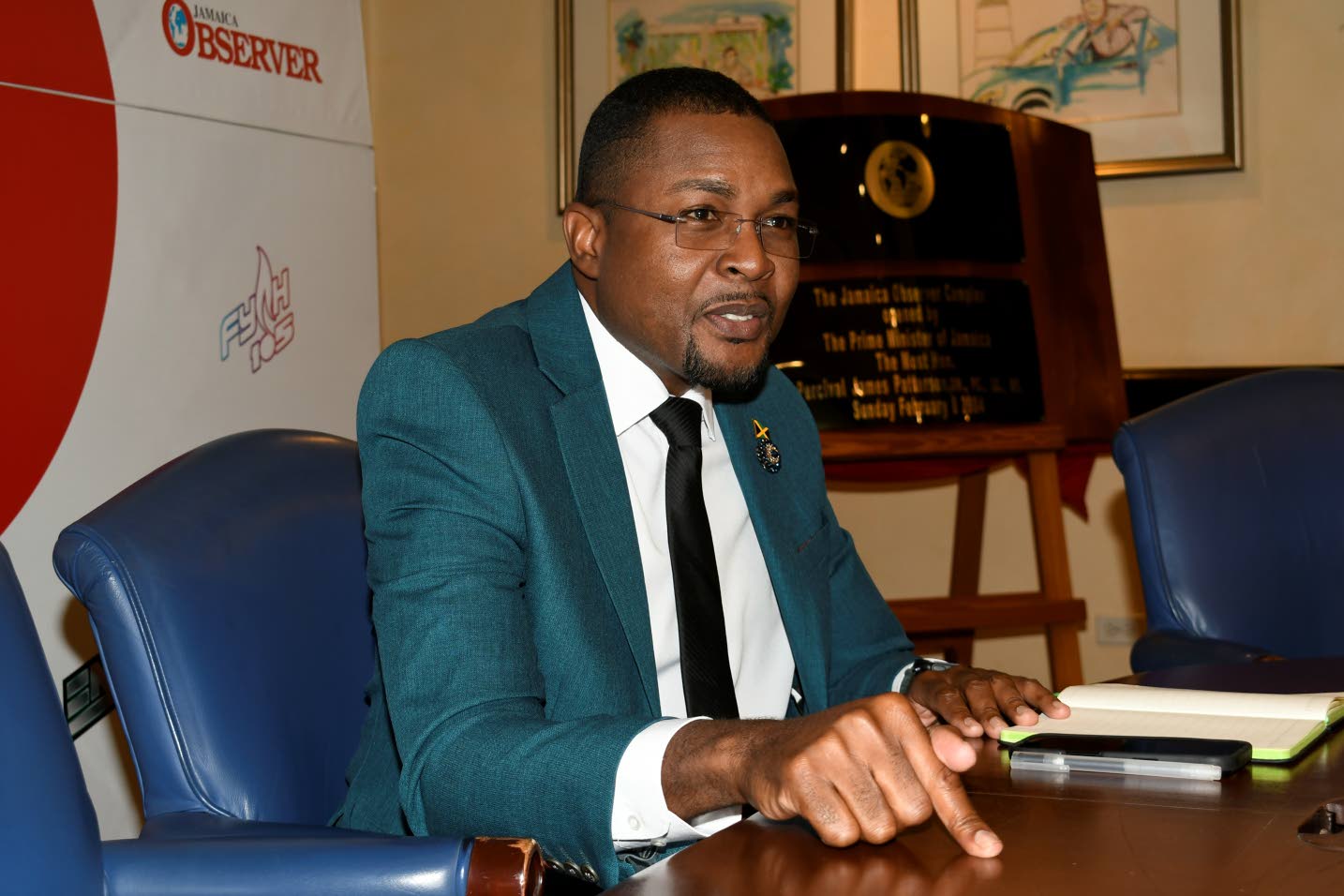
MORGAN…under SPARK 163 roads have started, 80 have been paved, but only about 60 are totally completed and ready to hand over Photo: Karl Mclarty


