$650-m payout to hurricane-hit Jamaicans
World Food Programme nearing cash aid target
THOUSANDS of Jamaicans have received more than $650 million through a cash assistance programme, led by the World Food Programme (WFP), to support recovery efforts following the devastating impact of Hurricane Melissa.
The initiative, implemented in partnership with the Ministry of Labour and Social Security, has so far reached more than 52,000 people who were severely affected by the October hurricane. The programme was launched on December 18, after an earlier emergency phase that provided food packs to about 123,000 vulnerable residents in the parishes of St Elizabeth, St James, Trelawny, and Westmoreland.
The programme was initially aimed at supporting 50,000 people, however, it was later expanded to 64,000 due to the strong demand. Beneficiaries have been identified in Hanover, St James, Trelawny, St Ann, Westmoreland, and St Elizabeth, with each recipient receiving a $37,000 voucher distributed through a network of more than 230 Western Union locations across the island.
Head of the Jamaica Satellite Office at the WFP Multi-Country Office, Dana Sacchetti said the programme is progressing steadily toward its expanded target.
“We’re about a little bit over 80 per cent of the way there, in terms of the target we want to reach — that 64,000 that we do want to provide cash assistance to. We also have a community feedback mechanism that is both in the field — officers in Junction and Montego Bay — [and] among staff in Kingston who interact with beneficiaries,” Sacchetti told the Jamaica Observer.
Beneficiaries were identified through damage assessments conducted by the Ministry of Labour and Social Security and its partners, targeting households with moderate or total housing damage, as well as elderly and disabled individuals affected by the Category Five storm.
Sacchetti shared that feedback from recipients indicates the assistance has been critical for many families struggling to recover.
“People said the cash really came to them at a very critical moment, where markets had just reopened but prices for critical foods had doubled, so people would tell us that without the support that was provided by the cash assistance, families would’ve had to make some pretty tough choices. The cash helped them to bridge that gap as they were facing job losses,” he said.
However, reaching all the beneficiaries has not been without challenges, particularly as some residents displaced by the storm have relocated or remain difficult to contact.
“We understand that power remains an issue for many people, and connectivity is a challenge, whether it’s Internet or by phone. Sometimes the assessments that were done at the household level, people may have moved, they may have been displaced, or they may have moved to another population centre — to Kingston or Montego Bay — or they may be staying with family, so it’s sometimes challenging to reach people to target them with the cash assistance,” Sacchetti explained.
Additionally, he noted that beneficiaries are notified via text message when their vouchers are ready, a method that has led some recipients to question the messages’ legitimacy due to the prevalence of scams.
“Some of the beneficiaries look at their phone and wonder if this is for real, so we have a number of them call our hotline and say, ‘We are not sure if we can trust this,’ but we are very clear. We have a large range of communication materials — we had ads on community radio, we have press releases at the ministry, we have a number of materials posted in the Ministry of Labour — and we work very closely with the parish office managers and social workers to get the word out about this cash initiative,” Sacchetti said.
To address these issues, he said the WFP has adopted several communication strategies to reach recipients and ensure they can access their benefits. These includes deploying field teams to deliver secure envelopes to individuals who cannot be reached electronically, within two weeks of being notified.
Currently, the redemption rate for the Hurricane Melissa programme stands at 82 per cent, with between 80 and 100 beneficiaries collecting their payments daily. The WFP hopes to reach redemption levels similar to those seen after Hurricane Beryl, when 10,500 people received cash assistance, and 95 per cent redeemed their support.
Beyond direct financial support, the WFP has also repurposed mobile storage units deployed during the emergency response into temporary classrooms for 12 schools identified by the Ministry of Education, Skills, Youth, and Information. The schools include Edgehill School of Special Education, Wakefield Primary and Infant, Waldensia Primary and Infant, Hastings Primary and Infant, Salt Marsh Primary and Infant, Hampden Primary and Infant, Unity Primary and Infant, Holland High School, Cornwall College, and Herbert Morrison Technical High.
Sacchetti said the organisation is also assessing ways to support the national school feeding programme in western Jamaica.
“We had a mission in January to understand what is the situation on school feeding across a number of schools, and we’re now engaged with the Ministry of Education to identify ways in which we can support resumption and scale up of school feeding at many of these institutions,” he told the Sunday Observer.
As recovery efforts continue, he urged Jamaicans not to forget those still struggling months after the storm.
“This was an absolutely catastrophic storm that altered the lives of hundreds of thousands, if not more than one million people in Jamaica. While normal daily life has resumed for a number of people in Jamaica, there are a significant number of people — particularly in the western parishes — for whom this was really a life-changing event,” said Sacchetti.
He added: “We remain firmly focused on identifying ways where we can address those immediate needs, reduce poverty for the long term, and support the Government of Jamaica to continue to learn from these responses to Hurricane Beryl, Hurricane Melissa, and to other shocks moving forward.”
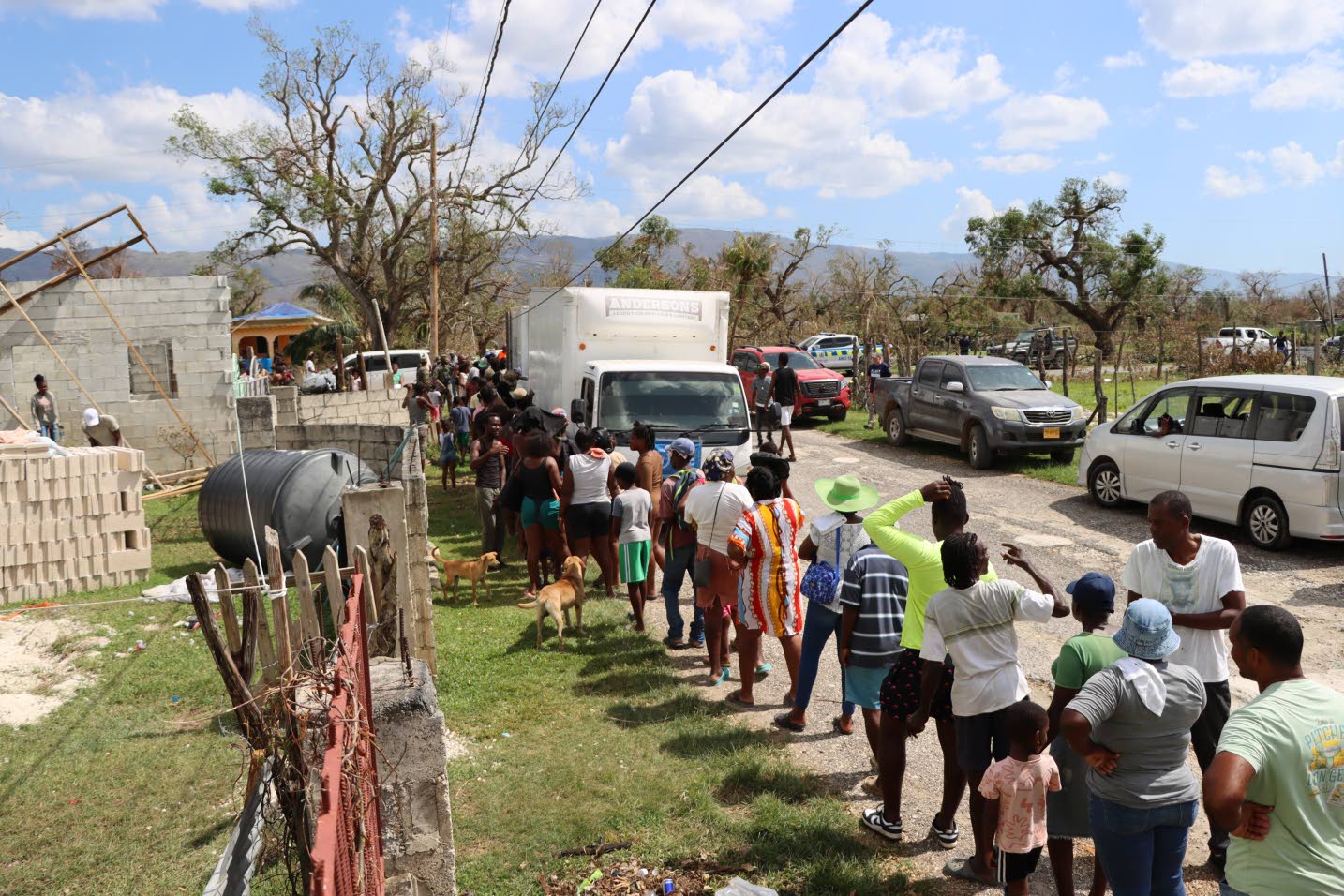
Distribution of World Food Programme emergency food boxes, and bottled water from NGO partner Food For the Poor, in support of the emergency response of the Government of Jamaica in the area of Arlington, St Elizabeth, in the aftermath of Hurricane Melissa. The early emergency phase provided food packs to about 123,000 vulnerable residents in the parishes of St Elizabeth, St James, Trelawny, and Westmoreland. (Photo: WFP/Alexis Masciarelli)

SACCHETTI…while normal daily life has resumed for a number of people in Jamaica, there are a significant number of people — particularly in the western parishes — for whom this was really a life-changing event
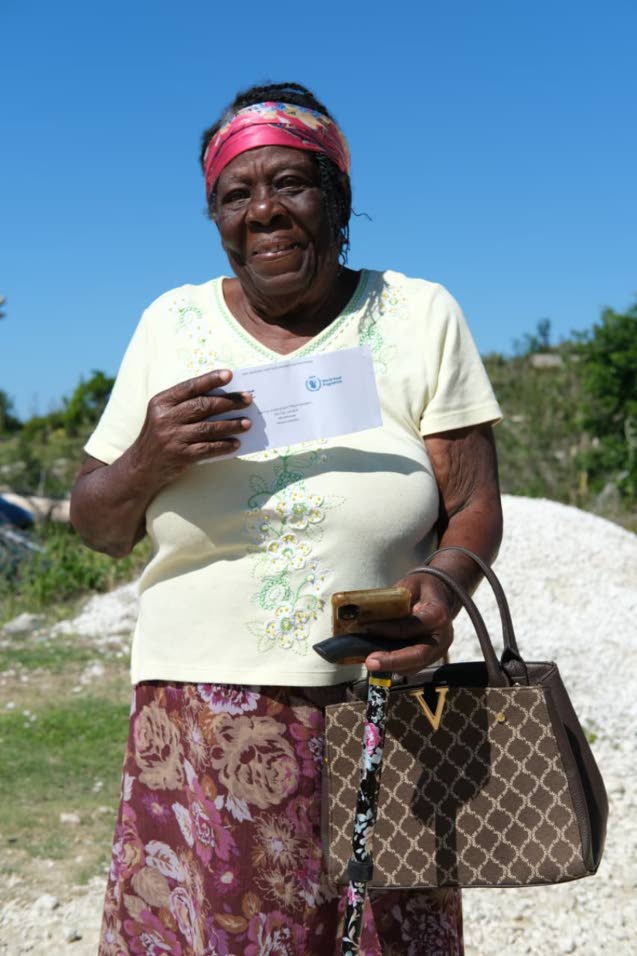
A beneficiary of the World Food Programme cash assistance programme moments after receiving a cash voucher from the organisation’s field officers.
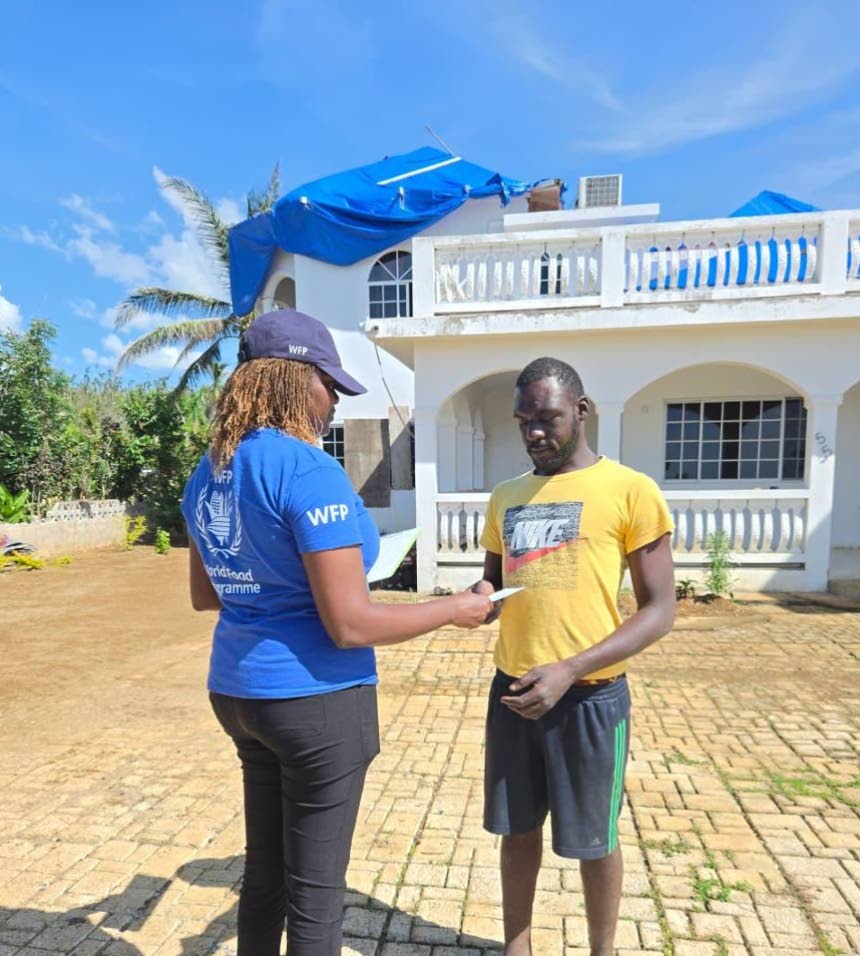
A World Food Programme field officer presents a cash voucher to a beneficiary.