



Regulatory changes limiting larger dividends for minority shareholders
JAMAICA’S largest financial groups are strengthening their capital buffers ahead of looming regulatory changes, a shift that executives say may limit the scope for higher dividend payouts even as profitability improves.
The tension surfaced on Wednesday at the annual general meeting (AGM) of Scotia Group Jamaica Limited (SGJ), where minority shareholders pressed the financial conglomerate to increase dividends after several years of rising earnings.
Two shareholders questioned why the group has maintained the same dividend level despite stronger profits, arguing that investors were not receiving an adequate share of the company’s financial gains.
“Across the board in Jamaica, I realise that the dividend yield is very low and not much priority is given to shareholders…I feel like in Jamaica shareholders are not really respected,” a SGJ shareholder said in his remarks.
He added, “Employees get an annual salary increase, directors get an annual salary increase, all the other stakeholders benefit from their investment, but we as shareholders don’t really benefit much as investors.”
Scotia Group’s board declared a $0.45 dividend — totalling $1.40 billion — to be paid on April 14 to shareholders on record as of March 23. The payout is unchanged from a year ago and represents a 34 per cent dividend payout ratio based on the company’s first-quarter results for the November 2025 to January 2026 period, when SGJ reported earnings per share of $1.32 and consolidated net profit of $4.12 billion.
By comparison, when SGJ generated $2.32 billion in consolidated net profit, or $0.75 per share, in the first quarter of 2019, it declared a $0.51 dividend — equivalent to a 68 per cent payout ratio.
For the financial year ended October 2025, SGJ reported consolidated net profit of $19.9 billion, with earnings per share of $6.40, and paid $1.80 per share — $5.6 billion in dividends. In the 2019 financial year the group reported $13.19 billion in consolidated net profit and paid $2.08 per share, or $6.47 billion, in normalised dividends.
Responding to the shareholder concerns, Anya Schnoor, who chaired the AGM, said the board must balance the interests of different stakeholders, including depositors, employees and investors, while also preparing for new regulatory requirements expected to increase capital demands on banks.
“As we deliberate in our board meetings on a monthly or quarterly basis, we take into consideration all the different factors that go into declaring a dividend, one of which is what is the capital that we need. We cannot forget that it’s a systemically important bank to Jamaica,” Schnoor noted.
Regulatory changes looming
The coming regulatory changes include the introduction of the Basel III capital framework, as well as proposed reforms to Jamaica’s financial regulatory structure such as the twin-peaks model, a special resolution regime (SRR) and new requirements for financial holding companies like SGJ.
Basel III rules will require banks to hold more capital against their assets, strengthening their ability to withstand financial shocks while reducing the share of profits that can be distributed to shareholders.
Deposit-taking institutions have been preparing for the transition since 2020, when guidance papers from the Bank of Jamaica outlined a proposed transition period from July 2022 to June 2023. Banks are currently reporting their capital adequacy to the regulator under both the existing framework and the proposed Basel III standards.
BOJ Deputy Governor Dr Jide Lewis said in December 2025 that the central bank was aiming to send drafting instructions to the Ministry of Finance and the Public Service during the first quarter of 2026 to begin the legislative process needed to implement the new rules.
“We are preparing for what’s to come, and it’s significant. The changes in the capital standards for banks such as ours is going to be significant. It’s one of the reasons it’s been delayed because other institutions are also looking at what they’re doing,” Schnoor explained on the delay to implement the standards.
As part of those preparations, SGJ’s main banking subsidiary, Bank of Nova Scotia Jamaica Limited (BNSJ), has been strengthening its regulatory capital. Its capital adequacy ratio increased from 12.68 per cent in 2024 to 14.35 per cent in 2025.
That increase followed the transfer of $14 billion from retained earnings to a retained earnings reserve. With BNSJ reporting $14.65 billion in net profit for the year, the move effectively meant that nearly all of its profit was retained to bolster capital rather than distributed.
During the first quarter, BNSJ transferred another $4 billion to the reserve, pushing its capital adequacy ratio to 14.59 per cent. The bank also received a $1.855-billion dividend from Scotia Jamaica Building Society during the period.
“We’re fully compliant with the regulations in terms of the capital adequacy ratios that are in place. We’re very comfortable as we go through the parallel run with Basel III, but the bigger point is that we know changes are coming. So we still consider 14 per cent just to be comfortable, but changes are coming, so we want to be in a position to navigate those changes as well,” said SGJ President and Chief Executive Officer Audrey Tugwell Henry on the capital changes.
Tugwell Henry is also the president of the Jamaica Bankers Association.
Banks boosting reserves
Scotia is not alone. Several of Jamaica’s largest financial institutions have been strengthening capital buffers in anticipation of the regulatory changes.
National Commercial Bank Jamaica Limited (NCBJ) has transferred profits into reserves over the past three years, with its capital adequacy ratio reaching 14.77 per cent in September 2025.
The proposed sale of its interest in NCB (Cayman) Limited to Clarien Bank Limited and the recent sale of NCB Insurance Agency’s pension portfolio to Guardian Life Limited are expected to further strengthen the capital base of Jamaica’s largest commercial bank by assets.
However, its parent company, NCB Financial Group Limited (NCBFG), currently pays a quarterly dividend of $0.50 per share — half the $1 per share distributed in March 2020 before the COVID-19 pandemic. NCBFG also skipped a dividend declaration in February 2025, the first break in payments in five quarters.
NCBFG CEO Robert Almeida recently said the group was targeting efficiency improvements and debt reduction to support higher dividends to shareholders, although the implementation of Basel III could influence those plans.
At JN Group Limited, CEO Earl Jarrett told members at January’s AGM that he hoped rumours of a Basel III deferral were true. Audited financial statements for JN Bank Limited showed a capital adequacy ratio of 13 per cent in March 2025, matching the BOJ’s stipulated threshold but remaining above the statutory minimum of ten per cent.
The bank had previously indicated in its March 2024 audited financial statements that it planned to raise additional capital.
Meanwhile, Sagicor Bank Jamaica Limited transferred an additional $1.75 billion to its statutory reserve fund in 2025 to bolster its regulatory capital. Its capital adequacy ratio stood at 13.2 per cent in December 2025.
Parent company Sagicor Group Jamaica Limited derives most of its dividend income from its life insurance businesses.
The tightening capital environment also comes as the banking sector manages the economic fallout from Hurricane Melissa, with banks granting roughly $50 billion in loan moratoria to customers affected by the storm.
Higher capital requirements strengthen financial stability but also reshape how banks allocate profits and extend credit. When regulators require banks to hold more capital against their assets, institutions must retain a larger share of earnings rather than distribute them to shareholders. That can translate into lower dividend payouts and, over time, lower returns on equity.
The changes can also affect the pace and pricing of lending. Because banks must hold more capital for every dollar extended in loans, credit growth can slow and borrowing costs may rise as institutions price the additional capital requirements into lending rates.
The shift can also alter banks’ risk appetite. Tighter capital rules often encourage lenders to favour lower-risk borrowers and larger, well-capitalised clients, which can make access to financing more difficult for smaller businesses that typically carry higher credit risk. In periods of economic uncertainty, that dynamic can influence how credit flows through the wider economy.
With capital expected to become more valuable under the new regulatory regime, banks may continue prioritising balance-sheet strength over larger shareholder payouts as they prepare for the transition.
“As part of my comments, I had mentioned that 2025 was a particular year of significant uncertainties, and as you can see, 2026 has started with even more uncertainties. Because we run this business over the long term, we create that balance between what we pay out for dividends and what we preserve to strengthen the company,” Schnoor closed.
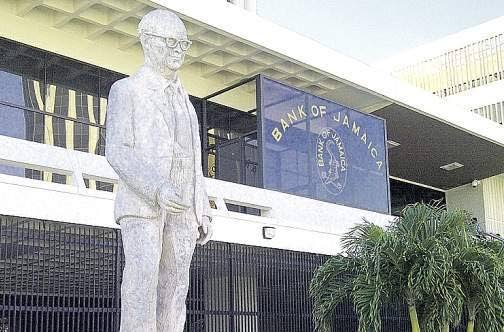
Bank of Jamaica headquarters in downtown, Kingston. Jamaica’s largest financial groups are strengthening capital buffers as regulators prepare to introduce the Basel III framework and other reforms that will require banks to hold more capital against their assets, a shift that could limit dividend payouts even as profits improve.
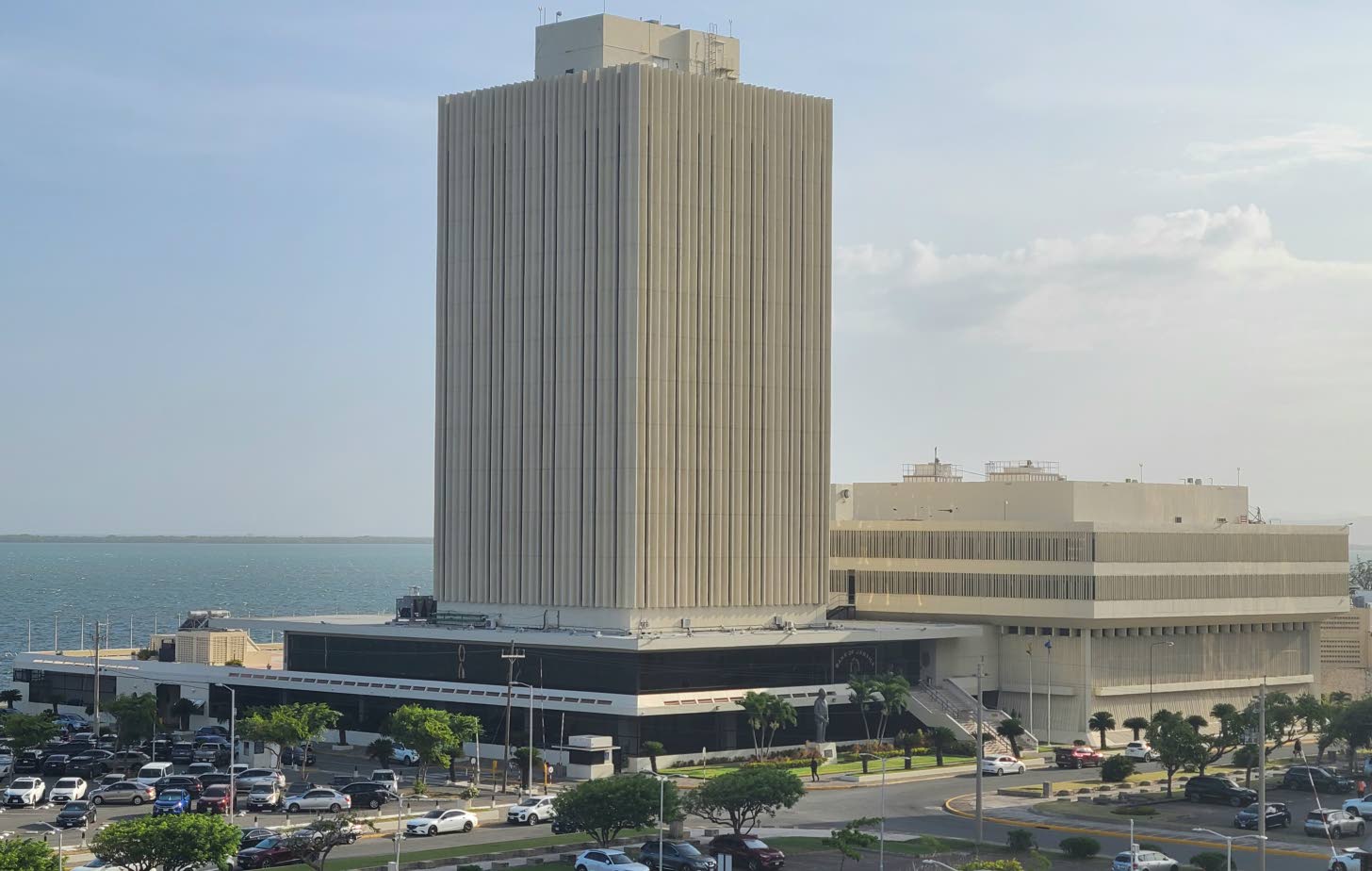
The Bank of Jamaica in downtown Kingston. Jamaica’s largest financial groups are strengthening capital buffers as regulators prepare to introduce the Basel III framework and other reforms that will require banks to hold more capital against their assets, a shift that could limit dividend payouts even as profits improve.


