



Samuda encourages greater participation in Para sports
JPA eyeing breakthrough with parents of disabled children to increase involvement
Although the Jamaica Paralympic Association (JPA) has been pleased with the growth of Para sports locally, President Christopher Samuda says one of the association’s objectives going forward is to change the mindset of parents who prevent their disabled children from participating.
On Jamaica’s fourth annual Paralympic Day on Tuesday, Governor General Sir Patrick Allen welcomed the JPA to King’s House where he met with Samuda and his directors, para-athletes and technical staff.
In recent times, the island has seen growing interest in the Paralympic movement, which was highlighted by last year’s visit of International Paralympic Committee President Andrew Parsons and the agreement by the JPA, Americas Paralympic Committee and Development Bank of Latin America and the Caribbean to establish a high-performance centre in Jamaica.
Though pleased with the upward trajectory of the movement, Samuda told the Jamaica Observer that they face difficulties in attracting more young athletes due to the unwillingness from parents.
“Clearly, there are challenges because there are persons, and particularly parents, who do not allow their children to participate in sport for one reason or the other. Sometimes it’s an emotional, umbilical connection with their child,” he said.
“But we are saying to them that sport is also therapy, sport is also a chance for the child to understand that he or she has that potential and they can realise that through sport. So there are challenges in getting out persons who are able, with a difference, to participate in sports and to go the entire journey and become professionals in Paralympic sports.”
However, Samuda says he is encouraged that the movement is branching into several sports instead of remaining confined to traditional events like track and field
“We have surfers now, we have fencers, we have archers, we are doing very well in judo, and of course our flagship sport is track and field. We have been going into pistol shooting, boccia and we are going to be looking at a goalball team to represent us, hopefully in LA (2028) so there has been tremendous progress,” he said.
“The journey continues, our efforts continue, and as I say, we have made tremendous success in the last three, four years and we will continue to do so with the assistance of certainly corporate Jamaica, which we thank them very much for their support over the years and also endorsements by the head of state, His Excellency.”
Samuda also praised Allen for his continued commitment to the growth of the paralympic movement.
“It is out of duty but also out of love that we also come to the King’s House every year to thank him for that proclamation and for him to get an opportunity to look at our new athletes and also to interface with our administrators,” he said.
“It’s very important when a Head of State endorses a movement and if my memory serves me correctly, it is the first Head of State in the English-speaking Caribbean, as well as I could go to Central America, that has declared a day to be celebrated as Paralympic Day. So we are very grateful to His Excellency and we will continue to have a very positive relationship with him as he encourages us and inspires us, both in terms of what he says and in terms of his actions.”
Allen, a patron of the JPA, says he remains motivated by the para-athletes after gaining a deeper understanding of their struggles following his back surgery.
“You are an inspiration to me. Whatever I am required to do for the nation, I will take that motivation that you have made up your mind to pursue something and do well despite the obstacles, I can do that also,” he said.
“So what you are doing is modelling for all Jamaicans. You are not sitting silently and looking out at the sea, you are in action and building a better Jamaica and hopefully the rest of the nation will view you as an inspiration.”
Jamaica’s Para athletes are expected to participate in this summer’s Commonwealth Games in Glasgow, Scotland, and the inaugural Para Central American and Caribbean Games in November in Mexico.
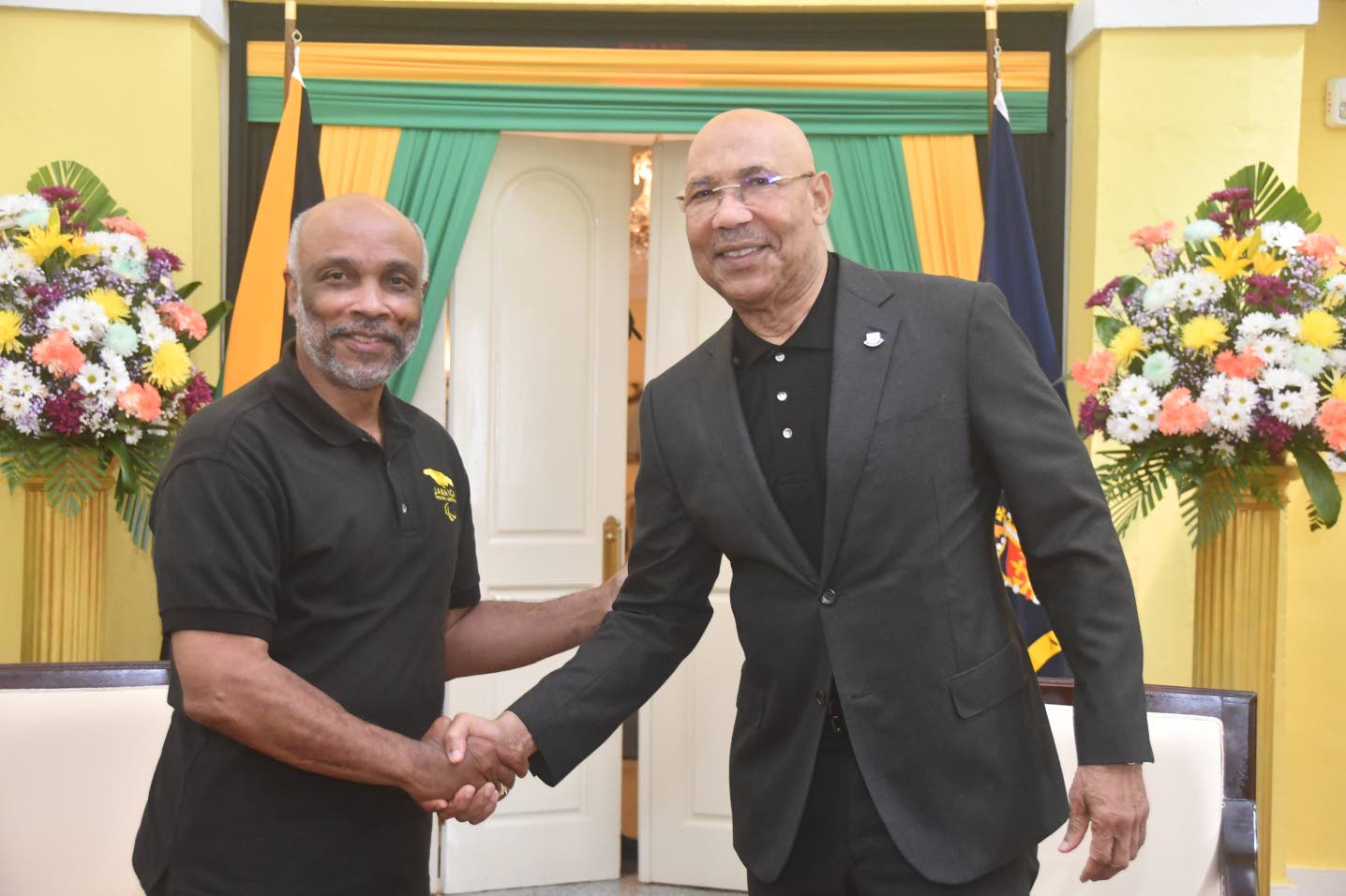
Jamaica Paralympic Association President Christopher Samuda (left) greets Governor General of Jamaica Sir Patrick Allen (centre) during a courtesy call at King’s House in Kingston on Tuesday March 10, 2026, as part of National Paralympic Day. (Photo: Naphtali Junior)
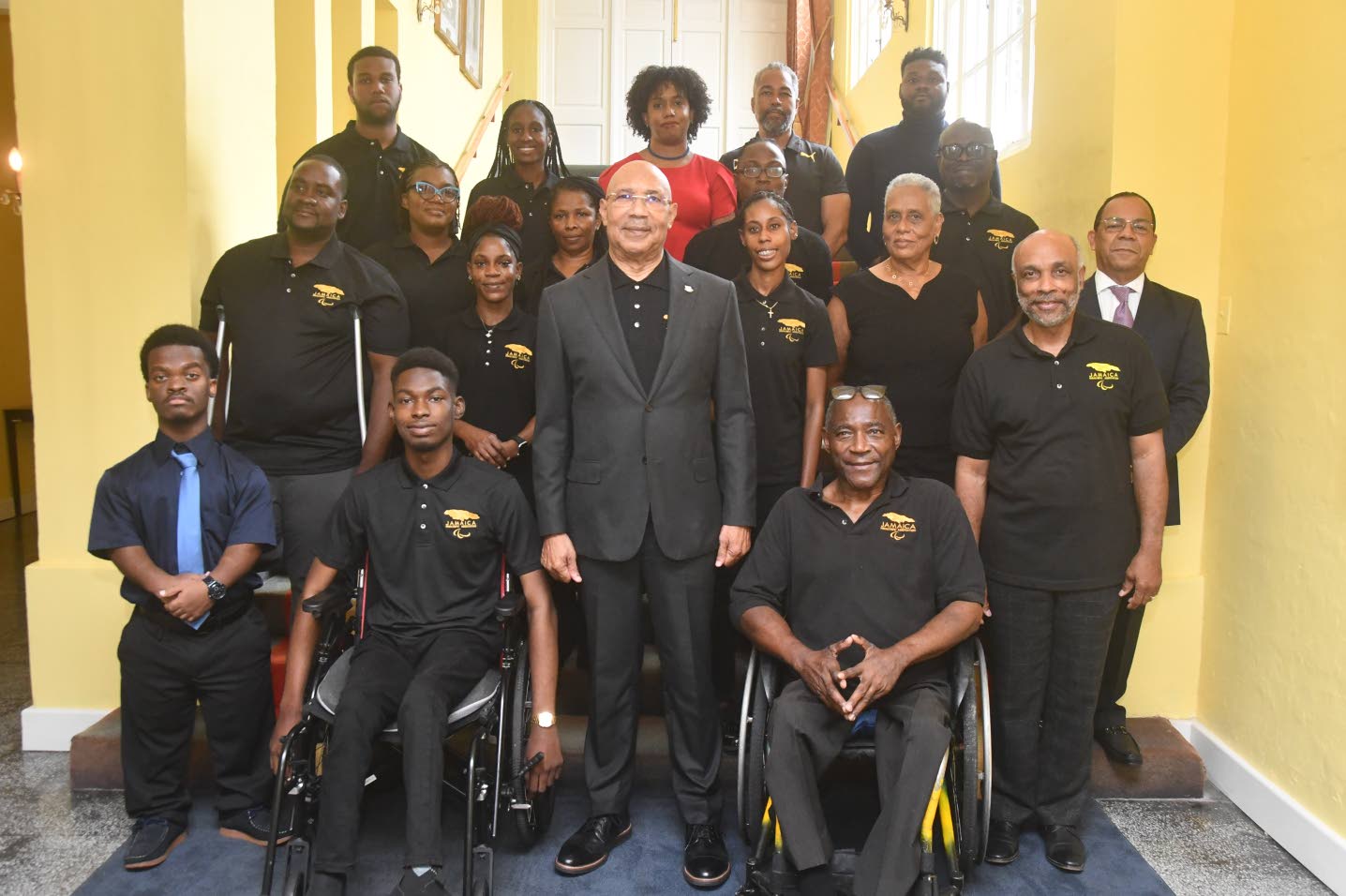
Governor General of Jamaica Sir Patrick Allen (centre) and members of the Jamaica Paralympic Association celebrate National Paralympic Day during a courtesy call at King’s House in Kingston on Tuesday, March 10, 2026. (Photo: Naphtali Junior)


