



Holness accuses Bunting of bias as PAAC mandate squabble continues
The increasingly tense atmosphere during sittings of Parliament’s Public Administration and Appropriations Committee (PAAC) was on display again on Wednesday when Member of Parliament for St Andrew East Rural Juliet Holness accused committee chairman Peter Bunting of bias in the way he manages the committee’s proceedings.
Questions about the scope of the committee’s mandate also resurfaced as Holness raised concerns that the PAAC may be extending its scrutiny beyond its mandated role.
At the last sitting of the PAAC members clashed over whether the committee was exercising proper oversight or straying into areas better handled by other committees. That quarrel centred on interruptions during questioning and competing interpretations of the PAAC’s remit under Standing Order 73A.
This time, Holness,who is also the Speaker of the House, sharpened the issue by directly challenging Bunting’s management of the meetings. She argued that the process for recognising members to speak ought to be more neutral and less dependent on the chair’s discretion.
“I do have an issue because I observed, for my first two meetings, I remember asking a question and being rushed and other members were allowed to go on and on, and on and on with their questions,” charged Holness.
She also expressed frustration at what she described as poor conduct from some members during committee sittings, suggesting that inadequate preparation and disrespect were undermining the quality of discussions.
“Now for some members who come here and are disrespectful and rude because they have not spent the time to learn before they start to make their commentary, I would encourage them when the Parliament is having the trainings to come to the trainings so that they don’t waste time. There are those of us who have spent the time sitting quietly. I remember my first term, and I listened in committees and learned instead of arguing with others… and so some fast learners continue to be stupid and use chatGPT for their questions,” Holness added.
She also questioned whether Bunting, as chairman, was dominating proceedings instead of simply guiding them.
“The chair is supposed to moderate the committee and not be the person who takes over at committees. And so I believe it would be more appropriate, Chair, to have members ask questions and where you see gaps, where you think you need to add, you do so,” said Holness, sparking an argument about the role of the PAAC.
Holness suggested the committee was drifting too far from its core function of reviewing how approved public money is spent, particularly during the budget cycle.
Bunting, however, pushed back as he argued that the committee’s powers are not as narrow as Holness suggested.
His position echoed the broader interpretation advanced during the previous sitting, when some members claimed that the PAAC can enquire into administrative efficiency and not merely spending lines on a page.
“I think you’re interpreting the mandate too narrowly,” Bunting said as he argued that overlap with other parliamentary committees is inevitable when large government programmes cut across sectors.
“But when we look, for example, at the Hurricane Melissa recovery elements of that straddle many different sectional select committees of this Parliament and it’s the nature of a PAAC that there will be some overlap at the margins. While we may not be the principal committee to examine infrastructure, [not] the principal committee to examine education, but in the course of our work we will overlap the work of those committees at the margins. I don’t think we can say a programme is off limits to the PAAC based on how this is structured,” argued Bunting.
He rejected the suggestion that he was acting unfairly in his leadership of the committee and argued that criticism from both sides was evidence that he was striking the right balance.
“I have tried to be impartial in my conduct of this committee and the fact that from time to time members on both sides maybe upset with me suggests to me that I am achieving impartiality, and that is something I would comment to you as well as when you’re presiding in the chair in the House,” said Bunting.
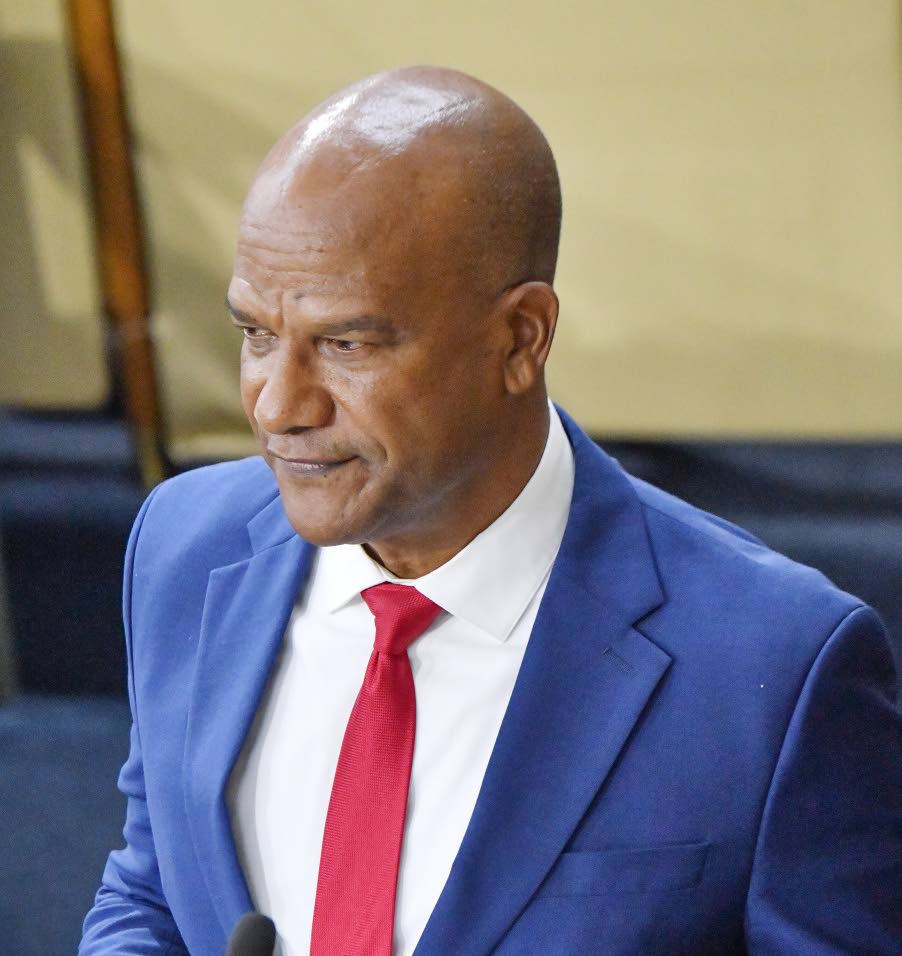
BUNTING… I have tried to be impartial in my conduct of this committee and the fact that from time to time members on both sides may be upset with me suggests to me that I am achieving impartiality


