



Rebuilding Jamaica — faster, stronger, smarter
The following is a lightly edited version of a presentation given by Minister Robert Nesta Morgan at the Ministerial Roundtable on Transport in Developing Countries on March 11, 2026.
Hurricane Melissa was the most destructive natural disaster in our nation’s history. The Planning Institute of Jamaica has placed the combined damage, losses, and additional costs at $1.952 trillion, or US$12.232 billion, which is 56.7 per cent of Jamaica’s 2024 gross domestic product (GDP).
That is a staggering figure. But we have chosen not to treat it only as a crisis. We are treating it as a mandate to build differently, finance differently, and grow faster than we have ever grown before.
I will frame our medium-term vision in four parts: the institutional architecture, the financing framework, the private investment pipeline, and the growth thesis.
First, the institutional architecture: Prime Minister Dr Andrew Holness has been clear that existing structures and procurement rules, while appropriate in normal times, were not designed for the scale and speed required for post-Melissa recovery. That is precisely why we are establishing the National Reconstruction and Resilience Authority (NaRRA).
This will be a statutory body with the mandate to lead, coordinate, fast-track, and oversee national reconstruction. The objective is emergency-level speed with clear responsibility and accountability. It is Jamaica recognising that this is not business as usual.
At the same time, we are strengthening the permanent governance framework for infrastructure, especially roads, because recovery cannot end with rebuilding. We must reduce the cycle of repeated repairs and inconsistent standards that drive long-term costs.
That is why we are establishing the One Road Authority (ORA) as part of our institutional reform agenda. ORA will modernise road-sector governance by creating a single national framework for standards, quality assurance, compliance monitoring, and performance reporting across all road classes, while bringing disciplined implementation to the national network.
Put simply, NaRRA will help Jamaica rebuild at speed after Melissa, and ORA will ensure Jamaica maintains and upgrades the road network to consistent standards so the gains are protected over time.
Second, the financing framework: Jamaica’s fiscal credibility and disciplined economic management have helped unlock an unprecedented US$6.7 billion coordinated package over three years, assembled by Development Bank of Latin America and the Caribbean (CAF), Caribbean Development Bank (CDB), Inter-American Development Bank (IDB) Group, International Monetary Fund (IMF), and World Bank Group. That package reflects confidence in Jamaica’s governance and it forms the base of our medium-term infrastructure and resilience agenda.
But multilateral support is not the ceiling, it is the floor. We have to expand financing sources by activating private capital at scale, alongside public financing, and by using instruments that are investment-grade. That means better project preparation, clearer risk allocation, and practical risk mitigation tools that reduce bankability barriers in a small market.
Third, the private investment pipeline, especially in transport: Jamaica is not starting from zero. We have experience using public-private partnership (PPP) models across infrastructure, and our intention is to scale that success because rebuilding at Melissa scale cannot rely on public financing alone.
The coordinated international package includes an initial estimate of US$2.4 billion in private investment mobilisation through the private sector arms of the Multilateral Development Banks (MDB), including IDB Invest and the World Bank Group’s International Finance Corporation (IFC) and Multilateral Investment Guarantee Agency (MIGA). We see this as catalytic capital that supports a real pipeline of bankable projects.
In transport, our pipeline will focus on investments that directly drive competitiveness: logistics corridors linked to ports and industrial zones, airport connectivity, major tourism routes, and the urban bottlenecks that impose daily productivity losses. The priority will be risk-informed and criticality-informed, so that capital flows to corridors that reduce user costs, improve reliability, and withstand hazard exposure.
ORA will strengthen this pipeline because investors finance predictability. Consistent standards, stronger quality assurance, clearer accountability, and transparent performance reporting reduce execution risk and improve lifecycle value. That governance discipline is what turns infrastructure investment into long-term competitiveness.
We also intend to build to stronger resilience standards so we are not rebuilding the same assets repeatedly. The early rapid estimate of physical damage was around US$8.8 billion, and as comprehensive assessments matured, the total impact expanded materially. That reinforces the point: resilience and lifecycle performance are not optional. They are the economics of survival.
Finally, the growth thesis: Our medium-term growth thesis is simple to state and disciplined in execution. We will use NaRRA to build back resilient at emergency speed. We will use ORA to lock in consistent standards and accountability so the road network performs and lasts. We will use a programmatic pipeline and structured PPP frameworks to crowd in private capital. And we will use this reconstruction moment to expand the economic base of communities that were previously not connected to opportunity at scale.
For investors, our message is that Jamaica will combine credibility with a prepared pipeline and stronger institutions. For the World Bank and MDB partners, our message is that Jamaica is ready to work programmatically on project preparation, risk mitigation, and investment scaling, aligned with national approvals, not a slow investment-by-investment approach.
Hurricane Melissa was a national shock, but it is also a national inflection point. We will rebuild stronger, we will finance smarter, and we will use infrastructure to drive a higher growth path.
Robert Nesta Morgan is minister with responsibility for works in the Ministry of Economic Growth and Infrastructure Development.
Robert Nesta Morgan
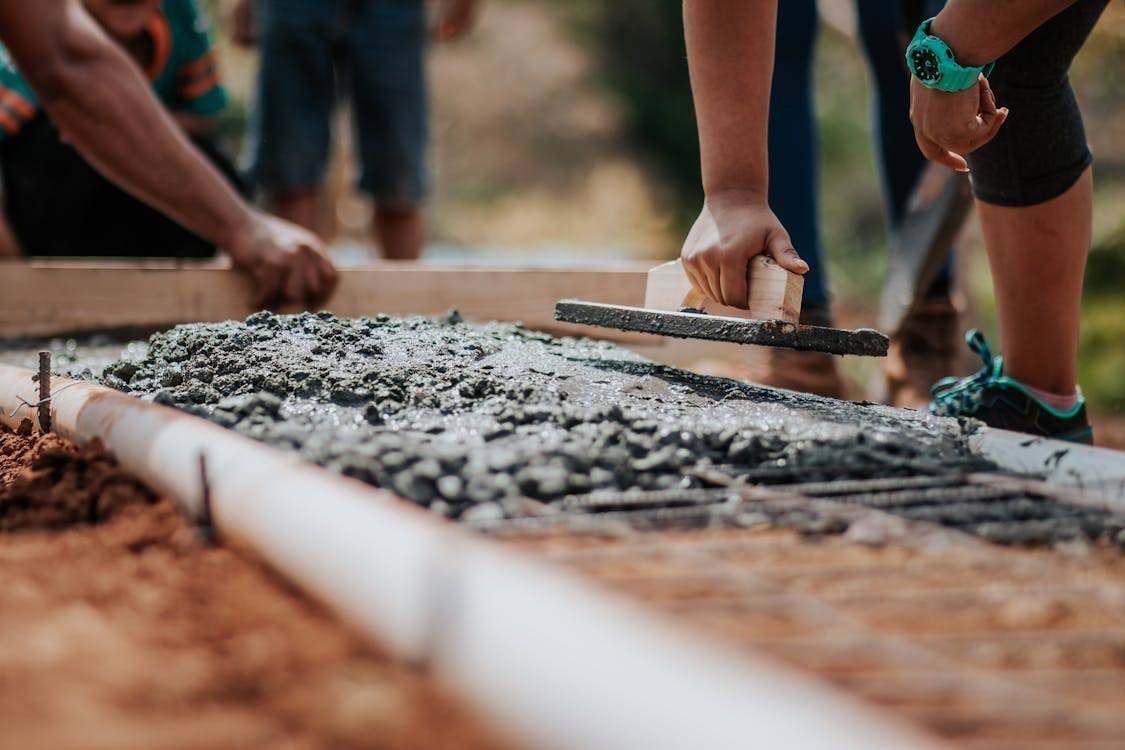
The Government’s approach to rebuilding in the wake of Hurricane Melissa will not be business as usual.
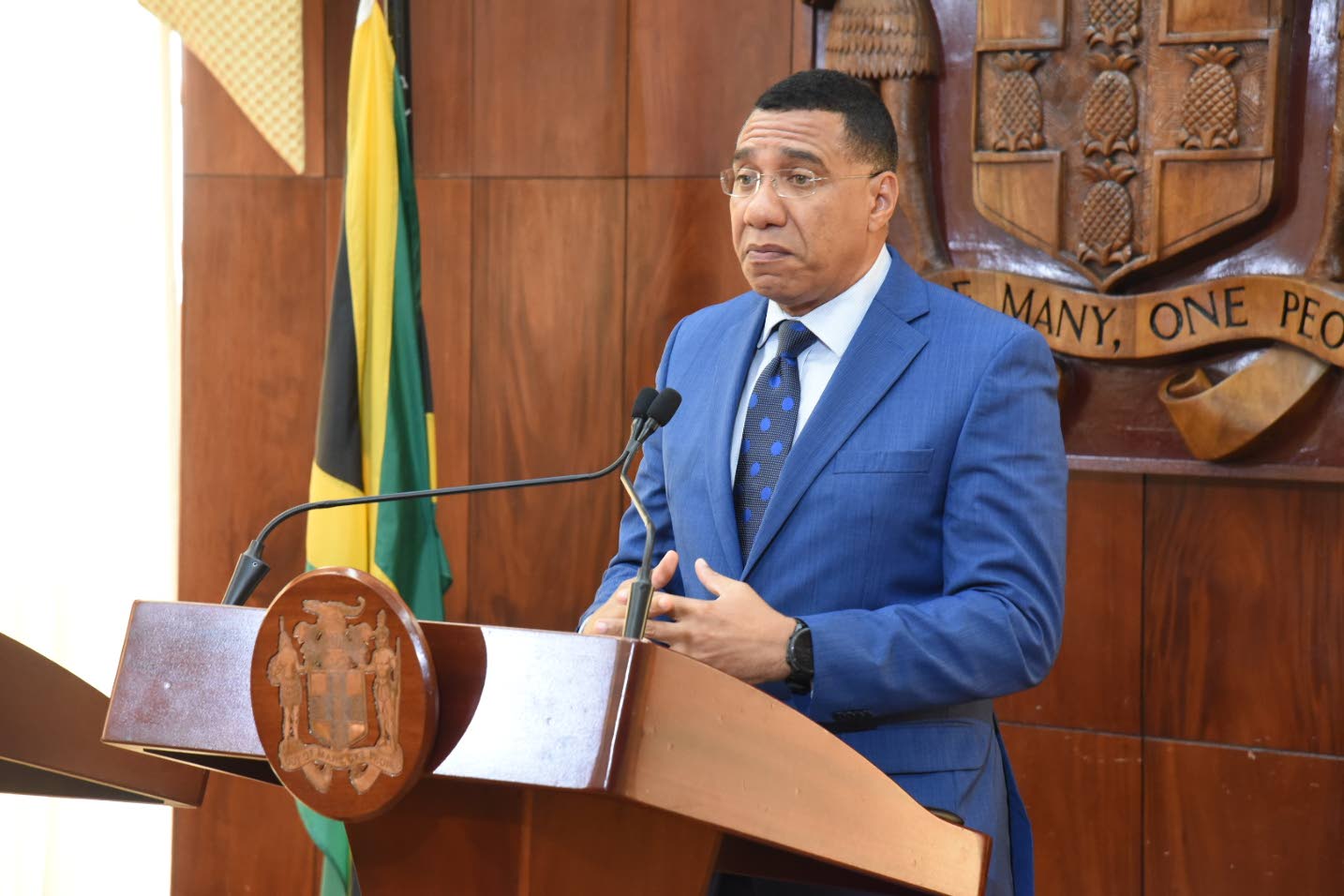
Prime Minister Dr Andrew Holness addresses a special press briefing on Hurricane Melissa recovery at Jamaica House in St Andrew on Wednesday, November 19, 2025. (Photo: JIS)


